
The Apex Connection: 10 Iconic Road Cars Built with Pure Motorsport DNA
There is an undeniable, visceral thrill that comes from piloting a vehicle engineered for the track. We aren’t merely discussing race-inspired aesthetic packages or aftermarket suspension tweaks; we are talking about elite production machines that house hearts originally forged for competition. These power plants, birthed in the crucibles of high-stakes endurance racing and Formula 1 development, translate high-revving, adrenaline-drenched performance directly to the tarmac. They offer a tangible bridge between the legendary race cars that defined automotive history and the driver behind the wheel.
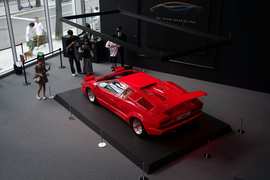
In this deep dive, we explore 10 production vehicles that blur the lines between circuit supremacy and street-legal capability. From screaming naturally aspirated V12s to sophisticated turbocharged hybrids, these machines provide a pure taste of racing pedigree. But first, it is essential to understand why manufacturers invest heavily in the cutthroat world of motorsport and how that expensive R&D ultimately shapes the high-performance vehicles available to enthusiasts today.
The Symbiotic Relationship: Motorsport DNA in Modern Engineering
Motorsport and road car development have always shared a symbiotic relationship. Competitive racing functions as the ultimate engineering stress test, pushing mechanical limits in environments where failure is simply not an option. Lessons learned under the extreme thermal and rotational loads of a 24-hour endurance race inevitably dictate the design language and material science of our daily drivers. Whether it involves advanced aerodynamics, proprietary carbon-fiber layering, or trickle-down thermal management, innovation forged on the track paves the way for a superior consumer experience.
The integration of motorsport DNA into production cars is more than just marketing; it is a testament to the pursuit of mechanical perfection. Innovations like ceramic disc brakes, dual-clutch transmissions, and sophisticated active aero were all incubated in race programs before becoming standard in high-end road vehicles. Furthermore, global dominance in prestigious series often acts as the ultimate brand equity multiplier—if a manufacturer wins on Sunday, the public interest in their showroom offerings spikes on Monday. While most of us will never pilot a Formula 1 car or a prototype at Le Mans, owning a vehicle with a race-derived engine allows us to participate in that legacy every time we depress the throttle.
The Alfa Romeo Montreal: A Prototype Soul
The Alfa Romeo Montreal houses a 2.6-liter naturally aspirated V8 derived from the iconic Tipo 33 sports prototype—a machine that battled for glory at the Targa Florio and the 24 Hours of Daytona. While the road-going version was softened for daily drivability, the core engine retains much of its high-RPM character, spinning effortlessly to 7,000 RPM. This is a quintessential example of motorsport DNA finding a home in a grand tourer.
The BMW M1, M5, and M6: The M-Division Legacy
BMW’s racing pedigree is legendary, particularly regarding the M88 inline-six engine. Originally engineered for the M1 ProCar series, this robust block eventually found its way into the E24 M6 and the E28 M5, defining the brand’s performance identity. Later, the E30 M3 utilized the S14 engine, which leveraged the architecture of the M12 F1 power unit. These engines weren’t just similar; they were architectural siblings to the most successful touring car racing platforms in German history.
Chevrolet Camaro ZL1: The Can-Am Terror
The 1969 Chevrolet Camaro ZL1 utilized an all-aluminum 427 cubic-inch V8 originally designed for the brutal world of Can-Am racing. Delivering 430 horsepower in its production trim, this engine turned the Camaro into a legendary drag-strip performer. Because of its exotic lightweight construction and massive displacement, it remains one of the most sought-after engines in automotive history, representing a rare moment where a pure-bred race heart was dropped into a mass-produced chassis.
Ferrari Dino 206 GT: Formula 2 Precision
The Ferrari Dino 206 GT utilized a 2.0-liter V6 developed for Ferrari’s Formula 2 programs. Weighing just over 2,000 pounds, the Dino felt like a true track car. It proved that displacement wasn’t the only path to performance; high-revving efficiency and perfect balance could deliver a more rewarding driving experience than the heavy luxury grand tourers of the era.
Ferrari F50: F1 on the Freeway
If you want the most authentic racing experience, the Ferrari F50 is the gold standard. Its 4.7-liter V12 was a direct descendant of the Tipo 641 F1 car driven by Alain Prost. With an 8,500 RPM redline and a rigid, engine-stressed chassis design, the F50 provided an unfiltered, mechanical connection to Grand Prix racing that remains unmatched by modern, sanitized supercars.

Ford GT: From Le Mans to the Showroom
The Ford GT pays homage to the legendary GT40, but its performance is thoroughly modern. The 2005 model utilized a supercharged V8 related to Ford’s Daytona Prototype programs, while the 2017 variant features a 3.5-liter twin-turbo EcoBoost V6 derived from Ford’s dominant endurance racing fleet. These are high-performance engineering masterclasses designed to win trophies, not just look good on a spec sheet.
Jaguar XJ220: Group C Domination
The Jaguar XJ220 remains a marvel of the 1990s. Initially conceived with a V12, it ultimately utilized a twin-turbo V6 from the Jaguar XJR-11 Group C racer. This engine helped the XJ220 hit 217 mph, a record-breaking speed at the time, confirming that competition-proven forced induction was the future of high-speed performance.
Plymouth Belvedere: The NASCAR Hemi
The 1964 Plymouth Belvedere introduced the world to the 426 Hemi V8, a powerhouse developed strictly for NASCAR oval racing. This “Race Hemi” was so dominant that it forced rule changes in the sport. Putting that level of raw, high-compression power into a civilian car changed the muscle car landscape forever, proving that racetrack performance was the ultimate yardstick for American power.
Porsche 918 Spyder: Hybrid Hypercar Efficiency
The Porsche 918 Spyder is perhaps the most sophisticated entry on this list. Its 4.6-liter V8 is based on the RS Spyder, an LMP2 prototype that conquered the 24 Hours of Le Mans. By integrating this track-hardened engine with modern hybrid electric motors, Porsche achieved a 0-60 time of just 2.2 seconds. It is the perfect marriage of historical racing expertise and futuristic energy management.
Porsche Carrera GT: The F1 Experiment
The Carrera GT remains the “analog” king. Its 5.7-liter V10 was an F1 project that was abandoned, only to be repurposed for a Le Mans prototype that never materialized. Porsche eventually dropped this screaming V10 into the Carrera GT, creating one of the most challenging, rewarding, and sonically distinct supercars ever produced.
The Future of Track-to-Street Technology
As we look toward 2025 and beyond, the influence of motorsport DNA remains more relevant than ever. Manufacturers are increasingly utilizing track data to calibrate autonomous driving systems, improve battery cooling for EVs, and refine active aerodynamic profiles. Whether you are looking for high-performance engine upgrades or seeking to invest in track-ready supercars, the trend is clear: the best cars of tomorrow are being built on the racetracks of today.
Investing in a vehicle with a competition-derived heart ensures that you are driving a piece of history. These are not merely appliances; they are mechanical testaments to the human desire for speed and efficiency.

Are you ready to elevate your driving experience? Explore our curated selection of high-performance vehicles or contact our specialist team today to schedule a private test drive of our latest track-bred inventory.