
From Track to Tarmac: 10 Street-Legal Legends with Genuine Race Engines
There is a visceral, unmistakable thrill that comes from piloting a machine infused with authentic motorsport DNA. We aren’t merely discussing aesthetic “track packs” or carbon fiber trim pieces that mimic the look of a racer. We are talking about the rare breed of high-performance vehicles that house engines originally forged for the uncompromising world of professional competition. These power plants, tempered in the high-pressure environment of endurance racing and Formula 1, bring a high-revving, adrenaline-soaked character to the public road.
As an industry veteran with over a decade spent evaluating the intersection of automotive engineering and consumer markets, I’ve seen countless “race-inspired” marketing campaigns. However, only a handful of production cars truly bridge the gap between the circuit and the street. In this deep dive, we explore 10 road-going icons that utilize competition-derived engines, offering a raw connection to the podium-topping machines that inspired them.
The Engineering Bridge: Why Motorsport Matters in 2025
The relationship between luxury sports cars and the racetrack is more than just a marketing gimmick; it is an R&D laboratory. In 2025, as we move toward hybrid electrification and ultra-efficient combustion, the lessons learned in racing are more vital than ever. Racing forces engineers to solve problems under extreme thermal stress and mechanical loads where failure is public and costly.
Historically, innovations like carbon ceramic brakes, active aerodynamics, and sophisticated dual-clutch transmissions were perfected on the track before trickling down to the exotic car market. Beyond the tech, the “Win on Sunday, Sell on Monday” philosophy remains a powerful driver for brand equity. When a manufacturer’s engine dominates Le Mans or the Nürburgring, that prestige trickles down into every showroom floor model. For the fortunate few, owning one of the following cars means owning a piece of that mechanical heritage.
Alfa Romeo Montreal: The Endurance Heart
The Alfa Romeo Montreal is a masterclass in 1970s style, but its true beauty lies beneath the hood. It features a 2.6-liter V8 engine directly derived from the Alfa Romeo Tipo 33 sports prototype—a legendary machine that conquered the Targa Florio and the 24 Hours of Daytona.
While the engineers detuned the unit for road longevity, it retained its high-revving motorsport DNA. Capable of reaching 7,000 RPM and producing 200 hp, the Montreal’s V8 provides a mechanical symphony that modern turbocharged engines struggle to replicate. For collectors seeking an investment grade classic, the Montreal remains a sophisticated choice with a genuine racing pedigree.
BMW M Series (M1, E30 M3, E28 M5): The Ultimate Heritage
BMW’s “M” division is the gold standard for track-tested performance. The story begins with the BMW M1, which utilized the 3.5-liter M88 inline-six. This engine wasn’t just inspired by racing; it was built for the M1 ProCar series.
M1, M5, M6: Powered by the M88/S38 evolution, delivering up to 282 hp.
E30 M3: Utilized the S14 four-cylinder, a high-strung unit based on the M88’s head design and BMW’s Formula 1 turbo blocks.
The E30 M3, in particular, was a “homologation special,” meaning it was built specifically so BMW could compete in DTM touring car racing. Driving one today feels like a direct dialogue with the tarmac, a quality that keeps its resale value among the highest in the used performance car market.
1969 Chevrolet Camaro ZL1: The Drag Strip King
In the world of American muscle, the 1969 Camaro ZL1 is the “Holy Grail.” At its heart was a 427-cubic-inch (7.0-liter) V8 designed for the Can-Am racing series. This was an all-aluminum masterpiece, an exotic material for the era, designed to save weight while producing massive output.
Though officially rated at 430 hp to satisfy insurance companies, these engines frequently pushed north of 500 hp in reality. With only 69 units ever produced, the ZL1 is a prime example of a rare collectible car that brings professional-grade drag racing power to the neighborhood stoplight.
Ferrari Dino 206 GT: The Formula 2 Connection
The Dino 206 GT occupies a special place in Maranello’s history. It featured a 2.0-liter V6 developed by Enzo Ferrari’s son, Alfredino, for Formula 2 competition. This high-revving, mid-mounted engine changed the trajectory of the brand.
Producing 180 hp in a chassis weighing just 2,000 pounds, the Dino offered a level of agility and balance that was previously reserved for the track. It was the precursor to the modern V6 hybrid supercars we see today, proving that you don’t need twelve cylinders to deliver a world-class driving experience.
Ferrari F50: An F1 Car in a Tuxedo
If you want to know what a 1990s Formula 1 car feels like without a pit crew, you look for a Ferrari F50. Its 4.7-liter V12 (Tipo F130B) was taken directly from the Ferrari 641 F1 car driven by Alain Prost.
The F50 is unique because the engine acts as a stressed member of the chassis—just like in a race car—meaning every vibration and mechanical note is transmitted directly to the driver’s spine. With an 8,500 RPM redline and 513 hp, it remains one of the most raw and unfiltered supercar investments on the planet.
Ford GT: Le Mans Modernized
The Ford GT isn’t just a car; it’s a multi-generational revenge plot against the European racing elite.
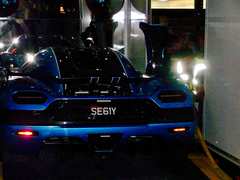
2005 Model: Used a 5.4-liter supercharged V8 with architecture shared with Ford’s Daytona Prototype engines.
2017 Model: Utilized a 3.5-liter Twin-Turbo EcoBoost V6, developed in tandem with the Chip Ganassi Racing team that won its class at Le Mans in 2016.
The modern Ford GT is effectively a race car with license plate brackets, featuring a hydraulic suspension system that drops the car into “Track Mode” with the aggressiveness of a fighter jet.
Jaguar XJ220: The Group C Speedster
The Jaguar XJ220 was once the fastest production car in the world, clocking in at 217 mph. While it was originally promised with a V12, the production version arrived with a 3.5-liter twin-turbocharged V6 sourced from the Jaguar XJR-11 Group C racer.
Despite the initial controversy over the cylinder count, the XJR-11 engine proved to be a powerhouse, delivering 542 hp. Its racing heritage allowed the XJ220 to dominate high-speed testing, and today it is recognized as a masterpiece of British automotive engineering.
1964 Plymouth Belvedere: The “Race Hemi”
Long before “Hemi” became a household name for trucks and SUVs, it was a terrifying force in NASCAR. The 1964 Plymouth Belvedere was the vessel for the 426 Hemi V8, an engine so dominant on the oval tracks that it was briefly banned.
To keep the engine legal for competition, Plymouth had to offer it in road cars. The “Street Hemi” version produced a conservative 425 hp, providing enthusiasts with a NASCAR-spec engine in a car they could take to the grocery store. It remains a cornerstone of American muscle car history.
Porsche 918 Spyder: The Hybrid Pioneer
The Porsche 918 Spyder redefined what a hybrid hypercar could be. Its 4.6-liter V8 is a direct descendant of the engine found in the RS Spyder LMP2 race car.
By pairing this race-bred V8 with two electric motors, Porsche achieved a combined output of 887 hp and a 0–60 mph time of just 2.2 seconds. This setup allows for silent electric cruising in the city, but when the V8 kicks in, the auditory experience is pure Le Mans prototype. As sustainable performance becomes the industry standard, the 918 stands as the blueprint for the future of luxury vehicle financing and high-end collections.
Porsche Carrera GT: The Shelved F1 Masterpiece
Many consider the Porsche Carrera GT to be the greatest driver’s car ever made. Its legendary 5.7-liter V10 was originally designed for a Formula 1 program in the early ’90s. When that project was scrapped, the engine was repurposed for a Le Mans prototype, which was also eventually canceled.
Refusing to let such a masterpiece go to waste, Porsche built a flagship supercar around it. The result is a 603 hp V10 that produces a high-pitched wail unlike anything else on the road. With a manual transmission and no stability control, it requires an expert hand, embodying the true spirit of motorsport-derived engineering.
The Future of Race-Bred Road Cars
As we look toward the 2030s, the definition of a “race engine” is shifting toward high-output electric drive units and hydrogen-combustion hybrids. However, the soul of the machine remains the same. Whether it is a screaming V12 or a high-torque EV motor, the goal of performance car manufacturers is to provide that umbilical link to the track.
For the modern enthusiast, finding a car with a genuine racing heart is about more than just speed—it’s about the pedigree, the history, and the uncompromising engineering that only the world of motorsport can provide. These 10 vehicles represent the pinnacle of that philosophy, proving that the best place to develop a road car is often in the heat of a race.
Are you ready to experience the raw power of a track-bred machine for yourself? Contact your local specialist dealer today to explore current inventory on these legendary models and elevate your driving experience to the professional level.