
The Evolution of Precision: Why the 2025 Porsche 911 GT3 RS Remains the Benchmark for Track Performance
In the world of high-performance automotive engineering, there are “fast cars,” and then there is the Porsche 911 GT3 RS. For those of us who have spent the last decade trackside, analyzing telemetry and feeling the granular feedback of steering racks, the “RS” badge (RennSport) isn’t just a marketing trim—it’s a holy grail. When Porsche first introduced the 996-generation GT3 in 1999, the industry thought we had reached the ceiling of what a street-legal, naturally aspirated flat-six could achieve. We were wrong. The engineers in Stuttgart are notoriously restless, and their refusal to settle has turned the Porsche 911 GT3 RS into a two-decade-long masterclass in aerodynamic efficiency and mechanical purity.
As we move into 2025, the automotive landscape is shifting toward electrification and forced induction. Yet, as the upcoming 992.2 Porsche 911 GT3 RS nears its official debut, it carries a weight far heavier than its carbon-fiber body panels: the responsibility of being the potential “swan song” for the pure, high-revving internal combustion engine.
A Legacy of Lightweight Dominance
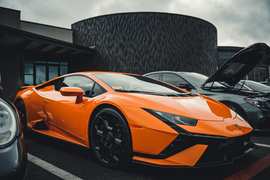
To understand where the Porsche 911 GT3 RS is going, we have to appreciate the clinical obsession that birthed it. Following the 996.2 facelift, Porsche realized that while the standard GT3 was a scalpel, some drivers wanted a chainsaw. They shaved weight through exotic materials, optimized the suspension geometry, and added magnesium wheels. It was a car that made the standard GT3 feel almost “soft” by comparison.
Fast forward to the current 992.1 generation, and the Porsche 911 GT3 RS has transitioned from a sports car to a literal aero-device. If you’ve seen one in the paddock, the first thing that hits you is the sheer scale of the swan-neck rear wing. It isn’t just for show; it features a Formula 1-style Drag Reduction System (DRS). Combined with the active front splitters and underbody flaps, the current car produces a staggering 860kg of downforce at 177mph. For perspective, that is nearly twice the downforce of its predecessor, the 991.2.
Deciphering the 992.2: What the Latest Nürburgring Testing Reveals
Recent sightings of the camouflaged 992.2 Porsche 911 GT3 RS at the Nürburgring Nordschleife suggest that Porsche is in the final “fine-tuning” phase of development. For those looking to invest in high-performance assets, the Porsche 911 GT3 RS price has historically held firm or appreciated, making the technical specs of this mid-cycle refresh critical for collectors and racers alike.
Subtle Refinements Over Radical Changes
At first glance, the 992.2 prototype maintains the aggressive silhouette that defines the Porsche 911 GT3 RS. The massive “nostril” outlets on the carbon fiber bonnet remain, designed to channel hot air from the central radiator over the roof and away from the side intakes. However, a closer look reveals several key updates:
Revised Aerodynamics: The rear diffuser has been subtly reshaped, featuring new vertical strakes and optimized air channels to further stabilize the car at high speeds.
Lighting and Esthetics: Unlike the standard 992.2 Carrera, which integrated turn signals into the main LED matrix headlights, the GT3 RS prototype retains lower-mounted blinkers. This is likely a functional choice to keep the airflow around the front wheel arches as clean as possible.
Thermal Management: New, smaller intakes located on either side of the center-exit exhaust suggests that Porsche is squeezing every last bit of cooling efficiency out of the engine bay.
The Powertrain Debate: Hybrid or Pure Motor?
The most frequent question I get from clients and fellow enthusiasts is: “Will the new Porsche 911 GT3 RS go hybrid?”
With the introduction of the 3.6L T-Hybrid system in the 992.2 Carrera GTS, the rumor mill has been spinning. A hybrid system would undoubtedly provide a massive torque fill, potentially dropping the 0-60 mph time below the current 3.2 seconds. However, from an expert standpoint, I would bet against a hybrid GT3 RS for three specific reasons:
Weight is the Enemy: The “RS” philosophy is built on the altar of weight reduction. Hybrid batteries and motors add significant mass. In a car designed to dance through the “Schwedenkreuz” section of the ‘Ring, every extra pound is a liability.
The GT3 Precedent: Porsche recently unveiled the 992.2 GT3, and it remained stubbornly, gloriously, naturally aspirated. It would be highly inconsistent for Porsche to hybridize the RS track-special while keeping the base GT3 “analog.”
The GT2 RS Factor: For those seeking record-breaking hybrid power, the upcoming 911 GT2 RS is the designated vessel for that technology. The GT3 RS is about throttle response and the mechanical scream of a 9,000 RPM redline.
Expect the 4.0L naturally aspirated flat-six to return, perhaps with a slight bump over the current 525 horsepower, achieved through further friction reduction and valvetrain optimization. If you are looking for exotic car financing or Porsche lease deals, now is the time to start those conversations, as the final pure-ICE RS models will likely see unprecedented demand.

Competitive Landscape: The AMG GT and the Battle for the Track
While Porsche has dominated the track-day niche, the competition isn’t sitting still. Mercedes-AMG has been spotted testing a new, ultra-hardcore variant of the AMG GT. While the AMG relies on brute force and sophisticated electronic damping, it often struggles to match the rear-engine traction and lightweight agility of the Porsche 911 GT3 RS.
For the serious driver, the choice usually comes down to “feel.” The GT3 RS offers a level of communication through the carbon bucket seats and the steering wheel that front-engined rivals rarely replicate. It’s the difference between driving a powerful machine and wearing one.
The Digital Cockpit and User Experience
One area where we expect a significant shift is inside the cabin. The 992.2 generation across the board has moved toward a fully digital instrument cluster. While purists may miss the physical analog tachometer that has sat center-stage in the 911 for decades, the digital shift allows for much better data visualization.
In the 992.2 Porsche 911 GT3 RS, this screen will likely offer bespoke “Track Screens” that prioritize tire pressure, oil temperature, and G-force meters. The steering wheel will remain the nerve center, featuring the four rotary dials that allow the driver to adjust Traction Control (TC), Stability Control (ESC), Dampers, and the Torque Vectoring (PTV+) on the fly.
Investment Potential and Market Outlook
From a luxury car market perspective, the Porsche 911 GT3 RS is more than a vehicle; it is a blue-chip asset. As environmental regulations tighten, the window for naturally aspirated high-displacement engines is closing.
If this 992.2 version is indeed the “Swansong” for the 4.0L flat-six, we are looking at a future classic. Collectors are already eyeing Porsche 911 GT3 RS for sale listings for the 992.1, and the anticipation for the facelift is driving values even higher. Whether you are a weekend warrior looking to shave seconds off your lap time at Laguna Seca or a savvy investor looking for high-yield automotive assets, the GT3 RS remains the most logical “emotional” purchase on the market.
Final Thoughts: The Roar of the Flat-Six
As I reflect on my years in this industry, I’ve seen many legends come and go. We’ve seen the shift from air-cooled to water-cooled, and from hydraulic to electric steering. Each time, critics claimed the “soul” was lost, and each time, Porsche proved that engineering excellence could redefine what soul feels like.
The Porsche 911 GT3 RS is the pinnacle of this evolution. It is a car that demands respect, rewards skill, and provides an acoustic experience that no electric motor can ever replicate. If you have the opportunity to get behind the wheel of this machine, do not hesitate. We are witnessing the final, glorious chapter of a mechanical era.

Are you ready to experience the pinnacle of German engineering? Whether you are looking to secure a build slot for the upcoming 992.2 or seeking the perfect pre-owned specimen, our team of experts is here to guide you through the acquisition process. Contact us today to explore our exclusive inventory and schedule a private consultation on your next performance investment.