
The Fastest Road Cars in 2026: The Ultimate List of Hypercar Velocity
In the world of automotive engineering, top speed serves as the ultimate litmus test for innovation. While most modern vehicles are electronically limited to cruise comfortably at highway speeds, the pursuit of the fastest road cars remains a prestigious arena where manufacturers stake their claim to technical supremacy. For a decade, I have observed the industry shift from pure mechanical combustion dominance to the high-voltage era of electrified hypercars. Achieving triple-digit speeds is no longer just about horsepower; it is a complex ballet of aerodynamics, battery density, and tire technology.
As we look toward 2026, the leaderboard for the fastest road cars is changing faster than ever. We are witnessing a paradigm shift where emerging electric powerhouses are challenging the long-standing hegemony of internal combustion legends.
The Evolution of the 300mph Barrier
The race to break the 300mph threshold has been the “Space Race” of the 21st century. What began as a pursuit of 200mph by legends like the McLaren F1 in the 90s has evolved into a quest for physics-defying performance. To reach these velocities, manufacturers must grapple with exponential increases in drag and the extreme thermal management requirements of high-performance hypercars.
McLaren F1 (240.1 mph)
The benchmark that started it all. Even in 2026, its naturally aspirated V12 remains the gold standard for driver engagement.
W Motors Fenyr SuperSport (245 mph)
Designed in Dubai, this machine leverages Porsche-derived engineering to deliver a raw, visceral experience that favors aggressive aesthetics and massive turbo-boosted torque.
Saleen S7 Twin Turbo (248 mph)
An American titan of the mid-2000s, the S7 proved that raw, unadulterated power—when paired with a carbon-fiber chassis—could humble European exotics.
Koenigsegg Gemera & CCXR (248 mph)
Koenigsegg has mastered the art of the hybrid hypercar. The Gemera, in particular, offers a “mega-GT” experience, blending four-seat practicality with a tri-motor hybrid powertrain that defies convention.
Aspark Owl (249 mph)
The Japanese contender that sent shockwaves through the industry. With a claimed 0-60 mph time of 1.72 seconds, the Owl is a masterclass in electric torque vectoring and lightweight battery packaging.
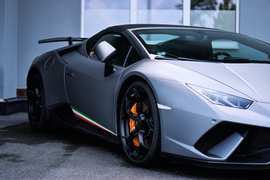
Ultima RS (250 mph)
Often overlooked, the Ultima RS proves that you don’t need a multi-million dollar R&D department to go fast. It’s a pure, track-focused tool that relies on a superior power-to-weight ratio to hit the quarter-thousand mark.
McLaren Speedtail (250 mph)
McLaren’s spiritual successor to the F1, the Speedtail uses an advanced hybrid powertrain and an ultra-slippery “longtail” design to achieve unmatched aerodynamic efficiency.
Czinger 21C V Max (253 mph+)
A disruptor in the space, the 21C utilizes additive manufacturing (3D printing) to create a chassis that is as light as it is rigid, housing a high-revving hybrid heart.
Koenigsegg Regera (255 mph)
The Regera introduced the Direct Drive system, eliminating the need for a traditional transmission and providing a seamless surge of power that feels infinite.
SSC Ultimate Aero (256.18 mph)
A pivotal car in the record books, it briefly unseated the Bugatti Veyron by focusing on simplicity, raw power, and a lack of electronic interference.
Rimac Nevera & Nevera R (258–268 mph)
Rimac has effectively become the global leader in electric drivetrain technology. The Nevera R represents the pinnacle of current EV capability, offering instant acceleration that few, if any, combustion engines can match.
Bugatti Veyron Super Sport (268 mph)
The car that changed the hypercar landscape forever. Its quad-turbocharged W16 remains one of the most significant engineering marvels of the 21st century.
Hennessey Venom F5 (271.6 mph)
Hennessey’s “Fury” V8 engine produces a staggering 1,817 hp. This Texas-built beast is designed specifically for high-speed stability and linear acceleration, pushing the boundaries of what is possible with rear-wheel drive.
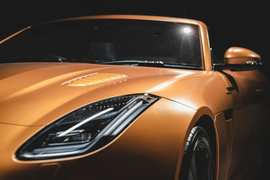
Bugatti Tourbillon (277 mph – Est.)
The future of the Bugatti lineage. By moving to a V16 hybrid configuration, Bugatti ensures that it remains at the forefront of the luxury hypercar market while embracing electrification.
Koenigsegg Agera RS (277.87 mph)
This vehicle solidified Koenigsegg’s reputation for not just breaking records, but doing so on public roads, proving the real-world stability of their engineering.
Bugatti Mistral (282.05 mph)
As the fastest roadster ever produced, the Mistral is a swan song for the legendary W16 engine. It combines open-top driving with speeds that are frankly terrifying to the average driver.
SSC Tuatara (282.9 mph)
After overcoming early testing controversy, the Tuatara proved its legitimacy with independent verification. It is a dedicated speed weapon, prioritizing minimal drag and high-RPM power delivery.
Bugatti Chiron Super Sport 300+ (304.8 mph)
The first production car to shatter the 300 mph barrier. With its extended tail and massive power output, it represents the absolute limit of the Chiron platform.
Koenigsegg Jesko Absolut (310 mph – Target)
Built for the singular purpose of being the fastest, the Jesko Absolut is a low-drag marvel. Every component, from the aero-focused body to the innovative nine-speed Light Speed Transmission, is optimized for maximum velocity.
Yangwang U9 Xtreme (308 mph)
Representing the new guard, the U9 Xtreme leverages a 1,200V architecture and quad-motor electric propulsion. It is the current king of the hill, proving that the fastest road cars are no longer defined by gasoline, but by the relentless pursuit of electrical efficiency.
The Future of Speed
As we look toward the latter half of the decade, the competition remains fierce. Whether you are an investor looking at high-CPC assets like rare hypercars or an enthusiast tracking the latest in automotive tech, one thing is clear: the ceiling for performance is still rising.

If you are interested in staying at the forefront of the hypercar market or require expert guidance on acquiring and maintaining these engineering marvels, reach out to our specialist team today to schedule a consultation on the future of performance driving.