
The Quest for Velocity: The World’s Fastest Road Cars of 2026
In the rarefied air of automotive engineering, top speed remains the ultimate metric of dominance. While the average modern commuter car handles highway speeds with mundane ease, the true obsession lies in the quest for the “magic number.” For over a decade, I have watched the industry push the boundaries of physics, transforming road-legal vehicles into aerodynamic missiles capable of speeds once reserved for fighter jets. This isn’t just about utility; it’s about the world’s fastest road cars—a segment defined by engineering brilliance, extreme investment, and the pursuit of raw bragging rights.
As we move through 2026, the playing field has shifted. The traditional hegemony of internal combustion engines is now being challenged—and in some cases, eclipsed—by electric hypercar innovation. Achieving speeds beyond 300 mph requires a perfect symphony of drag reduction, thermal management, and power density. Here is a deep dive into the elite machines currently redefining speed.
The Evolution of the Speed Race
The 1990s were defined by the race to the 200 mph threshold, featuring icons like the McLaren F1 and the Jaguar XJ220. Today, we are firmly entrenched in the “300 mph era.” This level of performance is exponentially more difficult to achieve, as aerodynamic drag increases with the square of speed. Building the world’s fastest road cars today requires not just raw horsepower, but a total systems approach to stability and efficiency.
The 2026 Leaderboard: Ranking the Absolute Fastest
McLaren F1 (240.1 mph)
The benchmark. With its naturally aspirated V12 and gold-lined engine bay, the F1 remains the spiritual godfather of the modern hypercar. Despite its age, its 240.1 mph record is a testament to Gordon Murray’s genius.
W Motors Fenyr SuperSport (245 mph)
Hailing from Dubai, this machine utilizes a Porsche-derived twin-turbo flat-six. It remains a hallmark of luxury design combined with extreme mechanical output.
Saleen S7 Twin Turbo (248 mph)
An American classic that brought 750 horsepower to the streets. While its top speed claims remain a subject of legendary debate, it solidified the U.S. presence in the global hypercar market.
Koenigsegg Gemera & CCXR (248 mph)
Koenigsegg is a master of the “megawatt” era. The Gemera, a four-seat hybrid, proves that hyper-performance doesn’t have to sacrifice usability, while the CCXR serves as a reminder of their early innovations in biofuel performance.
Aspark Owl (249 mph)
The Japanese entry into the high-voltage arena. With a 0-60 mph time often cited near 1.7 seconds, the Owl focuses on the intersection of blistering acceleration and sustained high-speed capabilities.
Ultima RS (250 mph)
A masterclass in power-to-weight. By stripping away non-essential luxury and focusing on a high-output Corvette heart, the Ultima proves that “kit” engineering can punch well above its weight class.
McLaren Speedtail (250 mph)
The spiritual successor to the F1, optimized for laminar flow. Its “Longtail” silhouette and three-seat cockpit make it one of the most distinctive entries on our list.
Czinger 21C V Max (253 mph+)
Utilizing 3D-printed chassis components and a high-revving hybrid powertrain, the 21C represents the future of manufacturing in the hypercar space.
Koenigsegg Regera (255 mph)
With its revolutionary Direct Drive transmission, the Regera eliminates the need for traditional gears, delivering seamless power delivery that is both brutal and efficient.
SSC Ultimate Aero (256.18 mph)
For a time, this was the king of the road, proving that small-scale manufacturers could unseat the established giants like Bugatti.
Rimac Nevera & Nevera R (258–268 mph)
Rimac has become the leader in high-performance electric vehicles. With the Nevera R, the Croatian manufacturer has showcased that battery-electric powertrains are the future of record-breaking velocity.
Bugatti Veyron Super Sport (268 mph)
The car that changed everything. Even in 2026, the quad-turbo W16 engine remains a monument to over-engineering and absolute mechanical refinement.
Hennessey Venom F5 (271.6 mph)
“The American Dream” of speed. Hennessey’s pursuit of 311 mph is backed by 1,817 horsepower. It is a raw, analog experience for those who prefer rear-wheel-drive dynamics.
Bugatti Tourbillon (277 mph – Est.)
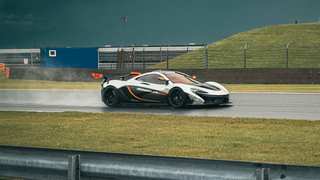
The new standard-bearer for Molsheim. Moving to a V16 hybrid setup, the Tourbillon is expected to push the limits of what a combustion-assisted vehicle can achieve.
Koenigsegg Agera RS (277.87 mph)
A masterclass in aerodynamics, this car still holds specific public-road records that remain a benchmark for all modern hypercars.
Bugatti Mistral (282.05 mph)
The fastest open-top car ever created. Retaining the legendary W16, the Mistral is a swan song for one of the most powerful engines in history.
SSC Tuatara (282.9 mph)
After overcoming early controversy, the Tuatara proved its mettle. Its sleek, fighter-jet-inspired bodywork allows it to cut through the air with surgical precision.
Bugatti Chiron Super Sport 300+ (304.8 mph)
The first production car to shatter the 300 mph barrier. With its lengthened bodywork and enhanced cooling, it represents the absolute pinnacle of the Volkswagen-era Bugatti engineering.
Koenigsegg Jesko Absolut (310 mph – Target)
Designed specifically to minimize drag, the Jesko Absolut is the ultimate “low-drag” machine. Every millimeter of the car is calculated to slip through the air at speeds that defy logic.
Yangwang U9 Xtreme (308 mph)
The current king. Representing the shift toward high-voltage architectures, the U9 Xtreme utilizes quad-motor technology and a 1,200V system to deliver power that legacy combustion engines simply cannot match for the price.
Why This Matters for the Future
The competition to create the world’s fastest road cars is no longer just about the engine displacement. It is about sustainable performance, the integration of EV charging infrastructure, and the use of carbon fiber composites. As we look toward the next decade, the convergence of high-CPC automotive tech—such as active aerodynamics and solid-state battery integration—will continue to raise the bar.
For collectors and enthusiasts, these vehicles represent the peak of human capability. If you are looking to enter the world of hypercar investment or simply want to understand the mechanics behind the world’s most elite machines, now is the time to track these developments closely.
Are you ready to experience the pinnacle of automotive engineering? Contact our expert advisory team today to discuss the latest market trends, private collections, and the future of high-performance driving.