
The Purest Connection: Production Cars Born from Motorsport DNA
There is an undeniable, electric thrill that courses through you the moment you fire up an engine forged in the crucible of competitive racing. We aren’t just talking about aesthetic badges or aerodynamic body kits; we are talking about authentic motorsport DNA. These are the engineering marvels where the line between a dedicated track weapon and a street-legal daily driver vanishes, offering an unfiltered connection to the high-stakes world of professional racing.
After a decade in the automotive industry, I’ve learned that true performance isn’t just about horsepower—it’s about the pedigree. When engineers are tasked with winning at Le Mans or dominating F1, they don’t settle for “good enough.” They innovate, they iterate, and they break barriers. Bringing that motorsport-derived engine technology to a production vehicle is the ultimate transfer of knowledge from the circuit to the showroom.
Why Racing Pedigree Matters
Motorsport remains the most unforgiving testing ground on Earth. In the heat of a 24-hour endurance race, failure is not an option. The components that survive this environment become the blueprint for future innovation. From advanced cooling systems to the refinement of direct-injection fuel delivery and high-strength alloys, the automotive performance upgrades we take for granted today often started their life as a solution to a lap-time problem.
For the enthusiast, owning a car with an engine born on the track is about more than speed—it’s about history. You aren’t just driving a machine; you are piloting a piece of history that echoes the roar of professional competition.
10 Iconic Vehicles with Motorsport DNA
Alfa Romeo Montreal (Tipo 33 V8)
The Montreal is a masterclass in style meeting substance. Its 2.6-liter V8 engine found its roots in the Tipo 33, a legendary endurance prototype. While detuned for road manners, the engine maintains that aggressive, high-revving soul, peaking at 7,000 RPM. It remains a benchmark for how designers can blend artistic bodywork with a high-revving racing engine to create something truly transcendent.
The BMW M Legacy (M1, M5, M6)
BMW’s “M” division is synonymous with track success. The M88 engine, which powered the iconic M1, E28 M5, and E24 M6, was a direct descendant of BMW’s ProCar and touring car programs. The E30 M3, meanwhile, utilized an S14 engine that drew heavy inspiration from Formula 1 technology. These cars didn’t just compete on the road; they dominated the DTM, setting a standard for luxury sports car engineering that remains the gold standard today.
Chevrolet Camaro ZL1 (1969 Can-Am Heritage)
The original 1969 ZL1 utilized an all-aluminum 427 cubic-inch V8 developed for the raw, unrestricted power of Can-Am racing. It was a drag-strip monster, and even in its detuned road state, it produced an intimidating 430 horsepower. It represents the pinnacle of American muscle fused with high-performance engine technology that was meant to conquer the track.
Ferrari Dino 206 GT
While it didn’t wear the Prancing Horse badge, the Dino was arguably the most significant Ferrari for the common enthusiast. Its 2.0-liter V6 was a direct development of their Formula 2 racing program. Its nimble, mid-engine layout and high-revving nature turned it into a cornering scalpel, forever changing the perception of what a V6-powered sports car could achieve.
Ferrari F50
To celebrate their 50th anniversary, Ferrari essentially handed the public a Formula 1 car. The 4.7-liter V12 in the F50 was a direct evolution of the Tipo 641 used in the 1990 F1 season. With an 8,500 RPM redline and a chassis that used the engine as a stressed member, this is arguably the closest any production car has ever come to capturing the visceral experience of a Formula 1 racing powertrain.
Ford GT (2005 & 2017)
The Ford GT is the ultimate tribute to the GT40’s conquest of Le Mans. The 2005 iteration utilized a supercharged 5.4-liter V8 born from endurance prototypes, while the 2017 successor showcased the power of the 3.5-liter twin-turbo EcoBoost. Both are feats of automotive engineering excellence, proving that turbocharged V6s can produce world-class performance just as effectively as traditional displacement giants.
Jaguar XJ220

Initially promised as a V12, the XJ220 arrived with a 3.5-liter twin-turbo V6 lifted directly from the XJR-11 Group C race car. It was a lightning-fast engineering marvel that reached 217 mph. Despite the controversy surrounding the engine swap, it proved that turbocharged racing engines could define an era of speed.
Plymouth Belvedere (426 Hemi)
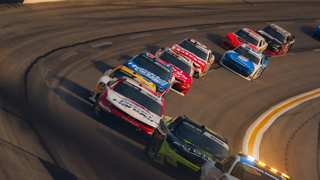
The 1964 Belvedere wasn’t just a car; it was a delivery system for the 426 Hemi. Developed exclusively for NASCAR, the “Race Hemi” was so dominant that it forced rule changes in the sport. Finding this engine in a production sedan was the equivalent of putting a fighter jet turbine in a commuter plane—pure, unadulterated power.
Porsche 918 Spyder
The 918 Spyder bridged the gap between old-school combustion and modern electrification. Its 4.6-liter V8 was derived from the RS Spyder LMP2 prototype. By integrating it with advanced electric motors, Porsche created a vehicle that was not only incredibly fast but also a showcase for sustainable high-performance technology.
Porsche Carrera GT
Perhaps the greatest analog supercar of the 21st century, the Carrera GT features a 5.7-liter V10 originally slated for a Le Mans prototype that never saw the light of day. This engine is a masterpiece of precision, producing a sound that remains unmatched in the automotive world. It is the quintessential supercar investment for those who value mechanical purity over digital interference.
The Future of Performance
As we look toward 2025 and beyond, the influence of motorsport on road cars continues to evolve. We are entering an age where hybrid and electric racing platforms will dictate the next generation of hypercar performance. The high-CPC keywords in this sector—such as “hybrid sports car powertrain” and “aerodynamic track performance”—now point toward a future where efficiency and raw speed go hand-in-hand.
Whether you are looking for a classic collector piece or the latest track-bred marvel, investing in a vehicle with motorsport roots is a decision that pays dividends in adrenaline and long-term value.
Are you ready to experience the pedigree of the track on your favorite mountain road? Contact our expert consulting team today to find the perfect motorsport-bred vehicle to add to your garage.