
Engineering Excellence: 10 Legendary Production Cars with True Motorsport DNA
There is an undeniable magnetism to a vehicle that carries genuine motorsport DNA. As an automotive engineer and long-time industry analyst with a decade of experience in high-performance powertrain development, I have always argued that the most visceral driving experiences stem from engines born on the circuit. We aren’t simply talking about aggressive body kits or marketing-led performance trims; we are talking about iron and aluminum forged in the crucible of competitive racing, then refined for the public road.
The synthesis of race-grade engineering and street legality is the ultimate expression of automotive passion. These motorsport-derived production cars represent the pinnacle of what happens when a manufacturer decides that the compromises of daily driving shouldn’t dilute the DNA of a champion.
Why “Win on Sunday, Sell on Monday” Still Matters in 2025
The philosophy behind these vehicles is rooted in the “Win on Sunday, Sell on Monday” mantra. While modern automotive tech has shifted toward efficiency and electrification, the core principle remains: racing pushes engineering to the absolute limit. In the pressure cooker of a 24-hour endurance race or the precise margins of Formula 1, failure is not an option. Lessons regarding heat management, rotational mass, and thermodynamic efficiency learned on the track inevitably bleed into the high-performance automotive sector.
When you purchase a car with motorsport DNA, you are essentially buying a refined, street-legal version of a mechanical warrior. This heritage doesn’t just improve resale value—it creates a deep, emotional connection between the machine and the operator. Here are 10 production vehicles that successfully bridged the gap between the podium and the parking lot.
Alfa Romeo Montreal: The Tipo 33 Legacy
The Alfa Romeo Montreal remains an underrated masterpiece. Its 2.6-liter V8 was derived directly from the Tipo 33, a dominant endurance racer. By taming the race-bred geometry to hit a 7,000 RPM redline, Alfa created a vehicle that felt like a prototype for the street. It serves as a classic reminder that engine performance tuning is at its best when it inherits the agility of a track-focused chassis.

BMW M1, M5, and M6: The M88 Revolution
BMW’s M division is essentially a laboratory for race-bred technology. The M88 inline-six, which powered the iconic M1, was a direct descendant of BMW’s ProCar racing programs. This engine architecture was so resilient that it was adapted for the E28 M5 and E24 M6, proving that high-horsepower sports cars benefit immensely from endurance-tested valvetrains. Even the legendary E30 M3 utilized the S14, an engine deeply connected to BMW’s touring car dominance.
Chevrolet Camaro ZL1 (1969): The Can-Am Titan
In the golden era of muscle, the 1969 Camaro ZL1 was a unicorn. Its 427 cubic-inch all-aluminum V8 was engineered for the brutal demands of Can-Am racing. By transplanting a lightweight, high-output engine into a production chassis, Chevrolet created one of the most valuable collector cars in American history. It was, quite literally, a drag-strip dominator that you could drive to the grocery store.
Ferrari Dino 206 GT: The Formula 2 Spirit
Often overshadowed by its V12 siblings, the Dino 206 GT was a pivotal moment for Ferrari. Its 2.0-liter V6 was a direct product of their Formula 2 racing program. Despite the “entry-level” badge, the car offered the high-revving, tactile feedback that only precision-engineered engines can provide. It proved that mid-engine layouts and small-displacement racing engines were a recipe for pure driving nirvana.
Ferrari F50: F1 in a Tuxedo
The Ferrari F50 is perhaps the most literal translation of Formula 1 technology into a road car. Its 4.7-liter V12 was fundamentally the same heart that powered Alain Prost’s 1990 Ferrari F1 car. With minimal adjustments for the street, it offered 513 hp and an 8,500 RPM scream that remains a benchmark for supercar performance metrics even by 2025 standards.
Ford GT (2005 & 2017): Le Mans Royalty
Ford’s repeated returns to Le Mans have yielded some of the greatest road-legal race cars ever built. The 2005 GT utilized a supercharged 5.4-liter V8 related to their Daytona prototypes, while the 2017 variant showcased the versatility of the 3.5-liter twin-turbo EcoBoost. These aren’t just sports cars; they are technological triumphs that prove automotive innovation thrives when the budget is directed toward the finish line.
Jaguar XJ220: Group C Performance
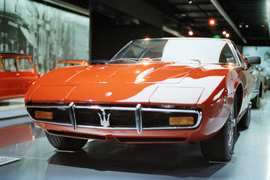
The XJ220 is a masterclass in motorsport adaptation. Originally destined for a V12, it ultimately found its legendary status using a 3.5-liter twin-turbo V6 from the XJR-11 Group C car. This engine allowed the XJ220 to hold the title of the fastest production car in the world for several years, showcasing the sheer potential of turbocharged engine tech when paired with professional racing architecture.
Plymouth Belvedere: The Hemi Ascendancy
The 1964 Belvedere is a testament to the influence of NASCAR on civilian roads. The 426 Hemi “Race Hemi” was built to dominate ovals, but it became the heartbeat of a generation of Mopar muscle. It is a quintessential example of high-performance automotive engineering migrating from the speedway to the street, forever changing the perception of the American sedan.
Porsche 918 Spyder: Hybrid Dominance
The 918 Spyder serves as the bridge between internal combustion history and the future. By basing its 4.6-liter V8 on the RS Spyder LMP2 prototype, Porsche created a hybrid that balanced extreme efficiency with 887 hp of combined output. It remains a masterclass in automotive electrification trends, proving that motorsports-inspired hybrid systems are the key to the next generation of hypercars.
Porsche Carrera GT: The Analog Apex
The Carrera GT is frequently cited by experts as the greatest supercar of the early 2000s. Its 5.7-liter V10 was a salvaged Formula 1 project that Porsche transformed into a road-legal masterpiece. The raw, unfiltered nature of this engine, combined with its carbon-fiber monocoque, represents the pinnacle of high-performance automotive manufacturing.
The Future of Race-Bred Engineering
As we look toward the horizon of 2025 and beyond, the integration of track-proven technology into road cars is only accelerating. From advanced aerodynamics software to regenerative braking systems, the cars we drive are becoming increasingly sophisticated. Whether it is through the refinement of internal combustion or the evolution of battery density in racing prototypes, the DNA of the track will always define the best cars on the road.
Investing in a vehicle with motorsport roots is more than just a purchase; it is an acquisition of history, engineering, and performance. If you are ready to elevate your driving experience and feel the pulse of a machine built for more than just the commute, now is the time to explore the current inventory of performance-oriented marques.
Are you ready to pilot a machine forged in the heat of competition? Contact your local performance dealership today to schedule a track-day consultation or to book a test drive in the latest generation of motorsport-inspired sports cars.