
Engineering the Asphalt: 10 Production Cars with Genuine Motorsport DNA
For the enthusiast who truly understands the visceral connection between machine and driver, there is a singular, intoxicating allure to owning a vehicle imbued with legitimate motorsport DNA. We aren’t merely discussing race-inspired aesthetic packages or aftermarket suspension tweaks; we are talking about engineering masterpieces that house power plants forged in the crucible of professional competition. These engines, born from the demands of the track, bring high-revving, adrenaline-inducing performance to public roads, offering a tangible link to the legendary circuits of the world.
As an industry expert with a decade spent analyzing automotive performance and powertrain development, I have seen how the transfer of racing technology defines the pinnacle of automotive engineering. In this analysis, we will explore 10 production vehicles that blur the lines between race-bred performance and daily-drivable supercars. But first, we must examine why manufacturers pour millions into the volatile world of motorsport and how that investment fundamentally changes the race-bred engine landscape for the average enthusiast.
The Symbiotic Relationship: Motorsport and Road Engineering
The bond between professional racing and consumer-facing automotive design has never been stronger. High-level competition is the ultimate testing ground; it subjects every component—from the connecting rods to the thermal management systems—to conditions that would cause standard parts to fail. Innovations such as advanced aerodynamics, carbon-fiber chassis reinforcement, and sophisticated paddle-shift transmissions all originated as racing-specific solutions.
Beyond the engineering, there is the undeniable marketing weight of the “Win on Sunday, Sell on Monday” philosophy. When a high-performance vehicle dominates global series like Formula 1 or the 24 Hours of Le Mans, the trickle-down effect elevates the brand’s entire catalog. Even if a driver never sets foot on a track, the presence of a competition-derived motor under the hood provides a sensory, emotional connection to a storied racing pedigree.
Alfa Romeo Montreal: A Prototype Reborn
The Alfa Romeo Montreal houses a 2.6-liter V8 engine derived from the brand’s Tipo 33 sports prototype—a machine that battled for supremacy in the Targa Florio and the 24 Hours of Daytona. While the production variant was tempered for road manners, it retained the soul of a racer, revving to 7,000 RPM and delivering 200 horsepower. It remains a masterclass in how manufacturers successfully ported endurance-racing technology into a stylish, accessible package.

BMW M1, M5, and M6: The M88 Legacy
BMW’s commitment to motorsport is written into its DNA. The legendary M1 utilized the 3.5-liter M88 inline-six, an engine explicitly developed for the ultra-competitive BMW M1 ProCar series. This same powerplant would eventually define the E28 M5 and E24 M6, proving that high-revving racing engines could be domesticated without losing their edge. Furthermore, the iconic E30 M3’s S14 engine pulled from the engineering brilliance of the M12 turbo F1 program, sharing critical internal architecture with the cars that dominated DTM touring car racing.
Chevrolet Camaro ZL1: The Can-Am Titan
In 1969, Chevrolet introduced the ZL1, featuring a 427 cubic-inch V8 originally designed for the high-stakes world of Can-Am racing. By utilizing an all-aluminum construction, the engine was remarkably lightweight for its displacement, generating a conservative 430 horsepower for the street. This car was a literal drag-strip insurgent, with an engine that powered various SCCA Trans-Am champions. Today, with only 69 units produced, it is one of the most coveted pieces of American automotive history.
Ferrari Dino 206 GT: The Formula 2 Connection
The Ferrari Dino 206 GT utilized a 2.0-liter V6 engine developed specifically for Formula 2 competition in the 1960s. Despite the lower displacement, the engine’s architecture prioritized high-RPM power, lending the Dino a nimble, race-like demeanor on winding mountain passes. It signaled a new era for Maranello, establishing a mid-engine blueprint that would influence every V6 supercar that followed.
Ferrari F50: The Unfiltered F1 Experience
To commemorate their 50th anniversary, Ferrari created a machine that remains arguably the closest a road car has ever come to a Grand Prix vehicle. The F50’s 4.7-liter V12 was a direct descendant of the Tipo 641, the car steered by Alain Prost in the 1990 Formula 1 season. With an 8,500 RPM redline and a rigid, carbon-fiber tub, this vehicle delivered an unfiltered, raw connection to the asphalt that is rarely matched by modern, assistance-heavy supercars.
Ford GT: Le Mans Provenance
The Ford GT stands as a testament to American endurance racing. The 2005 iteration utilized a 5.4-liter supercharged V8 linked to Ford’s Daytona Prototype program, while the 2017 model pushed boundaries with a 3.5-liter twin-turbo EcoBoost V6. This modern marvel was engineered alongside the Ford GT race car that secured a class win at Le Mans, proving that turbocharging could match the performance metrics of any naturally aspirated counterpart in professional endurance racing.
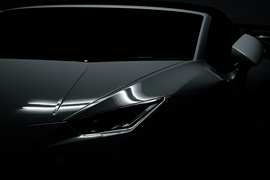
Jaguar XJ220: The Group C Survivor
Originally conceived with a massive V12, the Jaguar XJ220 eventually debuted with a 3.5-liter twin-turbocharged V6 scavenged from the XJR-11 Group C racer. This competition-spec engine allowed the XJ220 to clock 217 mph, briefly holding the title of the fastest production car on Earth. It is a prime example of a premium performance car utilizing top-tier racing tech to rewrite the record books.
Plymouth Belvedere: The NASCAR Legend
Under the hood of the 1964 Plymouth Belvedere lived the 426 Hemi, an engine developed specifically to conquer the high-banked ovals of NASCAR. Known as the “Race Hemi,” this unit brought 425 horsepower to the public, transforming a standard-looking cruiser into a high-octane muscle icon. It set the stage for a decade of Mopar dominance, proving that race-grade displacement could dominate the highway just as well as the speedway.
Porsche 918 Spyder: Hybrid Racing Evolution
The Porsche 918 Spyder stands as the apex of hybrid performance, featuring a 4.6-liter V8 engine based on the RS Spyder LMP2 prototype. By integrating this racing-derived combustion engine with cutting-edge electric motors, Porsche achieved 887 total system horsepower. This combination offers the immediate torque required for a 0–60 mph dash in roughly 2.2 seconds, ensuring the car sounds and behaves like a Le Mans champion.
Porsche Carrera GT: The V10 Analog Masterpiece
The Carrera GT remains the gold standard for analog supercars. Its 5.7-liter V10 was originally designed for a secret Formula 1 project before being redirected for a Le Mans prototype that never reached the grid. Porsche eventually installed the engine into the Carrera GT, producing 612 horsepower and an 8,000 RPM symphony that remains unrivaled in the modern era. It represents the pinnacle of advanced automotive engineering—a car that demands skill, focus, and respect from its driver.
Driving Toward the Future
Owning a vehicle with legitimate motorsport roots isn’t just about the spec sheet; it’s about experiencing the culmination of thousands of hours of track-side iteration. As we look toward an increasingly electrified future, these combustion-engine legends serve as a benchmark for performance and driver engagement.

Whether you are looking to invest in a piece of racing history or searching for a modern supercar that delivers that specific track-bred thrill, the time to explore your options is now. Reach out to a certified performance consultant or visit our showroom to discuss how you can get behind the wheel of a true engineering marvel today.