
The Definitive Guide to the World’s Fastest Road Cars in 2026
In the rarefied air of hypercar development, the pursuit of top speed is less about utility and more about human endeavor. As an industry veteran who has spent the last decade tracking the evolution of automotive engineering, I have witnessed the transition from raw mechanical brute force to the sophisticated, electrified symphony of power we see in 2026. While the average commuter car cruises comfortably at highway speeds, these “fastest road cars” represent the pinnacle of aerodynamic mastery and thermal management.
For manufacturers, these vehicles are the ultimate marketing tool—proof of dominance in an era where software-defined vehicles and battery density define the new performance benchmark. Below is an expert breakdown of the top 20 fastest road cars currently pushing the boundaries of physics.
The Evolution of the 300mph Barrier
The race to conquer 300mph has evolved significantly since the 1990s, when the McLaren F1 defined the genre. Today, we are seeing high-performance hypercars transition toward electrified powertrains, allowing boutique manufacturers to challenge legacy titans. Whether through internal combustion, hybrid assistance, or pure battery-electric force, reaching these speeds requires a perfect marriage of low drag coefficients and immense power output.
The Top 20 Fastest Road Cars of 2026
Yangwang U9 Xtreme (308mph) – Leading the pack, this electric marvel utilizes a 1,200V architecture and four motors to produce nearly 3,000bhp, proving that EVs are now the undisputed kings of velocity.
Koenigsegg Jesko Absolut (310mph target) – A testament to Swedish engineering, this low-drag variant is meticulously designed to slice through the air with a record-breaking drag coefficient.
Bugatti Chiron Super Sport 300+ (304.8mph) – A titan of the industry, the “Longtail” design remains a masterclass in high-speed stability and quad-turbocharged power.
SSC Tuatara (282.9mph) – Following rigorous validation, this American-made beast combines a flat-plane-crank V8 with a lightweight carbon fiber monocoque.
Bugatti Mistral (282.05mph) – Currently holding the title for the fastest convertible ever produced, a feat achieved by the legendary Andy Wallace.
Koenigsegg Agera RS (277.87mph) – A former record holder that cemented Koenigsegg’s status as a top-tier hypercar manufacturer on public roads.
Bugatti Tourbillon (277mph est.) – With a groundbreaking V16 hybrid engine, the successor to the Chiron is poised to redefine expectations.
Hennessey Venom F5 (271.6mph) – Engineered for maximum straight-line performance, this Texas-built machine is a pure expression of high-octane engineering.
Bugatti Veyron Super Sport (268mph) – The car that changed the world, still commanding respect for its pioneering work in thermal management.
Rimac Nevera / Nevera R (258mph / 268mph) – The definitive electric hypercar, boasting blistering acceleration times that make traditional gas-powered cars feel obsolete.
SSC Ultimate Aero (256.18mph) – A raw, analog pioneer that once stripped Bugatti of its crown.
Koenigsegg Regera (255mph) – Featuring an innovative direct-drive transmission that eliminates traditional gearbox losses.
Czinger 21C V Max (253mph+) – A testament to 3D-printing and AI-driven chassis design.
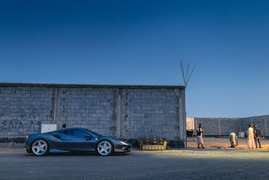
McLaren Speedtail (250mph) – The spiritual successor to the F1, focusing on extreme aerodynamics and grand touring comfort.
Ultima RS (250mph) – The “everyman’s” hypercar, proving that power-to-weight ratios are just as critical as massive displacement.
Aspark Owl (249mph) – A Japanese marvel focused on sub-2-second 0-60mph acceleration through extreme battery-electric discharge.
Koenigsegg Gemera & CCXR (248mph) – A dual entry representing the versatility of the Swedish brand’s powertrain development.
Saleen S7 Twin Turbo (248mph) – An all-American legend that brought twin-turbocharged power to the forefront of the performance world.
W Motors Fenyr Supersport (245mph) – A Dubai-based masterpiece of design and exclusivity.
McLaren F1 (240.1mph) – The gold standard of naturally-aspirated performance, remaining relevant nearly three decades after its debut.
The Role of High-Performance Hypercars in 2026
As an expert in the field, I look for more than just a top speed number. The shift toward high-performance hypercars reflects broader trends in automotive technology: battery chemistry, active aerodynamics, and extreme thermal cooling.
The investment in these machines often trickles down into consumer vehicles. For instance, the fastest road cars rely on advanced tire compounds and brake cooling systems that eventually become standard in luxury sports sedans. Furthermore, the high-performance hypercar segment is seeing a surge in demand from collectors, making these vehicles not just engineering triumphs, but stable financial assets in a volatile market.
Engineering Mastery: Beyond the Top Speed
Reaching 300mph isn’t just about horsepower; it’s about managing the massive amount of heat generated by forced induction and high-speed friction. For those exploring the market, understanding the maintenance requirements of high-performance hypercars is critical. These vehicles are precision instruments that require white-glove service, often involving specialized technicians flown in by the manufacturer.
The Future of Automotive Engineering
The competition for the title of “fastest car in the world” will likely continue to shift toward electrification. The high-performance hypercar market is currently experiencing a “power war” where brands like Rimac and Yangwang are using software-defined torque vectoring to achieve levels of control that were physically impossible ten years ago.
If you are an enthusiast or a potential collector looking to understand more about how these engineering marvels are built, or if you are considering the acquisition of a future classic, the time is now. These vehicles represent the peak of what is possible before global regulations change the landscape of the internal combustion engine forever.

Ready to explore the world of ultra-high-performance driving or discuss which of these engineering marvels belongs in your collection? Contact our specialist team today to schedule an expert consultation.