
Engineering Legends: The 10 Greatest Road Cars Built with Motorsport DNA
There is an unmistakable, raw electricity that courses through a driver when they pilot a vehicle forged in the crucible of motorsport. For those of us who have spent over a decade dissecting automotive engineering, it is clear that a car is more than just a chassis and a cabin; it is a manifestation of physics pushed to the absolute limit. We aren’t talking about mere aesthetic badges or aggressive body kits. We are discussing production vehicles that harbor hearts originally designed to dominate on the track—engines born from the ruthless pursuit of lap times.
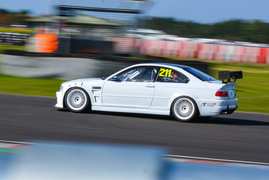
When an automaker invests millions into a race program, they are essentially running an accelerated laboratory. The goal is simple: maximize power-to-weight ratios and endurance under extreme thermal loads. When that technology transitions from the circuit to the showroom, it creates a unique class of machinery. These cars serve as a bridge between professional racing and everyday accessibility, offering a visceral connection to the legends that inspired them.
Why Motorsport DNA Matters for Your Drive
Innovation has always been a trickle-down phenomenon. Technologies like carbon-fiber monocoques, active aerodynamics, and high-performance automotive engineering solutions often debut under the glare of grandstand lights before reaching the consumer market. Beyond the technical specs, there is a “Win on Sunday, Sell on Monday” marketing ethos that remains highly effective.
For the enthusiast, owning a car with motorsport-derived engines is a gateway to the elite world of racing. It’s the difference between a mass-produced engine and a high-revving masterpiece that has been pressure-tested in the most grueling environments on the planet. Let’s examine 10 production vehicles that successfully blurred the lines between the paddock and the public road.
Alfa Romeo Montreal: The Tipo 33 Legacy
The Alfa Romeo Montreal is a masterclass in Italian design, but its soul lies in its 2.6-liter V8. This engine was derived directly from the Tipo 33, a legendary endurance racer. While it was tuned down for public roads, the motor retains that signature high-revving character, climbing toward a 7,000 RPM redline with 200 horsepower. It captures the essence of 1970s sports prototypes in a package you could technically take to the grocery store.
The BMW M Series: M88 and S14 Prowess
BMW’s M division is essentially a racing team that happens to sell cars. The M88 inline-six, which powered the iconic M1, the E28 M5, and the E24 M6, was a direct descendant of BMW’s racing programs. Similarly, the E30 M3’s S14 engine utilized architecture rooted in the M12 F1 engine—a power plant that achieved legendary status in European touring car championships. These cars defined the standard for high-performance luxury vehicles by bringing genuine race-bred agility to the streets.
Chevrolet Camaro ZL1 (1969): The Can-Am Terror
In the late 60s, Chevrolet unleashed the ZL1, packing a 427-cubic-inch V8 meant for the brutal Can-Am series. Featuring an all-aluminum block to save weight, this beast produced 430 horsepower in road trim—an astronomical figure for the era. It remains one of the most sought-after collector car investments due to its rarity and its pedigree as a street-legal drag strip king.
Ferrari Dino 206 GT: The Formula 2 Connection
Often overlooked, the Dino 206 GT was a pivotal moment for Ferrari. Its 2.0-liter V6 was developed for 1960s Formula 2 racing. By placing this high-strung, mid-mounted engine into a lightweight chassis, Ferrari created a car that felt like a junior-leagues prototype. It wasn’t about raw power numbers; it was about precision, balance, and the mechanical symphony of a racing engine just inches behind your ears.
Ferrari F50: F1 Performance for the Road
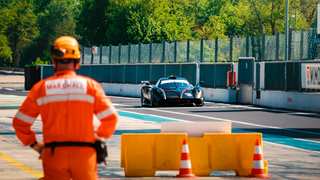
If you want to talk about true F1 heritage, the Ferrari F50 is the gold standard. Its 4.7-liter V12 was plucked from the 1990 Ferrari 641 F1 car. With an 8,500 RPM redline and 513 horsepower, it provides an unfiltered, violent acceleration curve that mimics the sensory overload of a 1990s Grand Prix race. For many, this is the ultimate manifestation of high-performance sports car engineering.
Ford GT: Le Mans Pedigree
The Ford GT story is a tribute to endurance. The 2005 model utilized a 5.4-liter supercharged V8 rooted in the Daytona Prototype program, while the 2017 model pushed boundaries with a 3.5-liter twin-turbo EcoBoost V6—the exact configuration used to conquer Le Mans. These cars prove that modern advanced engine technology can bridge the gap between efficiency and sheer track-dominating speed.
Jaguar XJ220: Group C Dominance
The XJ220 remains a polarizing icon, mostly because its engine was swapped from a massive V12 to the twin-turbo V6 from the Jaguar XJR-11 Group C racer. While purists were skeptical at the time, that 3.5-liter engine propelled the XJ220 to 217 mph, cementing its place as the fastest production car of its day. It is a textbook example of how race-tuned performance parts can transform a road car into a world-record holder.
Plymouth Belvedere: The NASCAR Hemi
The 1964 Belvedere is a reminder that American muscle was, at its core, a form of racing. The 426 “Race Hemi” was built specifically to destroy the competition on NASCAR ovals. By dropping this engine into a production Belvedere, Plymouth gave consumers the ability to drive the same hardware that dominated the most popular motorsport in the U.S.
Porsche 918 Spyder: The LMP2 Hybrid
The Porsche 918 Spyder is the future of hybrid supercar technology. Its 4.6-liter V8 is derived from the RS Spyder, an LMP2 prototype that ruled the 24 Hours of Le Mans. Combined with cutting-edge electric motors, the 918 generates 887 horsepower. It’s not just fast; it’s an engineering marvel that uses high-efficiency fuel systems and instant electric torque to redefine what “race-derived” means in the modern era.
Porsche Carrera GT: The F1 Engine That Wasn’t
Porsche’s Carrera GT is perhaps the most analog, soul-stirring supercar ever produced. The 5.7-liter V10 was originally meant for F1, but when the project shifted, it was re-engineered for a Le Mans prototype that never raced. Porsche kept the engine, and the result is a 603-horsepower, 8,000 RPM masterpiece that requires absolute focus from the driver. It represents the pinnacle of naturally aspirated engine design.
Driving the Legacy
These vehicles are more than just items for a collection; they are the result of decades of intense competition and technical evolution. Whether you are looking for a weekend thrill or a strategic addition to your garage, choosing a vehicle with genuine motorsport DNA guarantees an experience that standard production cars simply cannot replicate.

If you are ready to elevate your driving experience and feel the pulse of true engineering excellence, it’s time to get behind the wheel of a machine that belongs on the track. Contact our team today to discuss our current inventory of performance-focused vehicles and find the race-bred engine that matches your passion for the road.