
Engineering the Impossible: 10 Legendary Road Cars Born from Motorsport DNA
There is an electrifying, visceral experience that occurs when you ignite an engine forged in the crucible of competitive racing. It’s more than just horsepower; it is the culmination of thousands of hours of track data, heat-cycled metal, and the relentless pursuit of speed. As an automotive engineer with a decade of experience in high-performance powertrain development, I have seen firsthand how motorsport DNA dictates the boundary between a standard vehicle and a true mechanical masterpiece.
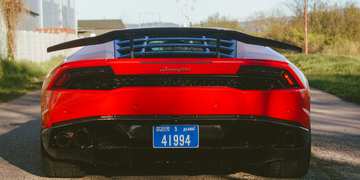
When an automaker takes a power plant originally designed for the punishing, high-revving demands of the track and drops it into a production chassis, the result is nothing short of a symphony. These vehicles are the bridge between the sterile environment of a laboratory and the unfiltered thrill of the open road. But why do manufacturers invest millions of dollars to cross-pollinate their racing programs with consumer production lines? The answer lies in the engineering trickle-down effect.
The Physics of Racing: Why Track Tech Matters
The mantra “Win on Sunday, sell on Monday” has evolved into a sophisticated engineering strategy. Motorsports function as the world’s most demanding R&D department. When a manufacturer pushes an engine to its thermal and mechanical limits at the 24 Hours of Le Mans, they learn how to optimize airflow, cooling, and structural rigidity in ways that standard road testing simply cannot replicate.
From the introduction of high-efficiency carbon-ceramic brakes to the refinement of direct-injection systems, racing pushes boundaries. For the enthusiast, owning a car with these components means benefiting from a decade of accelerated innovation. Beyond the specs, there is the undeniable prestige. Driving a road car with motorsport DNA connects you to a lineage of champions, offering a sensory experience that defines the modern supercar and sports car market.
The Alfa Romeo Montreal: A Prototype for the Street
Few cars capture the soul of Italian racing like the Montreal. At its heart sits a 2.6-liter V8 derived from the Tipo 33 endurance prototype. While the race version was built to conquer the Targa Florio, the road-going Montreal retained that high-revving, intoxicating character. With a 7,000 RPM redline, it brings a genuine competitive edge to a grand tourer aesthetic.
BMW’s M Division: The Touring Car Legacy
BMW has arguably mastered the transition from the grid to the garage better than any other. The M88 inline-six, which powered the legendary M1, was the direct ancestor for the engines in the E28 M5 and E24 M6. Furthermore, the S14 engine in the iconic E30 M3 wasn’t just “inspired” by racing—it was an evolution of the M12 engine that saw massive success in F1. This is the gold standard for motorsport DNA integration.
Chevrolet Camaro ZL1: The Can-Am Brawler
In the late 60s, the battle for dominance was fought on the track, and the 1969 Camaro ZL1 was the street-legal beneficiary of Can-Am competition. Its 7.0-liter, all-aluminum 427 V8 was designed to survive sustained, high-load racing. Though detuned for the street, it remained a drag-strip monster, proving that raw American displacement could indeed benefit from professional racing pedigree.
The Ferrari Dino 206 GT: Formula 2 Roots
The Dino 206 GT is often cited as one of the most balanced mid-engine sports cars ever made. Its 2.0-liter V6 was pulled directly from the Ferrari Formula 2 racing program. By keeping the engine’s high-revving architecture and light weight, Ferrari gifted the public a car that truly felt like an F2 machine stripped of its race-day aero and fitted with a comfortable interior.
Ferrari F50: F1 on a License Plate
If you want the most literal interpretation of motorsport DNA, look at the Ferrari F50. Its 4.7-liter V12 was fundamentally a modified version of the Tipo 641 F1 engine piloted by Alain Prost. By mounting the engine as a stressed member of the chassis, Ferrari brought the raw, unrefined vibration and sound of a 1990s Grand Prix car to the public. It remains a benchmark for analog, track-bred exhilaration.

Ford GT: From Le Mans Glory to the Showroom
The Ford GT story is a masterclass in modern heritage. The 2005 version used a supercharged V8 rooted in Ford’s Daytona Prototype racing engine. Fast-forward to the 2017 generation, and we saw a twin-turbo 3.5-liter V6 EcoBoost that mirrored the propulsion systems used in Ford’s GTLM endurance racing program. It serves as a reminder that efficiency and power, when honed for racing, yield incredible performance for the street.
Jaguar XJ220: The Group C Survivor
The XJ220 remains a fascinating historical anomaly. Originally intended to feature a V12, the final production run utilized a 3.5-liter twin-turbo V6 lifted directly from the XJR-11 Group C racer. This powertrain propelled the XJ220 to 217 mph, cementing its status as one of the fastest production cars ever, essentially handing consumers the keys to a Le Mans contender.
Plymouth Belvedere: The NASCAR Legend
We often forget that NASCAR’s “Win on Sunday” era birthed absolute monsters for the road. The 426 Hemi V8 in the 1964 Belvedere was a competition engine through and through. By bringing this high-compression, high-output architecture to the showroom, Plymouth allowed the average consumer to experience the same brute force that terrorized oval tracks across the country.
Porsche 918 Spyder: Hybrid Hypercar Perfection
Porsche’s RS Spyder LMP2 prototype was a giant killer in endurance racing, and its high-revving V8 was the soul of the 918 Spyder. When combined with an advanced hybrid drive system, it created a 0-60 time that defied physics. The 918 proves that motorsport DNA is not just about the internal combustion engine; it is about the integration of complex systems to achieve total lap-time dominance.
Porsche Carrera GT: The V10 Masterpiece
Porsche’s Carrera GT is widely considered the last “analog” supercar. The engine was originally designed for a 1990s Formula 1 program, then repurposed for a Le Mans prototype. When the racing plans were canceled, Porsche dropped the 5.7-liter V10 into the Carrera GT. The result is an 8,000 RPM scream that defines the pinnacle of automotive engineering.
The Future of Performance
As we move toward electrification, the definition of motorsport DNA is shifting. We are seeing a high-CPC demand for advanced battery management systems and regenerative braking tech developed in Formula E. Regardless of the propulsion method, the core philosophy remains: high-performance engineering is best when it is forged under the pressure of the finish line.
If you are currently researching your next investment or simply looking to understand the mechanics behind your favorite supercars, don’t settle for marketing fluff. Look for the racing lineage, study the block architecture, and appreciate the heritage.
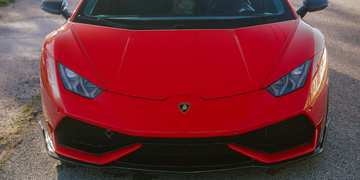
Ready to find your own piece of racing history? Contact our performance vehicle specialists today to explore our curated inventory of track-bred machinery and schedule a consultation for your next high-performance acquisition.