
Engineering Excellence: 10 Legendary Production Cars with True Motorsport DNA
There is an undeniable, visceral thrill that comes from piloting a vehicle engineered for the track. As an automotive professional with a decade of experience in the performance sector, I have learned that “motorsport DNA” is often a marketing term thrown around to sell base-model sedans with slightly stiffer springs. However, true race-bred engineering is something far more profound. It involves power plants forged in the furnace of high-stakes competition, where every gram of weight and every millisecond of throttle response matters.
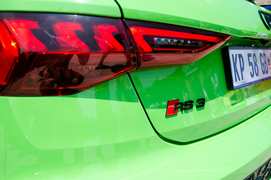
When you drive a car with a track-derived heart, you aren’t just commuting; you are inheriting the fruits of thousands of hours of R&D on the world’s most punishing circuits. These motorsport-inspired vehicles bridge the gap between static showroom models and the machines that dominate Le Mans or Formula 1. For enthusiasts, this is the holy grail of automotive ownership—a high-performance production car that delivers a raw, unfiltered connection to the legacy of global racing.
The Symbiotic Relationship Between Track and Street
Why do manufacturers invest millions into racing programs only to trickle that technology down to the consumer? The answer lies in the “Win on Sunday, Sell on Monday” ethos. Racing is the ultimate laboratory. When an engineer faces the extreme thermal loads of a 24-hour endurance race or the precision requirements of a grand prix, they innovate at an accelerated pace.
Advancements like carbon-ceramic brakes, sophisticated active aerodynamics, and complex engine management systems were once exclusive to the paddock. Today, they define the elite tier of the automotive market. From an investment standpoint, these factory-tuned performance cars also act as halos for their respective brands, elevating the prestige of the entire lineup. When a consumer buys a performance-oriented model, they are buying into a heritage of victory.
Below are 10 exceptional production machines that carry the literal soul of the racetrack beneath their hoods.
Alfa Romeo Montreal (Tipo 33 Heritage)
The Montreal is an underrated masterpiece. Its 2.6-liter V8 engine is a direct descendant of the Tipo 33 sports prototype, a car that carved its name into the history books at the Targa Florio and Daytona. While detuned for public road use, the Montreal engine still sings to a 7,000 RPM redline, offering a mechanical intensity that remains intoxicating even by modern standards.
The BMW M Legacy (M1, M3 E30, M5 E28)
BMW’s M division is perhaps the most successful practitioner of moving racing tech to the street. The M88 inline-six, which powered the iconic M1, the E28 M5, and the E24 M6, was a masterclass in naturally aspirated engineering born from the M1 ProCar series. Similarly, the legendary S14 engine in the E30 M3 utilized architecture from the M12 Formula 1 engine, solidifying its status as a touring car titan that still demands high automotive investment prices at auction today.
Chevrolet Camaro ZL1 (1969 Can-Am Roots)
The 1969 Camaro ZL1 is a testament to American muscle built for the circuit. Its 427 cubic-inch all-aluminum V8 was engineered specifically for Can-Am racing. By utilizing exotic materials to keep weight down, Chevrolet created a drag-strip monster that felt like a sprint car on the highway. With only 69 produced, it remains one of the most sought-after collector car assets in existence.
Ferrari Dino 206 GT
While it lacks the “Ferrari” badge on the nose, the Dino 206 GT is pure Maranello royalty. Its 2.0-liter V6 was developed for 1960s Formula 2 racing. It introduced the mid-engine layout to Ferrari’s street lineup, favoring balance and high-revving agility over sheer displacement. It is arguably the most influential chassis in the history of the mid-engine sports car.
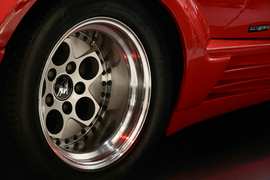
Ferrari F50 (The F1 Prototype for the Road)
If you want to talk about raw performance, the F50 is the gold standard. Its 4.7-liter V12 was essentially a stressed member of the chassis, lifted directly from the 1990 Tipo 641 F1 car. Every gear shift in an F50 feels like an assault on the senses, providing an experience that no computer-controlled modern hypercar can replicate. It is the closest a civilian will ever get to driving a vintage grand prix car.
Ford GT (2005 & 2017)
The Ford GT exists solely because of Le Mans. The 2005 model utilized a supercharged 5.4-liter V8 linked to Ford’s Daytona Prototype program, while the 2017 iteration utilized a twin-turbo 3.5-liter EcoBoost V6 derived from endurance racing dominance. These cars are not just homage pieces; they are rolling test beds for the technologies that keep Ford at the front of the pack globally.
Jaguar XJ220
For a brief window in the early 90s, the XJ220 was the fastest car on the planet. Its heart was a 3.5-liter twin-turbo V6 lifted from the Group C Jaguar XJR-11 race car. Despite the controversy regarding its lack of a V12, the performance—217 mph—proved that the racing-derived V6 was a superior choice for the chassis, delivering a power-to-weight ratio that set a new benchmark for supercar performance metrics.
Plymouth Belvedere (The 426 Race Hemi)
In the world of NASCAR history, the 426 “Race Hemi” is a deity. When Plymouth shoved this engine into the Belvedere, they created a street-legal terror. It wasn’t just a muscle car; it was a homologated race machine that dominated ovals across the US. Owning a Hemi Belvedere today is owning a piece of the golden era of stock car racing.
Porsche 918 Spyder
The 918 Spyder showcases the future of racing tech. Its V8 engine is a direct evolution of the RS Spyder LMP2 prototype. By integrating electric motors with this racing V8, Porsche created a hybrid system that produces 887 horsepower. This is the definition of high-performance engineering in the modern age, proving that electrification and motorsport tradition can coexist to create record-shattering speed.
Porsche Carrera GT
Perhaps the greatest analog supercar ever produced, the Carrera GT’s V10 began its life as a secret Formula 1 project. When that program was scrapped, the engine was destined for Le Mans but eventually found its home in this mid-engine icon. With 603 hp and an 8,000 RPM redline, it is a demanding, rewarding, and legendary machine that represents the pinnacle of the naturally aspirated era.
The Future of Motorsport-Derived Driving
As we look toward the 2025 automotive landscape, the integration of track-tested technology remains the driving force behind brand loyalty and technical innovation. These vehicles are more than just lists of specifications; they are an automotive experience that connects the driver to the heritage of the track.
Whether you are looking to invest in a classic homologation special or seeking the latest high-performance technology, the marriage of racing pedigree and road-going functionality is what makes the industry so exciting. If you are ready to upgrade your garage with a vehicle that carries true track DNA, I invite you to reach out to our team of specialists to discuss your next acquisition and find a machine that matches your passion for performance.