
Engineering Excellence: 10 Legendary Production Cars with True Motorsport DNA
There is an undeniable, visceral thrill that comes from piloting a vehicle born from the crucible of motorsport. We aren’t merely discussing race-inspired aesthetic packages or dealership-installed performance trinkets; we are talking about motorsport DNA—engines conceived in the high-pressure environment of the track, where every millisecond and every horsepower counts. These power plants offer more than just specs on a sheet; they provide a direct, mechanical link to the legendary machines that dominated endurance races and grand prix circuits.
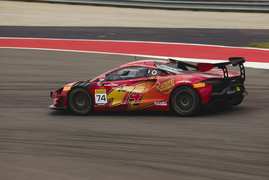
As an automotive expert with a decade in the industry, I have seen how the “win on Sunday, sell on Monday” philosophy continues to shape modern engineering. Integrating high-performance track-derived engines into street-legal vehicles is a monumental technical undertaking, often costing millions in R&D. But why do manufacturers push these limits? Because racing is the ultimate laboratory. It is where advanced aerodynamics, specialized metallurgy, and thermal management systems are stress-tested to destruction. When a manufacturer successfully adapts a racing powertrain for the street, they aren’t just selling a car; they are selling a tangible piece of racing history.
Below, we analyze ten iconic vehicles that blurred the lines between the paddock and the public road, showcasing the pinnacle of high-performance automotive engineering.
The Evolution of Race-Bred Performance
Motorsport has always been the primary catalyst for automotive innovation. Historically, technologies like ceramic disc brakes, paddle-shift gearboxes, and lightweight carbon fiber components were exclusive to the track. Today, they are standard expectations in the premium vehicle market. Beyond pure utility, there is a prestige factor: when a brand dominates, consumer demand follows. Owning a car that shares the same mechanical lineage as a Le Mans winner gives the driver a unique sense of belonging to that legacy.
Alfa Romeo Montreal: The Tipo 33 Legacy
The Montreal remains one of the most aesthetically and mechanically intriguing vehicles of its era. At its heart lies a 2.6-liter V8 derived from the Tipo 33 sports prototype—a machine that terrorized the Targa Florio and the 24 Hours of Daytona. Even in its detuned road-going state, the engine screams to a 7,000 RPM redline, outputting 200 horsepower. It captures the essence of 1970s Italian engineering with a raw, unadulterated racing spirit.
BMW M-Series: M88 and S14 Excellence
BMW’s Motorsport (M) division is the gold standard for bridging the gap between track and road. The legendary M88 straight-six, utilized in the M1 ProCar series, later found a home in the E28 M5 and E24 M6, defining the “executive express” segment. Similarly, the E30 M3’s S14 engine was a masterclass in development, drawing heavily from the M12 F1 engine program. These models solidified the brand’s reputation in DTM touring car racing, proving that a performance luxury vehicle could handle the rigors of competitive track duty.
1969 Chevrolet Camaro ZL1: The Can-Am Monster
In the world of American muscle, the 1969 ZL1 stands as a monolith of power. Designed around a 427-cubic-inch all-aluminum V8 intended for Can-Am racing, it was a lightweight, high-output marvel. While officially rated at 430 horsepower to appease insurance adjusters, these engines were easily capable of much more. It remains a holy grail for collectors—a factory-built drag strip warrior with genuine race-proven mechanicals.
Ferrari Dino 206 GT: The Formula 2 Pioneer
The Dino 206 GT changed Ferrari’s trajectory. Its 2.0-liter V6 was a direct descendant of Ferrari’s Formula 2 engine, offering a high-revving, agile driving experience that was revolutionary for its time. Weighing just over 2,000 pounds, the Dino proved that chassis balance and engine response were more important than raw displacement, setting the stage for every mid-engine supercar that followed.
Ferrari F50: F1 on Public Roads
If you want to experience the sensation of a Formula 1 car without being a professional driver, the Ferrari F50 is the answer. Built for Ferrari’s 50th anniversary, the 4.7-liter V12 was pulled directly from the 1990 Tipo 641 F1 car. With an 8,500 RPM redline and a chassis that uses the engine as a stressed member, the F50 is the closest a civilian will ever get to the raw intensity of 90s-era grand prix racing.
Ford GT: Le Mans Pedigree
The Ford GT serves as an homage to the legendary GT40. The 2005 version utilized a supercharged 5.4-liter V8 with roots in Ford’s Daytona Prototype racing engine. The 2017 iteration moved to a 3.5-liter twin-turbo EcoBoost V6, mirroring the powerplant of the Ford GT race cars that returned to Le Mans to claim victory. These cars represent the pinnacle of modern endurance racing technology translated for the enthusiast driver.
Jaguar XJ220: Group C Power
The XJ220’s history is a fascinating tale of engineering pivots. Originally envisioned with a V12, it eventually utilized a 3.5-liter twin-turbo V6 lifted from the Jaguar XJR-11 Group C racer. This engine helped the XJ220 reach 217 mph, a world record at the time. It is a prime example of how competition-derived engines can redefine the performance capabilities of a production supercar.
Plymouth Belvedere: The NASCAR Hemi
The 1964 Belvedere is proof that race engines weren’t just for sports cars. Under the hood sat the 426 Hemi, the “elephant engine” developed exclusively to dominate NASCAR. It was so potent that it effectively forced a change in racing regulations. Putting a race-spec engine into a family-sized sedan created a muscle car icon that still commands massive attention at auctions today.
Porsche 918 Spyder: The Hybrid Revolution
Porsche utilized its LMP2 RS Spyder engine—a naturally aspirated 4.6-liter V8—as the foundation for the 918 Spyder. By integrating high-torque electric motors, Porsche achieved 887 total horsepower and a 0-60 sprint of 2.2 seconds. It is a masterclass in how hybrid performance technology can elevate a race-bred engine to unprecedented levels of efficiency and speed.
Porsche Carrera GT: The F1 V10
The Carrera GT remains the benchmark for analog supercars. The 5.7-liter V10 was originally developed for a secretive F1 program and subsequently a Le Mans project that never saw the track. Porsche’s decision to drop this screaming V10 into a production chassis resulted in one of the most exhilarating and unforgiving driving experiences in history. Its motorsport DNA is woven into every gear shift and every rotation of the engine.
The Future of Track-to-Street Technology
As we look toward 2025 and beyond, the trend of translating high-performance engineering into production cars is shifting toward electrification and advanced aerodynamics. Whether you are a collector looking for a blue-chip investment or a driving enthusiast seeking the ultimate thrill, the connection between the track and the road remains the most vital pulse of the automotive world.
Are you ready to experience the pedigree of real motorsport engineering? Whether you’re looking to purchase a modern classic or need professional guidance on maintaining your own performance vehicle, our team of experts is here to help. Contact us today to schedule a consultation and elevate your driving experience to the next level.