
Track to Street: The Legend of Motorsport-Derived Engines in Production Cars
There is a distinct, visceral thrill that comes from piloting a vehicle defined by its motorsport DNA. We aren’t merely discussing race-inspired aesthetic packages or superficial aerodynamic tweaks; we are talking about authentic, fire-breathing power plants forged in the crucible of competitive racing, then refined for public consumption. These high-performance engines bring an adrenaline-pumping, high-revving soul to the street, offering a direct, mechanical connection to the legendary machines that inspired them.
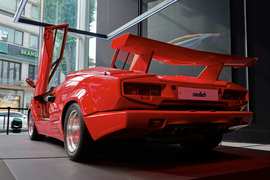
In this deep dive, we explore 10 iconic production vehicles that effectively blur the line between track-only prototypes and road-going legends. But before we peel back the engine covers, it is vital to understand why automakers pour billions into the high-stakes world of motorsport and how that investment fundamentally reshapes the consumer driving experience.
The Symbiotic Relationship Between Racing and Daily Driving
The intersection of motorsport and road-legal engineering has always been the primary catalyst for automotive innovation. Racing serves as the ultimate laboratory—a place where engineers test components under extreme thermal loads and structural stresses where failure is simply not an option. Lessons learned during 24-hour endurance tests eventually trickle down into the vehicles we drive to the office or the grocery store.
Whether it is the refinement of advanced forced-induction systems, the integration of lightweight carbon-fiber composites, or the calibration of sophisticated traction control, innovation birthed on the asphalt dictates the future of automotive safety and performance. Consider that features once reserved for elite racers, such as disc brakes, paddle-shift gearboxes, and multi-stage fuel injection, are now standard in your average sedan. Beyond the hardware, motorsport success serves as the ultimate brand validation. When a manufacturer dominates a series like Le Mans or Formula 1, that engineering excellence is perceived as a promise of reliability and prestige for their street vehicles. For the enthusiast, owning a car with a motorsport-derived engine is as close as one can get to the raw emotion of professional racing.
Alfa Romeo Montreal: The Tipo 33 Heritage
The Alfa Romeo Montreal houses a 2.6-liter V8 engine directly descended from the Tipo 33 sports prototype. Built to compete in grueling endurance races like the Targa Florio, the Tipo 33 was a masterpiece of Italian engineering. While the Montreal’s unit was softened for street manners, it retained the core architecture of a racing heart, capable of screaming to 7,000 RPM. Producing roughly 200 horsepower, it delivered an auditory experience that solidified the Montreal as one of the most underrated, beautiful, and mechanically fascinating vehicles of its era.
BMW M1, M5, and M6: The M88 Legacy
The racing pedigree of the BMW “M” division is legendary, and it largely centers on the M88 inline-six engine. Originally engineered for the BMW M1 ProCar series, this powerplant later found a second life in the E28 M5 and E24 M6, defining the super-sedan segment. The M88 was a masterclass in thermal efficiency and power delivery. Simultaneously, the iconic E30 M3 utilized the S14 engine—a four-cylinder powerhouse that shared genetic markers with the M12 Formula 1 units. These engines didn’t just power cars; they dominated the DTM touring car circuits, cementing BMW’s reputation as the “Ultimate Driving Machine.”
Chevrolet Camaro ZL1: The Can-Am Terror
In the late 1960s, Chevrolet’s obsession with Can-Am racing produced the legendary 426 cubic-inch (7.0-liter) ZL1 V8. Constructed entirely of aluminum to save weight for the track, this engine was a marvel of American muscle. Although the road-going versions were slightly detuned to ensure longevity, they still pushed out 430 horsepower. The ZL1 remains one of the most sought-after collector cars, representing a rare moment when a true-blue high-performance race engine was dropped straight into a production muscle car chassis.
Ferrari Dino 206 GT: Formula 2 Roots
The Ferrari Dino 206 GT proved that you didn’t need twelve cylinders to capture the essence of Maranello. Its 2.0-liter V6 was a direct descendant of Ferrari’s mid-1960s Formula 2 program. High-revving, responsive, and incredibly light, the engine turned the Dino into a surgical instrument for canyon roads. It was Ferrari’s bold step into a new segment, proving that the track-proven technology of their smaller-displacement engines could offer a more agile, balanced driving experience than the heavy grand tourers of the time.
Ferrari F50: F1 on the Road
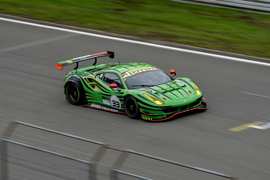
If the Dino was an entry into racing tech, the Ferrari F50 was a blatant invasion. Built to honor the company’s 50th anniversary, the F50’s 4.7-liter V12 was plucked from the 1990 Ferrari F1-90 driven by Alain Prost. By mounting the engine as a stressed member of the chassis, Ferrari brought unfiltered Formula 1 physics to the public. Producing 513 horsepower and redlining at 8,500 RPM, the F50 remains arguably the most “raw” supercar ever sold to the public, offering a sensory experience that no modern digital-heavy vehicle can replicate.
Ford GT: From Le Mans to the Showroom
The Ford GT story is a modern-day fairytale of performance. The 2005 Ford GT utilized a supercharged 5.4-liter V8 born from the DNA of Ford’s Daytona Prototype program. Fast forward to the 2017 GT, and we see a 3.5-liter twin-turbocharged EcoBoost V6—a powerplant derived directly from Ford’s triumphant endurance racing efforts. These engines demonstrate that through modern turbocharging and computational fluid dynamics, an engine can be both compact and capable of winning the world’s most prestigious endurance races.
Jaguar XJ220: Group C Dominance
The Jaguar XJ220 holds a unique place in history. Originally conceived with a V12, it ultimately found its spirit in the 3.5-liter twin-turbo V6 from the Jaguar XJR-11 Group C racer. This competition-derived unit allowed the XJ220 to hold the title of the world’s fastest production car for several years, hitting 217 mph. It remains a testament to the fact that when you apply aerodynamic efficiency and racing-grade turbocharging to a road car, the performance ceiling rises exponentially.
Plymouth Belvedere: The NASCAR Hemi
The 1964 Plymouth Belvedere is the perfect example of “Win on Sunday, Sell on Monday.” Under its unassuming hood sat the 426 Hemi V8, a power plant developed exclusively to crush the competition in NASCAR. With 425 horsepower, it was essentially a race car masquerading as a family sedan. This engine defined the golden age of muscle, proving that the most intimidating technology on the street often comes from the most intense battles on the oval track.
Porsche 918 Spyder: Hybrid Hyper-Performance
The Porsche 918 Spyder represents the pinnacle of modern performance. Its 4.6-liter V8 engine is a direct evolution of the RS Spyder, the LMP2 prototype that dominated the 24 Hours of Le Mans. By pairing this high-revving, race-bred combustion engine with sophisticated electric motors, Porsche created a vehicle that produces nearly 900 combined horsepower. It is a masterclass in how advanced powertrain integration can merge classic, high-displacement racing heart with modern efficiency.
Porsche Carrera GT: The V10 F1 Dream
The Carrera GT is arguably the holy grail for driving purists. The 5.7-liter V10 was originally designed for a 1990s Formula 1 entry, but when that program was shelved, Porsche repurposed it for a Le Mans prototype that never saw the grid. Ultimately, this engine found its home in the Carrera GT, producing 603 horsepower with an 8,000 RPM redline. It is a violent, beautiful, and utterly brilliant piece of engineering that reminds us why motorsport-derived engines are the soul of the industry.
Invest in the Experience
Owning a vehicle with an engine forged in the heat of competition is about more than just numbers; it’s about the legacy of innovation. Whether you are looking to acquire a piece of automotive history or you want to understand how high-performance engineering drives value in the pre-owned market, the connection between the track and the street has never been more relevant.
If you are ready to elevate your garage with a vehicle that possesses genuine racing pedigree, or if you simply want to learn more about how to evaluate the long-term investment potential of these iconic machines, let’s get the conversation started. Contact our expert team today to explore our curated selection of high-performance vehicles and find the one that puts you in the driver’s seat of history.