
Engineering Unleashed: 10 Iconic Production Cars with Pure Motorsport DNA
There is an undeniable, visceral thrill that comes from piloting a vehicle engineered for the razor-thin margins of competitive racing. For a true enthusiast, the difference between a high-performance street car and a machine with genuine motorsport DNA is palpable. We aren’t simply talking about aggressive aero packages or track-inspired badging; we are referring to power plants forged in the furnace of top-tier competition—engines that prioritize high-revving efficiency, mechanical endurance, and raw power output.

As a veteran with over a decade in automotive engineering and performance analysis, I’ve seen the industry evolve from basic mechanical tuning to complex hybrid integrations. Yet, the core allure remains the same: the race-derived engine. These components bring the adrenaline of the paddock to your local winding road, bridging the gap between factory production and the winners’ circle.
The Symbiotic Relationship: Track to Street
The automotive industry relies on the “Win on Sunday, Sell on Monday” ethos. Motorsport functions as the ultimate R&D laboratory, where components undergo stresses that would destroy a standard consumer engine in minutes. Engineers gain invaluable data on thermal management, lightweight materials, and friction reduction. This trickle-down effect has gifted us everything from standard dual-clutch transmissions to advanced carbon-ceramic braking systems.
However, the pinnacle of this transfer is the engine itself. When manufacturers port a racing heart into a street-legal chassis, they aren’t just selling a vehicle; they are selling a piece of engineering history. Below, we explore 10 landmark production vehicles that successfully blurred the line between the race track and public roads.
Alfa Romeo Montreal: The Endurance Spirit
The Alfa Romeo Montreal is a masterpiece of design, but its beating heart is what defines its legacy. Equipped with a 2.6-liter V8, the engine traces its lineage back to the Tipo 33, a legendary sports prototype that campaigned at the Targa Florio and the 24 Hours of Daytona. With a 7,000 RPM redline, this engine translates endurance-racing durability into a soulful, high-revving driving experience.
The BMW M Legacy (M1, M5, M6)
BMW’s “M” division is synonymous with precision. The M88 inline-six engine—found in the iconic M1 and early iterations of the M5 and M6—was directly influenced by the brand’s ProCar racing programs. Even the E30 M3, featuring the S14 engine, utilized architecture stemming from the M12 F1 power plants. These engines weren’t just fast; they were precision instruments that dominated touring car championships.
Chevrolet Camaro ZL1 (1969)
The 1969 ZL1 is the definition of a “drag strip monster.” Its 427 cubic-inch, all-aluminum V8 was a derivative of engines built specifically for Can-Am racing. By utilizing exotic materials to keep weight down while maximizing displacement, Chevy created a unicorn. While it was detuned for road legality, it remains one of the most sought-after collector pieces in automotive history.
Ferrari Dino 206 GT
The Dino 206 GT proves that racing pedigree isn’t solely about displacement. Its 2.0-liter V6 was a direct descendant of Ferrari’s Formula 2 program. It introduced the world to the mid-engine layout that would eventually define the supercar era, proving that a high-strung, small-displacement engine could provide more driving engagement than a heavy, lazy V8.
Ferrari F50: The F1 Connection
If you want to experience a Formula 1 car without the headache of a pit crew, the F50 is the answer. Its 4.7-liter V12 was developed from the Tipo 641, the chassis that carried Alain Prost through the 1990 F1 season. With an 8,500 RPM limit and a chassis that uses the engine as a stressed member, this is arguably the closest a civilian has ever come to driving a genuine grand prix machine.
Ford GT (2005 & 2017)
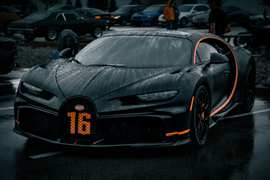
The Ford GT story is a masterclass in endurance racing. The 2005 model utilized a supercharged V8 rooted in Ford’s Daytona Prototype program. The 2017 iteration shifted to the 3.5-liter EcoBoost V6—a radical move that mirrored Ford’s return to Le Mans. By choosing forced induction over displacement, Ford proved that modern racing engineering is as much about efficiency as it is about brute force.
Jaguar XJ220: The Group C Survivor
The XJ220 carries a fascinating history. Originally slated for a V12, the final production run featured a 3.5-liter twin-turbocharged V6 derived from the Jaguar XJR-11 Group C racer. It was a technological tour de force that pushed the boundaries of automotive performance, briefly holding the title of the fastest production car on the planet.
Plymouth Belvedere (426 Hemi)
In the world of American muscle, the “Race Hemi” is the stuff of legend. Originally built to crush the competition in NASCAR, the 426-cubic-inch V8 found its way into the Plymouth Belvedere. It turned an unassuming sedan into a track-proven titan, cementing the Hemi nameplate in the history books of drag racing and street performance.
Porsche 918 Spyder
The 918 Spyder represents the pinnacle of modern performance hybrid technology. Its 4.6-liter V8 engine is a direct relative of the engine used in the RS Spyder, which dominated the LMP2 class at Le Mans. By integrating this racing-bred V8 with advanced electric motors, Porsche achieved a 0-60 mph time of roughly 2.2 seconds, changing how we define “track performance” forever.
Porsche Carrera GT
Perhaps the greatest analog supercar of the 21st century, the Carrera GT features a 5.7-liter V10 that was intended for a canceled F1 project and a shelved Le Mans prototype. Porsche’s decision to drop this engine into a road car resulted in 603 hp and a sound that is widely considered the best of the modern era. It is a raw, demanding machine that rewards driver skill with unparalleled feedback.
Why These Cars Matter in 2025
As we move toward a future of electrification, these combustion-powered icons with motorsport DNA are becoming increasingly valuable. They represent an era where mechanical synergy was the ultimate goal of the automotive engineer. These are not merely cars; they are tactile, roaring, and high-performance archives of racing history.
If you are looking to invest in a piece of driving history or simply want to understand the lineage of your own performance vehicle, the journey begins with identifying the engineering philosophy behind the hood.
Are you ready to elevate your driving experience? Contact our performance specialists today to discuss your next acquisition or to learn more about the engineering specs that define today’s top-tier automotive collectibles.