
Track-Born Power: 10 Iconic Production Cars with True Motorsport DNA
There is an undeniable, visceral thrill that comes from piloting a vehicle engineered with pure motorsport DNA. We aren’t simply talking about aggressive aesthetics or clever marketing packages; we are discussing elite machinery that houses internal combustion power plants originally forged in the crucible of professional competition. These engines, honed in the white-hot intensity of track duty, bring high-revving, adrenaline-inducing performance to public roads, establishing a direct, tactile connection to the legendary racing machines that inspired them.
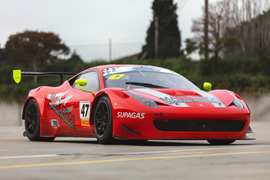
As an automotive engineer with a decade of experience in performance vehicle development, I have seen how the “win on Sunday, sell on Monday” mantra continues to shape the industry. In this feature, we explore ten production vehicles that blur the lines between race-day prototypes and street-legal marvels. But first, it is essential to understand why manufacturers invest billions into the unforgiving world of competitive racing and how that capital expenditure filters down to the driver sitting in their driveway.
The Engineering Symbiosis: Why Motorsport Matters
Motorsport and high-performance road cars have always shared a symbiotic relationship. Racing is the ultimate laboratory, pushing components to their thermal and mechanical limits where failure is never an option. Innovations such as carbon-ceramic disc brakes, advanced active aerodynamics, and dual-clutch transmission software—all of which now appear in standard high-performance vehicles—were once exclusively found on the starting grid.
When a manufacturer dominates on the track, the trickle-down effect on their brand equity is immense. Integrating a race-bred engine into a road car provides a unique selling proposition that drives both brand loyalty and collector value. From a technical standpoint, these engines are masterpieces of automotive engineering, often utilizing exotic alloys and tight-tolerance machining that, while costly to produce, provide an unparalleled driving experience.
Alfa Romeo Montreal: The Tipo 33 Legacy
The Alfa Romeo Montreal is a masterclass in elegant, race-derived engineering. Beneath its stunning exterior lies a 2.6-liter V8 engine directly descended from Alfa’s Tipo 33 sports prototype. This endurance racer competed at legendary venues like the Targa Florio. While the road-going Montreal was detuned for civility, it retained the soul of a racer, capable of singing to 7,000 RPM. It remains a coveted classic for enthusiasts who appreciate Italian exotic car repair and authentic racing lineage.
BMW M1, M5, and M6: The M88 Phenomenon
BMW’s motorsport heritage is defined by the legendary M88 inline-six. Developed for the M1 ProCar series, this engine was a marvel of the era. Its architecture was so robust that it found its way into the E28 M5 and E24 M6, defining the “ultimate driving machine” ethos. Even the iconic E30 M3, which utilized the S14 engine, leaned heavily on the engineering principles established by BMW’s DTM dominance. For collectors looking for luxury performance car investments, these models remain the gold standard.
Chevrolet Camaro ZL1 (1969): The Can-Am Beast
The 1969 Camaro ZL1 is a testament to American muscle built for the track. Its 427-cubic-inch all-aluminum V8 was engineered specifically for Can-Am racing, offering a power-to-weight ratio that was unheard of in the late 60s. Though it was a niche production run of only 69 units, the ZL1 proved that a drag-strip monster could indeed be a street-legal icon. Its influence on American muscle car performance remains unparalleled in automotive history.
Ferrari Dino 206 GT: Formula 2 Roots
The Dino 206 GT occupies a special place in Ferrari’s history. Its 2.0-liter V6 was a direct descendant of Ferrari’s Formula 2 program. It was small, agile, and fiercely high-revving, marking the brand’s first serious foray into mid-engine sports cars. Driving a Dino today offers a masterclass in weight distribution and precision, serving as a reminder that performance driving dynamics are often more important than raw horsepower.
Ferrari F50: F1 on the Street
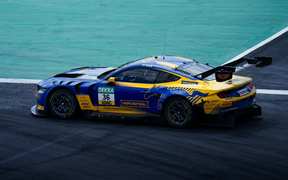
If you want to experience what a 1990s Formula 1 car feels like on public roads, the Ferrari F50 is the answer. Its 4.7-liter V12 was derived from the Tipo 641 used by Alain Prost. This is not a “road-tuned” engine in the traditional sense; it is a stressed member of the chassis, offering a raw, unfiltered connection to the tarmac that few modern cars can replicate. It remains one of the most significant high-CPC vehicle assets in the collector market.
Ford GT: From Le Mans to the Driveway
The Ford GT, in both its 2005 and 2017 iterations, serves as a love letter to the GT40. The 2005 model utilized a supercharged V8 rooted in Ford’s Daytona Prototype racing, while the 2017 version featured a 3.5-liter twin-turbo EcoBoost V6 derived from endurance racing campaigns. These cars represent the pinnacle of advanced automotive technology, successfully translating complex aero-load and forced-induction systems from the track to the road.
Jaguar XJ220: The Group C Survivor
The XJ220 is perhaps the most famous example of a race engine finding a home in a road car. Originally intended to feature a V12, the final production version utilized a twin-turbo V6 from the Jaguar XJR-11 Group C racer. This engine helped the XJ220 reach 217 mph, a record-breaking speed that solidified its place in the pantheon of supercar industry trends.
Plymouth Belvedere: The NASCAR Hemi
Few engines are as feared in American history as the 426 Hemi. Known as the “Race Hemi,” it was designed for the brutal world of NASCAR. When Plymouth placed it into the Belvedere, they effectively handed the keys to a track weapon to the average consumer. It remains a hallmark of high-performance engine tuning and raw, unadulterated power.
Porsche 918 Spyder: The Hybrid Revolution
The 918 Spyder proved that hybridization could enhance, rather than hinder, the driving experience. Its 4.6-liter V8 was based on the RS Spyder LMP2 prototype. By integrating high-output electric motors, Porsche created a platform that could rocket to 60 mph in roughly 2.2 seconds. This vehicle set the blueprint for the current wave of electric performance innovation in the luxury sector.
Porsche Carrera GT: The V10 Analog Masterpiece
The Carrera GT is arguably the finest analog supercar ever constructed. Its 5.7-liter V10 was originally developed for a canceled F1 project, then destined for Le Mans, before landing in this road-legal flagship. With no electronic nannies to save the driver, it demands respect and precise inputs, offering a level of motorsport driving experience that is increasingly rare in 2025.
Final Thoughts: Connecting with the Legacy
Owning a vehicle with true motorsport DNA is about more than just numbers on a spec sheet; it is about the heritage of the engine and the history written in its combustion chambers. As we move further into an era of software-defined vehicles, these mechanical legends will only become more valuable—both as investments and as testaments to the golden age of internal combustion.

Are you ready to elevate your garage with a machine that shares its soul with the racetrack? Contact our performance vehicle consulting team today to begin your search for the perfect track-inspired icon and experience engineering excellence firsthand.