
From Paddock to Pavement: 10 Legendary Road Cars Born from Motorsport DNA
There is an undeniable, visceral thrill that comes from piloting a machine forged in the crucible of professional racing. As an automotive engineer and enthusiast with over a decade of experience, I’ve spent years deconstructing what separates a standard sports car from a true track-bred icon. It isn’t just about aggressive aero or stiffened suspension; it’s about the heart of the beast. When an automaker drops a powerplant originally engineered for the intensity of high-stakes competition into a production chassis, the result is a bridge between the sterile precision of the racetrack and the unpredictable joy of public roads.
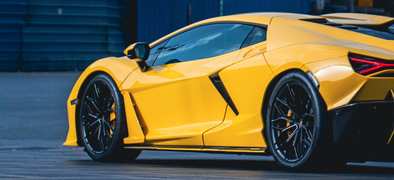
Motorsport DNA isn’t just a marketing buzzword. It represents millions of dollars in R&D, thousands of hours of track testing, and a philosophy where failure is not an option. Today, we are exploring 10 production vehicles that blur the lines between race and road, proving that you don’t need a pit crew to experience true high-performance automotive engineering.
The Engineering Symbiosis: Why Motorsport Matters
The relationship between the track and the dealership is a cycle of innovation. In the automotive industry, racing serves as the ultimate laboratory for durability and efficiency. Concepts like carbon-ceramic brakes, paddle-shift transmissions, and complex variable valve timing didn’t emerge in a vacuum—they were hardened in the fires of endurance racing and Formula 1.
When a brand successfully translates this technology to the street, they aren’t just selling a car; they are selling a pedigree. For the consumer, this offers an investment in high-performance automotive parts that have been proven under the most extreme thermal and mechanical stresses.
Alfa Romeo Montreal: The Tipo 33 Legacy
The Alfa Romeo Montreal remains one of the most stylish expressions of Italian engineering. Beneath its Bertone-designed skin lies a 2.6-liter V8 engine derived directly from the Tipo 33 sports prototype. While the race version was built to conquer the Targa Florio, the Montreal version was refined for the road. With a 7,000 RPM redline and 200 hp on tap, it provides a masterclass in how motorsport DNA can add soul to a classic grand tourer.
BMW M1, M5 (E28), and M6 (E24): The Inline-Six Mastery
BMW’s M division is the gold standard for road-legal racing tech. The M88 inline-six, which powered the iconic M1 ProCar, is perhaps the most significant engine in the brand’s history. This powerplant didn’t just stay in the M1; it migrated into the E28 M5 and E24 M6, defining the “sports sedan” category. Later, the E30 M3 utilized the S14 engine, a direct descendant of the M12 F1 powerplant, sharing DNA with the machines that dominated DTM racing.
Chevrolet Camaro ZL1 (1969): The Can-Am Terror
In the late 60s, Chevrolet’s obsession with Can-Am racing led to the creation of the 427 cubic-inch all-aluminum V8. The 1969 Camaro ZL1 was effectively a street-legal drag strip monster. Producing an underrated 430 hp, it was a pure exercise in American displacement and lightweight construction. Today, with only 69 examples produced, it stands as a testament to the “Win on Sunday, Sell on Monday” strategy at its most extreme.
Ferrari Dino 206 GT: Formula 2 DNA
Before Ferrari embraced the mid-engine layout as their standard, they tested the waters with the Dino 206 GT. Its 2.0-liter V6 was a direct evolution of the marque’s Formula 2 racing programs. Weighing just over 2,000 pounds, this car was designed for the driver who wanted the agility of a racing prototype in a package suitable for the winding mountain passes of Italy.
Ferrari F50: The F1 Car for the Road

If you want to talk about raw, unfiltered F1 technology, the Ferrari F50 is the benchmark. Its 4.7-liter V12 was pulled directly from the Tipo 641, the car piloted by Alain Prost in the 1990 Formula 1 season. Capable of screaming to 8,500 RPM, the F50 stripped away the amenities to provide an authentic, terrifyingly fast experience that remains the closest any enthusiast can get to a 90s-era Grand Prix car.
Ford GT (2005 & 2017): Le Mans Engineering
The Ford GT exists because of a grudge match at Le Mans, and both the 2005 and 2017 iterations carry that spirit forward. The 2005 model utilized a supercharged 5.4-liter V8 with architecture shared with Ford’s Daytona Prototypes. Meanwhile, the 2017 GT leveraged a twin-turbo 3.5-liter EcoBoost V6, a unit developed specifically to win the 24 Hours of Le Mans in the GTE Pro class.
Jaguar XJ220: The Group C Survivor
The XJ220 is a story of ambition. Though originally conceived with a V12, it arrived with a 3.5-liter twin-turbo V6 lifted from the Jaguar XJR-11 Group C racer. This choice turned the car into a 217-mph icon. It remains one of the few instances where a top-tier supercar was essentially a detuned endurance racer in a leather-trimmed body.
Plymouth Belvedere: The NASCAR Hemi
The 1964 Plymouth Belvedere proved that American muscle wasn’t just about straight-line speed; it was about NASCAR dominance. The 426 “Race Hemi” was an engineering marvel that made 425 hp and completely changed the landscape of stock car racing. Finding one of these engines in a production Belvedere meant you were driving a piece of track history capable of outrunning almost anything on the street.
Porsche 918 Spyder: The LMP2 Hybrid
Porsche’s mastery of hybrid technology began on the track with the RS Spyder. The 918 Spyder utilizes a 4.6-liter naturally aspirated V8 derived from that very LMP2 prototype. By pairing this race-bred engine with cutting-edge electric motors, Porsche created a hypercar that could accelerate to 60 mph in 2.2 seconds, proving that sustainable tech and motorsport performance are not mutually exclusive.
Porsche Carrera GT: The V10 Swan Song
Finally, we have the Carrera GT, perhaps the most analog supercar ever built. The 5.7-liter V10 was originally meant for the Formula 1 grid, then re-tasked for an aborted Le Mans prototype program. Porsche, refusing to let such a masterpiece die, fitted it into a carbon-fiber chassis. The result is 603 hp of pure, unadulterated racing fury that demands total concentration from its driver.
The Future of High-Performance Driving
As we move toward a future of electrification, the importance of motorsport-derived engineering remains more critical than ever. Whether it is through advanced aerodynamics or high-energy-density battery management, the track will continue to refine the vehicles we enjoy.
If you’re ready to elevate your own collection or finally get behind the wheel of a machine that truly understands the meaning of performance, the time to start your search is now. Contact our specialist team today for a consultation on sourcing the perfect track-inspired performance vehicle that aligns with your automotive ambitions.