
The Roar of the Track: Production Cars Forged with Race-Bred Hearts
For a decade now, my lifeblood has been the intricate dance between automotive engineering and the raw pursuit of speed. I’ve witnessed firsthand how the crucible of motorsport doesn’t just forge champions, but also innovations that redefine what’s possible on the public road. It’s a thrill unlike any other, experiencing the unadulterated fury of an engine born for the unforgiving asphalt of a racetrack, now singing its powerful song beneath the hood of a production vehicle. We’re not merely talking about cosmetic enhancements or minor performance tuning; we’re delving into machines where the very soul of a race car resides, offering a visceral connection to the titans that conquer circuits worldwide.
This exploration isn’t just a nostalgic look back; it’s a deep dive into ten production vehicles that masterfully bridge the chasm between the checkered flag and the everyday commute. From the piercing wail of naturally aspirated V12s to the guttural thunder of meticulously engineered turbocharged powerhouses, these machines deliver an authentic taste of motorsport prowess to the discerning driver. But before we celebrate these mechanical marvels, it’s crucial to understand the compelling reasons why automotive manufacturers invest so heavily in the demanding world of motorsport, and how those triumphs ultimately trickle down to the vehicles we can all own and enjoy.
The Unseen Engine: Motorsport’s Enduring Influence on Road Cars
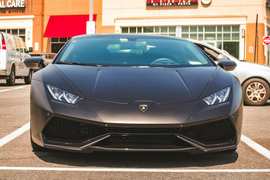
The symbiotic relationship between racing and road-going automobiles is as old as the automobile itself. Motorsport is the ultimate proving ground, an arena where engineering is pushed beyond its perceived limits, subjecting components to unimaginable stresses and unforgiving conditions. Failure on the track is not an option, and this relentless pursuit of perfection yields invaluable lessons. These insights, forged in the heat of competition, invariably find their way into the cars we drive daily. Whether it’s breakthroughs in aerodynamic efficiency, the adoption of ultra-lightweight materials that defy gravity, or the sophisticated electronic management systems governing engine performance, innovation born on the racetrack invariably paves the path toward better, more capable, and more engaging road cars.
Consider, for instance, the ubiquitous adoption of technologies like disc brakes and paddle shifters. These were once the exclusive domain of racing machines, intricate systems designed for split-second responsiveness. Today, they are commonplace features in production vehicles, a testament to their proven effectiveness and the automotive industry’s ability to refine and integrate cutting-edge race technology for mass appeal. Beyond the mechanical advantages, motorsport success serves as a powerful brand amplifier. When a manufacturer’s race car consistently dominates on the global stage, its road-going counterparts are imbued with an aura of performance, desirability, and technological superiority. While the dream of owning a Formula 1 car or a Le Mans prototype remains out of reach for most, the spirit of these legendary machines can still be experienced, particularly when the thunderous heart of a race-bred engine beats beneath the hood of a car destined for public roads. This “win on Sunday, sell on Monday” philosophy, a cornerstone of automotive marketing and development, is experiencing a significant resurgence, potentially marking one of the most exciting eras for the automotive industry in decades.
Ten Production Powerhouses with Motorsport DNA
Let’s now turn our attention to the vehicles that embody this exceptional lineage, showcasing the raw, unadulterated thrill of race-bred engineering for the road.
Alfa Romeo Montreal: A Symphony of Italian Ingenuity
The Alfa Romeo Montreal is a captivating machine, a testament to Italian design and engineering brilliance. At its core lies the Tipo 33-derived naturally aspirated V8 engine. This powerplant, originally conceived for Alfa Romeo’s formidable Tipo 33 sports prototype – a fierce competitor in grueling endurance races like the Targa Florio and the 24 Hours of Daytona – imbues the Montreal with an undeniable motorsport soul. While meticulously detuned for street legality and everyday usability, the 2.6-liter V8 still retains the high-revving character and exhilarating response characteristic of its racing ancestry. With a peak output of 200 horsepower, achievable at a thrilling 7,000 RPM, the Montreal offers a sound and sensation that few other road cars can match. Its sharp, distinctive styling, coupled with the intoxicating roar of its V8, cemented the Montreal’s status as one of the most stylish and regrettably overlooked automobiles to ever wear the Alfa Romeo badge.
BMW M Cars: The Quintessential Motorsport Icons
BMW’s M division has consistently delivered vehicles that blur the lines between track capability and road-going refinement. Several iconic models stand as prime examples of this philosophy, notably the M1, E30 M3, E28 M5, and E24 M6. The legendary M1, a groundbreaking mid-engine sports car, was propelled by the potent M88 3.5-liter inline-six engine. This powerplant itself was a direct descendant of BMW’s formidable racing programs, notably finding its way into the highly competitive BMW M1 ProCar series. Later, this robust engine, or a closely related variant, powered the esteemed E28 M5 and E24 M6 models, bringing supercar-levels of performance to more practical sedans and coupes. Meanwhile, the E30 M3’s compact yet potent S14 inline-four engine drew inspiration and shared engineering principles with the M88 and the formidable M12 turbocharged Formula 1 engines. This engine was a masterclass in efficient power delivery, directly influenced by BMW’s dominance in touring car racing, particularly the Deutsche Tourenwagen Masters (DTM), sharing critical components and engineering prowess with the cars that conquered those prestigious series. This lineage solidifies BMW M cars as true enthusiasts’ choices.
Chevrolet Camaro ZL1 (1969): American Muscle Meets Can-Am Fury
The 1969 Chevrolet Camaro ZL1 is a legendary muscle car that unequivocally deserves its place on this list. Its heart is the colossal 427 cubic-inch (7.0-liter) V8 engine, an all-aluminum marvel originally engineered for the brutal demands of Can-Am racing. This construction strategy, rare for its time, endowed the engine with a remarkable power-to-weight ratio. While capable of a monstrous 500 horsepower in its pure racing trim, the street-legal version was artfully detuned to a still-impressive 430 horsepower. The ZL1 package transformed the already potent Camaro into a veritable street-legal drag strip weapon. Its racing-derived engine continued to dominate in various SCCA Trans-Am series, further cementing its performance credentials. With a production run of a mere 69 units, the 1969 Camaro ZL1 remains an exceptionally rare and highly coveted collector’s item, representing the pinnacle of American automotive engineering for its era. Exploring classic muscle car performance reveals the enduring appeal of such automotive legends.
Ferrari Dino 206 GT: A Prancing Horse’s V6 Legacy
The Ferrari Dino 206 GT, though sometimes a subject of debate regarding its official Ferrari badging, represents a pivotal moment in the marque’s history. Its compact 2.0-liter V6 engine was initially developed for Ferrari’s Formula 2 racing endeavors in the 1960s. Despite being detuned for road use, this engine retained the eager, high-revving nature that is so characteristic of racing powerplants. This instilled the Dino with a palpable sense of sporting pedigree, making it an absolute joy to drive on winding roads. Producing a spirited 180 horsepower, this output was more than adequate for a car weighing just over 2,000 pounds, offering an exceptional power-to-weight ratio. The Dino was not only Ferrari’s first foray into mid-engine V6 sports cars but also served as a precursor to many future models that would carry the iconic Prancing Horse emblem. For those seeking performance sports cars with a rich heritage, the Dino is a compelling choice.
Ferrari F50: Formula 1 Direct from the Factory
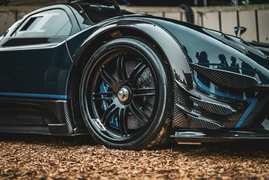
The Ferrari F50 stands as an unparalleled embodiment of taking track-derived engineering directly to the street. Created to commemorate Ferrari’s 50th anniversary, its heart is a 4.7-liter naturally aspirated V12 engine, a direct descendant of the Tipo 641 Formula 1 car, famously piloted by legends like Alain Prost in the 1990 season. This naturally aspirated powerhouse is a symphony of mechanical fury, capable of revving to a breathtaking 8,500 RPM and unleashing a colossal 513 horsepower. The F50 delivers the raw, unadulterated, and visceral sensation of driving an actual Formula 1 car, albeit with necessary modifications to meet road-going regulations. At its release, the F50 was arguably the closest a street-legal Ferrari could get to the pinnacle of motorsport, making it a truly extraordinary automotive achievement. The allure of V12 supercar performance is powerfully represented by this magnificent machine.
Ford GT: A Modern Homage to Le Mans Glory
The Ford GT is a contemporary homage to one of the most legendary race cars in history: the Le Mans-winning Ford GT40. The first generation, the 2005 Ford GT, was powered by a 5.4-liter supercharged V8 engine. Its roots are deeply embedded in the development of Ford’s endurance racing programs, sharing architectural similarities with the powerplants used in Ford’s Daytona Prototype race cars. Building upon this legacy, the more recent 2017 Ford GT features a twin-turbocharged 3.5-liter EcoBoost V6 engine. This sophisticated powerplant is a direct product of Ford’s extensive experience in endurance racing, showcasing the evolution of their high-performance engine technology. Both iterations of the Ford GT offer a potent blend of historical reverence and modern performance, making them highly sought-after American performance cars.
Jaguar XJ220: A Twin-Turbocharged Legend
The Jaguar XJ220 remains an icon of British automotive design and engineering, celebrated for its groundbreaking performance. While initially conceived with a V12 engine, the production version famously adopted a 3.5-liter twin-turbocharged V6 engine sourced directly from the Jaguar XJR-11 Group C race car. This competition-proven powerplant endowed the XJ220 with astonishing capabilities, enabling it to achieve a top speed of 217 mph, a record that held for a significant period, making it the fastest production car in the world. The XJ220’s motor was a pinnacle of advanced track-tested technology seamlessly integrated into a road-legal vehicle. The pursuit of fastest production cars often leads to such remarkable engineering feats.
Plymouth Belvedere (1964): The Race Hemi Unleashed
On the surface, the 1964 Plymouth Belvedere might not immediately scream “race car,” but beneath its unassuming exterior lies the legendary 426 Hemi V8 engine. This powerhouse was specifically developed for the intense demands of NASCAR racing. Known colloquially as the “Race Hemi,” this engine was a dominant force on the oval tracks and soon became a highly desirable option in Plymouth’s production lineup. The Belvedere equipped with this engine, producing a formidable 425 horsepower, quickly became one of the most powerful muscle cars of the 1960s. This reputation for brute force and performance carried through the 1970s, notably with its spiritual successor, the iconic ‘Cuda. For enthusiasts of American muscle cars, the Belvedere represents a significant chapter in automotive history.
Porsche 918 Spyder: Hybrid Powerhouse with Racing Roots
The Porsche 918 Spyder represents a bold leap into the future of performance, masterfully blending hybrid technology with a race-derived internal combustion engine. Its 4.6-liter naturally aspirated V8 engine is directly based on the RS Spyder, a formidable prototype race car that competed in the LMP2 class at the prestigious 24 Hours of Le Mans. This competition-bred V8, when combined with its electric motors, unleashes a staggering 887 horsepower, propelling the 918 from 0 to 60 mph in an astonishing 2.2 seconds, placing it among the quickest production cars ever made. While the electric motors contribute significantly to its blistering acceleration, it is the race-derived V8 that provides the car’s soul-stirring auditory experience and emotional engagement, proving that hybrid supercar performance can be deeply connected to motorsport heritage.
Porsche Carrera GT: The Analog Supercar’s V10 Heartbeat
The Porsche Carrera GT is widely regarded as one of the greatest analog supercars ever constructed, and a significant portion of its legendary status is attributed to its extraordinary ten-cylinder engine. This 5.7-liter V10 powerplant originated from Porsche’s ambitions in Formula 1 during the V10 era. Although Formula 1 aspirations didn’t materialize, the engine was not abandoned. It was later slated for use in a Le Mans prototype car that, unfortunately, never saw competitive action. Instead of letting this magnificent engine go to waste, Porsche strategically decided to integrate it into their flagship supercar. This decision endowed the Carrera GT with an astounding 612 horsepower and the ability to rev to an exhilarating 8,000 RPM. Coupled with its lightweight construction and pure motorsport DNA, the Carrera GT remains a challenging yet immensely rewarding driving experience for those seeking ultimate driving engagement supercars.
Experience the Legacy
The automotive world is a constant evolution, but the raw thrill and engineering excellence born from motorsport remain a timeless benchmark. These ten production vehicles are more than just cars; they are rolling testaments to the enduring power of racing heritage, offering a tangible connection to the spirit of competition that drives automotive innovation.
If the idea of experiencing this unparalleled blend of race-bred performance and road-going usability ignites your passion, it’s time to explore the possibilities. Contact us today to discuss your interest in these exceptional vehicles or to learn more about how you can own a piece of motorsport history. Your journey into the heart of automotive excellence awaits.