Porsche 911 GT3 RS: Evolution of an Icon
The genesis of the ultimate track-focused 911 can be traced back to 1999 with the introduction of the 996 GT3. Equipped with a race-tuned flat-six engine, lightweight construction, and homologation-driven development, it was widely regarded as the pinnacle of the 911 lineage. However, Porsche’s engineers clearly perceived room for enhancement.
This pursuit of perfection culminated in the facelifted 996.2 GT3, a variant that pushed boundaries further. Through strategic weight reduction via lighter wheels and body panels, a modest power increase, and refined aerodynamics, Porsche unveiled the GT3 RS. This hardcore, race-derived machine rendered the standard GT3 seemingly ordinary and has since cemented its status as an icon at track days and spirited drives for two decades.
The current 992.1 GT3 RS represents a new benchmark in track-focused engineering. Its design incorporates a carbon fiber bonnet housing a central radiator with distinctive “nostril” outlets that direct airflow over the roof. Complementing this are a hydraulically adjustable front splitter and underbody flaps, reminiscent of the Turbo S. The prominent swan-neck rear wing, equipped with DRS technology, mirrors that of Formula 1 cars and the McLaren P1.
Further enhancing its performance credentials are adjustable, race-derived suspension, dynamic engine mounts, substantial air intakes, aggressive side skirts, and a potent 4.0-liter, 525-horsepower naturally aspirated flat-six engine. This meticulously engineered package enables a 0-62 mph sprint in just 3.2 seconds, generates 860 kg of downforce at 177 mph, and has achieved a remarkable Nürburgring lap time of 6:44.85. The 992.1 GT3 RS stands as a distinct entity from its standard GT3 counterpart, much like an eagle to a swallow.
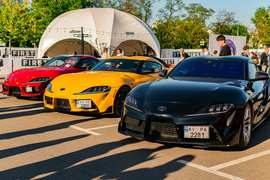
Porsche 911 GT3 RS 992.2: Final Testing Phases Underway
Recent photographic evidence confirms the development of the camouflaged 992.2 GT3 RS, with testing actively conducted at the Nürburgring. Consistent with the 911 ethos, visual distinctions from the outgoing 992.1 appear minimal. The updated model retains the central radiator with “nostril” outlets, the imposing swan-neck rear wing with DRS, large air intakes, side skirts, and even the same door handles.
Notable updates include lower-positioned indicator lights, a departure from most 992.2 models where they are integrated into the headlights. The rear diffuser has undergone a subtle redesign, incorporating new, discreet rear intakes flanking the exhaust. While the integration of the 992.2 range’s digital dashboard remains unconfirmed, the vehicle fundamentally preserves the aggressive yet highly effective aesthetic synonymous with the GT3 RS.
Speculation suggests the potential integration of the 3.6-liter twin-turbo hybrid flat-six engine found in many 992.2 variants, which would undoubtedly surpass the power output of the current 4.0-liter naturally aspirated unit. However, this development is considered improbable. Firstly, the absence of a hybrid powertrain in the standard GT3 indicates Porsche’s intent to maintain distinct engine philosophies for its variants.
Secondly, the added weight of a hybrid system, despite Stuttgart’s engineering prowess, would be a significant compromise for a GT3 RS, an attribute inherently antithetical to the model’s core ethos. Moreover, the introduction of a hybrid system solely for power gains would detract from the GT3 RS’s fundamental purpose: to deliver an engaging and thrilling driving experience, rather than solely focusing on record-breaking performance.
Such performance-oriented aspirations are more likely to be realized in the forthcoming GT2 RS, which is expected to incorporate the 3.6-liter hybrid flat-six. Porsche’s strategic approach is to cater to GT3 RS clientele by delivering the purest, most mechanically focused, and race-tuned driving machine available. The integration of any engine other than the 4.0-liter naturally aspirated flat-six would be perceived as incongruous, particularly given the strong possibility that this model may represent the final iteration of this iconic powerplant.

The recent unveiling of spy shots featuring Mercedes-Benz’s track-focused AMG GT suggests a potential rival for either the upcoming GT3 RS or GT2 RS. While the AMG GT appears formidable, it will need to offer exceptional performance to rival the established capabilities of the GT3 RS. The enduring legacy of the GT3 RS, spanning two decades, is a testament to its inherent excellence. As its evolution approaches a potential conclusion, it is poised to depart with the resonant power and unmistakable character of its flat-six engine.