
The Financial Hierarchy of Speed: World’s Most Expensive Cars for 2026
In the rarefied air of the ultra-high-net-worth automotive market, a car is rarely just a machine. For the top 0.1% of collectors, these vehicles represent the intersection of mechanical engineering, art, and asset preservation. As we look at the landscape for 2026, the definition of the “most expensive car” has shifted from mere power output to historical exclusivity and bespoke craftsmanship.
Whether you are a collector looking to diversify your portfolio or an enthusiast tracking the pinnacle of automotive innovation, understanding the pricing dynamics of these hypercars is essential. While these vehicles are often marketed as “investments,” the reality of owning them involves complex financial considerations, including insurance, maintenance costs, and long-term liquidity.
The 2026 Hypercar Market: A Brief Overview
The market for top-tier automotive assets is currently seeing a “flight to quality.” Buyers are increasingly prioritizing vehicles with ultra-low production numbers and direct ties to racing pedigree—specifically those from firms like Rimac, Gordon Murray Automotive, and Red Bull Advanced Technologies. When evaluating these machines, we aren’t just looking at the sticker price; we are looking at the total cost of ownership, which can easily escalate into the millions when accounting for storage, climate-controlled transport, and specialized maintenance contracts.

Notable 2026 Market Leaders
Rolls-Royce Droptail ($32M+): The undisputed king of the bespoke market. With only four in existence, this is less of a car and more of a mobile gallery.
Red Bull RB17 ($6.8M): Designed for the track-focused investor, this vehicle brings F1 performance to private hands.
Pininfarina B95 ($4.8M): A masterclass in open-top design, appealing to those who want a blend of EV technology and classic aesthetic flair.
Koenigsegg Jesko Absolut ($3.4M): The benchmark for high-speed aerodynamics and internal combustion engineering.
What This Means for You
If you are considering entering the high-end automotive investment space, the first hurdle is access. Most of these manufacturers require a long-standing relationship with the brand before granting a build slot. If you aren’t already on a priority list for a 2026 hypercar, you are likely looking at the secondary market, where premiums can be staggering.
Should You Buy, Wait, or Invest?
Buying for Appreciation: If your goal is capital appreciation, target vehicles with under 100 units produced. The history of the Ferrari F40 and McLaren F1 suggests that true limited-run “halo” cars rarely lose value over a 10-year horizon.
The “Wait” Strategy: The hypercar market is currently experiencing a transition from combustion to hybrid and electric systems. If you are skeptical about the long-term value of electric-only hypercars, stick to the analog, naturally aspirated models like the Gordon Murray T.50, which arguably hold “classic” appeal better than batteries.
Refinancing and Leverage: Many high-net-worth individuals don’t pay cash for these vehicles. Using specialized high-value asset loans to leverage your capital allows you to maintain liquidity for other real estate investments while securing your place in the hypercar market.
Best Financial Strategies Right Now (2026)
When dealing with transactions involving millions of dollars, the “best options” aren’t found on a traditional dealer lot.
Tax Efficiency: Consult with a tax professional regarding Section 179 or similar depreciation schedules if the vehicle is held within a business entity, though this is rare for collector cars.
Insurance Mitigation: Your biggest hidden cost will be insurance. Premiums for a $3 million vehicle are not standard auto insurance; they are high-risk specialty policies. Always obtain a comparison from at least three boutique carriers specializing in exotic assets.
The Escrow Advantage: Never move funds for a private sale without a qualified escrow service. In the world of hypercars, “curbstoning” and title fraud are risks that can cost you the entire investment.
Mistakes to Avoid That Could Cost You Money
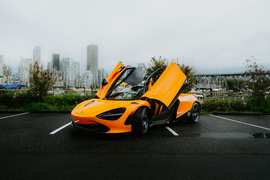
In my 10 years of monitoring the exotic market, I have seen even the wealthiest buyers make fundamental errors.
Case Study: The “Blind” Investor
A client once purchased a hypercar based solely on press releases, neglecting to verify the service intervals. When the time came for the first major engine-out service—which required shipping the car back to the manufacturer’s home country—the maintenance bill was nearly $150,000. He hadn’t factored this into his initial cost analysis, turning what should have been a profitable asset into a “money pit.”
Primary Pitfalls:
Ignoring Serviceability: Before you buy, ask the dealer: “Where is the closest authorized service center?” If you live in a city like Miami or Dubai, you’re covered. If you live in a secondary market, the shipping logistics alone will erode your ROI.
Overlooking Mileage Restrictions: Many investment-grade cars come with “usage agreements.” Driving them too much can tank their resale value by 20–30%.
Failing to Conduct a PPI: Even for a $5 million car, a Pre-Purchase Inspection by a third-party expert is non-negotiable. Don’t trust the seller’s documentation alone.
Cost Breakdown & Market Outlook
| Category | Typical Cost Range | Investment Risk |
| :— | :— | :— |
| New Hypercar (MSRP) | $1.5M – $30M+ | Low (If limited supply) |
| Specialty Insurance | 1% – 3% of value/year | N/A (Required) |
| Maintenance/Storage | $20k – $100k/year | High |
| Auction Fees | 10% – 15% | High |
The market for high-performance vehicles remains a hedge against inflation. However, you must view these as long-term holds. If you are looking for quick, high-RPM returns, you are better served looking at real estate investment trusts or diversified portfolios rather than a singular garage asset.
Final Expert Insights: The Future of Speed
In 2026, the most expensive cars aren’t just about the top speed; they are about the experience of the driver. As we move toward autonomous tech in the mass market, the “purebred” car—the manual-shifting, naturally aspirated, or analog-controlled machine—is seeing a massive resurgence in value. If you can acquire a manual-transmission V12 hypercar today, you are likely holding an asset that will become a cornerstone of the automotive history books.
The automotive industry is evolving rapidly, but the desire for exclusivity remains constant. Whether you are ready to secure a slot for a limited-production masterpiece or you’re looking to optimize your current collection with the best financing solutions, now is the time to act.
Take the next step in your collection journey: compare current high-end insurance rates, research the latest luxury loan programs, or connect with a reputable broker to review the 2026 production slots available for your next major investment.