
The Definitive Guide to the World’s Fastest Road Cars: 2026 Edition
For over a decade, I’ve tracked the arms race of hypercar engineering. If there is one thing I’ve learned, it’s that while top speed is often dismissed as a mere “bragging right,” it serves as the ultimate litmus test for automotive ingenuity. In 2026, the landscape of the world’s fastest road cars has shifted from pure combustion dominance to an electrified, high-tech battleground that challenges the very laws of physics.
Whether you are an investor looking at these vehicles as alternative assets or a collector curious about the evolution of performance, understanding these machines requires looking past the marketing fluff. Here is an expert analysis of the top 20 production vehicles that define speed today.
The World’s Fastest Road Cars (2026 Rankings)
Yangwang U9 Xtreme (308 mph): A testament to Chinese EV advancement, utilizing a 1,200V architecture to unlock near 3,000hp.
Koenigsegg Jesko Absolut (310 mph target): Currently the engineering benchmark for low-drag stability.
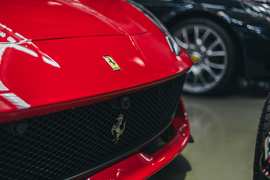
Bugatti Chiron Super Sport 300+ (304.8 mph): The titan that first broke the 300 mph barrier.
SSC Tuatara (282.9 mph): A masterclass in American aero-efficiency.
Bugatti Mistral (282.05 mph): The definitive record-holder for open-top production cars.
Koenigsegg Agera RS (277.87 mph): Still a force to be reckoned with on public highways.
Bugatti Tourbillon (277 mph est.): The new hybrid era begins here.
Hennessey Venom F5 (271.6 mph): A raw, rear-wheel-drive powerhouse.
Bugatti Veyron Super Sport (268 mph): The legend that started the modern hypercar era.
Rimac Nevera R (268 mph): The electric king of acceleration.
SSC Ultimate Aero (256.18 mph): The raw, analog record-breaker of the past.
Koenigsegg Regera (255 mph): The hybrid marvel with a single-speed direct drive.
Czinger 21C V Max (253 mph+): AI-designed, 3D-printed, and blisteringly quick.
McLaren Speedtail (250 mph): A tribute to aerodynamic purity.
Ultima RS (250 mph): Proof that power-to-weight remains the ultimate secret weapon.
Aspark Owl (249 mph): An acceleration specialist built for sub-2-second 0–60 sprints.
Koenigsegg Gemera / CCXR (248 mph): The “mega-GT” and the classic icon sharing a ceiling.
Saleen S7 Twin Turbo (248 mph): An American icon of early-2000s speed.
W Motors Fenyr Supersport (245 mph): A Dubai-born masterpiece with Porsche-sourced heart.
McLaren F1 (240.1 mph): The car that remains the gold standard for pure driving dynamics.
What This Means for You
If you are considering entering the hypercar market, you aren’t just buying a vehicle; you are buying a slice of industrial history. From a financial perspective, these cars are increasingly behaving like fine art. Unlike standard real estate investment or stock market assets, these limited-run hypercars often see rapid appreciation, provided the provenance is preserved. However, maintenance costs can reach six figures annually. You must treat this as a high-risk, high-reward alternative asset class.
Should You Buy, Wait, or Invest?
If you are an investor, the shift to electric platforms like the Rimac Nevera or the Yangwang U9 signals a volatile period for combustion-engine collectors.
Buy: If you can secure a limited-run internal combustion engine (ICE) hypercar from brands like Bugatti or Pagani, these will likely become the “classic cars” of the next 50 years.
Wait: If you are looking at early-stage EV hypercars, wait for the secondary market to stabilize. Tech depreciates faster than heritage engineering.
Invest: Consider “blue-chip” hypercars—models with limited production runs and a proven lineage of speed records.
Best Financial Strategies Right Now (2026)
Refinancing/Liquidity: Use specialized automotive finance vehicles rather than personal loans. Home loans or traditional mortgage rates are rarely the right tool for exotic car acquisitions.
Insurance: Specialized “agreed value” insurance is mandatory. Do not use standard auto policies; they will not cover track use or the specific valuation of these assets.
Portfolio Diversification: Do not allocate more than 5-10% of your net worth to high-end automotive assets. The cost of liquidating a multi-million dollar hypercar can be high if you are in a rush.
Cost Breakdown: The Reality of Ownership
Acquisition: $1.5M – $5M+
Annual Maintenance: $50k – $150k (tires, fluids, software calibration).
Hidden Costs: Transport to specialized service centers, climate-controlled storage, and high-premium insurance.
Depreciation Risk: Unlike the best options in real estate, cars rarely appreciate linearly. Market sentiment toward specific brands (like the shift to hybrid tech) can crash the values of older “fast” cars overnight.
Mistakes to Avoid That Could Cost You Money
In my decade of experience, I’ve seen buyers commit three fatal errors:
The “Hype” Trap: Buying into a new brand’s initial top-speed claim without verified independent testing. If the brand hasn’t produced a track record, you’re buying a “paper car.”
Neglecting Maintenance: Leaving an engine dormant for years destroys seals and electrical components. These cars must be driven to maintain their value.
Ignoring Regulatory Hurdles: Many of these cars are not street-legal in all jurisdictions. Ensure you have the right documentation before assuming you can take your purchase on the road.
Case Study: The “Buyer A vs. Buyer B” Scenario
Buyer A purchased a mass-produced “performance” supercar, expecting it to be the next big investment. He ignored the high supply and the depreciation curve. After two years, he was down 30% on his capital.
Buyer B focused on a low-production, manual-transmission hypercar from a legendary manufacturer. He treated it as a long-term asset, held for five years, and sold it at a 20% premium over his entry price.
The lesson? Scarcity and brand heritage win every time.
Final Expert Verdict
The world’s fastest cars in 2026 are no longer just about who can burn the most fuel; they are about who can master electricity and aerodynamics simultaneously. As these cars push toward the 310 mph barrier, the gap between “fast” and “unobtainable” is widening.
If you are ready to explore your options or want to analyze how a hypercar purchase fits into your broader portfolio, start by researching independent performance verification reports and consulting with a specialist in high-end automotive assets.
Are you ready to find your next investment? Explore the latest hypercar listings or contact a specialized broker to compare the best options on the market today.