
The World’s Fastest Road Cars 2026: Engineering Marvels and Financial Realities
Top speed is a statistic that haunts the dreams of automotive engineers and captures the imagination of enthusiasts, yet for the average commuter, it remains a purely academic figure. In an era where modern sedans easily handle highway speeds, the hunt for the absolute fastest road cars is less about utility and more about prestige, technological dominance, and the raw pursuit of “bragging rights.”
As we move through 2026, the barrier between internal combustion legends and high-voltage electric hypercars has blurred. Achieving speeds near the 300mph mark is no longer just a challenge for legacy brands like Bugatti; it has become a proving ground for new manufacturers leveraging advanced battery architectures.
What This Means for You
If you are looking at this list, you are likely either an enthusiast or an ultra-high-net-worth investor looking to diversify into “blue-chip” automotive assets. Understanding the hierarchy of these machines is vital. The market for hypercars has shifted; while performance is the headline, residual value, exclusivity, and the “collectibility index” are what drive the actual financial outcomes for owners.
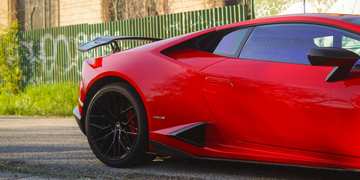
The 2026 Landscape: From 240mph to 300mph+
The hierarchy of speed has been completely upended in the last 24 months. Here are the titans of the tarmac, ranked by their peak velocity.
Yangwang U9 Xtreme (308mph)
The current crown holder represents a paradigm shift. Utilizing a 1,200V architecture and four electric motors producing a staggering 2,978bhp, the U9 Xtreme proves that the future of speed is electrified. At a price point significantly lower than its European rivals, it forces us to reconsider the depreciation curves of traditional combustion hypercars.
Koenigsegg Jesko Absolut (310mph Targeted)
Koenigsegg remains the gold standard for engineering obsession. The Jesko Absolut, with its ultra-lightweight crankshaft and drag-minimized body, is designed for a single purpose: to surpass the 300mph threshold.
Bugatti Chiron Super Sport 300+ (304.8mph)
The benchmark for a generation. Breaking the 300mph barrier was a monumental moment for the industry. Owning one of the 30 units produced is essentially holding a piece of history.
SSC Tuatara (282.9mph)
After navigating significant controversy, SSC proved the Tuatara’s worth with independent verification. It remains one of the few machines capable of high-speed stability on real-world road surfaces.
Bugatti Mistral (282.05mph)
As the fastest convertible, the Mistral occupies a unique space in the investment portfolio. It is the swan song for the W16 quad-turbo engine, making it a prime candidate for future appreciation.
(Rankings continue through engineering milestones like the Koenigsegg Agera RS, Hennessey Venom F5, and Rimac Nevera R.)
Should You Buy, Wait, or Invest?
In my decade of observing the hypercar market, I have seen many buyers treat these vehicles like stocks. Here is my expert take on your strategy for 2026:
Buy: If you are chasing a “legacy” piece (e.g., Bugatti Chiron, McLaren Speedtail). These vehicles have historical gravity and are less likely to see aggressive price drops.
Wait: If you are tempted by the latest electric hypercar startups. While the specs are mind-blowing, the long-term reliability and brand longevity are unproven. Let the early adopters absorb the initial R&D depreciation.
Invest: If you can secure a build slot for a limited-run hypercar (under 100 units). These are the only vehicles that consistently outpace inflation and standard luxury car depreciation.
Best Financial Strategies Right Now (2026)
When dealing with assets priced between $1.5M and $5M, traditional financing is rarely the path taken. Most sophisticated buyers utilize Asset-Based Lending (ABL). Instead of liquidating your portfolio and triggering massive capital gains taxes, you can use your hypercar as collateral for a line of credit. This maintains your liquidity while allowing you to enjoy the asset.
Cost Breakdown & Financial Impact
Maintenance: Expect to spend between $30,000 and $100,000 annually on tires, fluids, and specialized factory servicing. These are not daily drivers.
Insurance: “Agreed Value” policies are mandatory. Do not skimp here. A simple low-speed fender bender on a carbon-fiber chassis can easily exceed $250,000 in repair costs.
Mistakes to Avoid That Could Cost You Money
Ignoring the “Service History” Factor: In the world of hypercars, a missing receipt for a transmission fluid change can wipe $100k off the resale value. Keep a meticulous digital and paper trail.
Over-customization: While it is tempting to spec a car in “hot pink” to match your personality, the secondary market heavily favors “tasteful” or factory-standard specifications. If you want to sell, stay conservative.
Assuming Speed = Value: The fastest car on paper is not always the most valuable. Brand heritage, design, and scarcity often trump raw top-speed numbers.
Case Study: The Cost of Waiting
Consider “Investor A” and “Investor B.”
Investor A bought a rare, limited-edition Koenigsegg in 2022 for $2.8M. Today, that vehicle is valued at $3.5M.
Investor B sat on the sidelines waiting for a “better deal” or a “better electric model.” They missed the window for the limited production run and now have to pay a 40% premium on the secondary market to acquire a similar machine.
The lesson? In the hypercar segment, the “best options” are rarely the ones currently sitting on the showroom floor; they are the ones you secure before the production run is finalized.
Conclusion: Take Action
Whether you are an investor looking to diversify your portfolio or a collector seeking the pinnacle of human engineering, the landscape of 2026 offers unparalleled opportunities—provided you approach the market with professional due diligence.
Don’t let the high cost of entry deter you from exploring your options. If you are serious about entering the hypercar market, the next step is to compare current inventory, check financing rates for luxury assets, and consult with a specialist who understands the nuances of the 2026 supercar market.

Ready to start your journey? Contact a specialist today to review your investment options and compare current hypercar availability.