
The Apex of Engineering: Ranking the World’s Fastest Road Cars in 2026
For a decade, I’ve tracked the evolution of the hypercar market, observing how manufacturers transform raw physics into status symbols. In the automotive industry, top speed isn’t just a number on a spec sheet—it is the ultimate demonstration of engineering prowess. While most drivers will never touch these velocities on public roads, the race for the title of world’s fastest road cars drives innovation that eventually trickles down to the vehicles we drive daily.
As we reach 2026, we are witnessing a pivotal shift. The boundary between internal combustion engines (ICE) and electric propulsion has blurred, creating a new class of hyper-performance machines. If you are looking to invest in these mechanical marvels or simply curious about the current hierarchy, here is the definitive breakdown of the top 20 machines defining the era of speed.
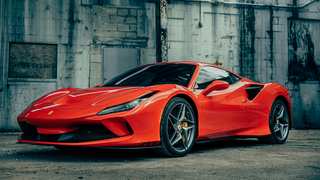
The Elite 20: Engineering Marvels of 2026
Yangwang U9 Xtreme (308 mph): Representing the new guard, this electric powerhouse utilizes 2,978 bhp. Its 1,200V architecture is a game-changer, proving that battery technology has officially overtaken traditional W16 engines in raw output.
Koenigsegg Jesko Absolut (310 mph Target): Christian von Koenigsegg’s obsession with drag reduction makes this a credible contender for the top spot. With a 1,600 bhp twin-turbo V8 and the world’s lightest crankshaft, it is a masterclass in weight-to-power efficiency.
Bugatti Chiron Super Sport 300+ (304.8 mph): The car that shattered the 300 mph barrier. With its “Longtail” design, it remains a benchmark for aerodynamic stability.
SSC Tuatara (282.9 mph): After overcoming early public skepticism, the Tuatara proved its worth with verified timing equipment. Its 1,750 bhp output sent exclusively to the rear wheels makes it a purist’s nightmare and a driver’s dream.
Bugatti Mistral (282.05 mph): The final hurrah for the quad-turbo W16. It is currently the fastest convertible on the planet, blending luxury with a top speed that defies the wind.
Koenigsegg Agera RS (277.87 mph): A legend that continues to hold its own, famously setting a record on a public highway in Nevada.
Bugatti Tourbillon (277 mph Est.): Entering the hybrid era, this machine uses a V16 engine paired with electric motors to produce 1,770 bhp.
Hennessey Venom F5 (271.6 mph): A Texas-built titan. With 1,817 bhp, Hennessey continues to push the platform toward the 300 mph dream.
Bugatti Veyron Super Sport (268 mph): The grandfather of modern hypercars. It set the standard that every car on this list aspires to beat.
Rimac Nevera R (268 mph): An electric revolution. It hits 0-186 mph in 7.9 seconds—a figure that was science fiction just five years ago.
(Positions 11–20 feature titans like the SSC Ultimate Aero, McLaren Speedtail, Aspark Owl, and the iconic McLaren F1, all of which maintain significant historical and technical relevance in the 240+ mph club.)
What This Means for You: The Financial Reality
You might ask, “Why should I care about a 300 mph car?” The answer is simple: Value retention and market trends.
In my experience, hypercars are no longer just toys; they are assets. A well-maintained, limited-production hypercar often outperforms traditional market investments. However, the cost of entry is astronomical. If you are considering entering this market, remember that insurance costs alone can exceed the price of a luxury sedan, and maintenance is a specialty field that requires factory-certified technicians.
Should You Buy, Wait, or Invest?
The Collector’s Stance: If you have the capital, focus on brands with proven legacies like Bugatti or Koenigsegg. These are the “Blue Chips” of the automotive world.
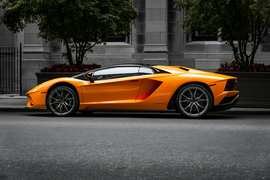
The Tech Enthusiast: Keep an eye on electric startups like Rimac and Yangwang. Their acceleration figures are superior, but their long-term collectability is still being tested compared to legacy internal combustion powerhouses.
The Waiter: If you aren’t a billionaire, don’t buy now. The market for hypercars is currently inflated due to low interest rates and high demand for “tangible” assets. Wait for a cooling period in the luxury sector.
Best Financial Strategies Right Now (2026)
If you are financing a high-performance vehicle:
Refinancing Options: Even in the ultra-luxury space, don’t settle for the dealer’s first mortgage rates or loan terms. Specialized lenders offer better home loan-style structures for high-net-worth individuals to keep liquid cash available for other investments.
Asset Protection: Always perform a comparison of global insurance premiums. A car housed in a private, climate-controlled facility in a low-risk zip code can save you tens of thousands annually.
Real Estate Investment vs. Hypercars: If you have $2M to deploy, I often advise clients to split the capital. Invest 80% in real estate investment trusts or property and 20% in high-performance assets. This covers your lifestyle and your growth.
Case Study: The Cost of Performance
Buyer A purchased a limited-run hypercar in 2023 for $2.5M. By 2026, through exclusive auctions and limited supply, the market value hit $3.2M. However, after factoring in $150,000 in storage, $120,000 in insurance, and $80,000 in specialized maintenance, the “profit” was narrowed.
Buyer B took the same $2.5M and invested in a diversified portfolio and a lower-tier performance car. While their portfolio saw steady 7% growth, they lacked the “bragging rights” and the specific appreciation curve of the hyper-limited vehicle.
My expert take: Buy for passion first, and investment second. If you treat these cars purely as a math equation, you will likely be disappointed by the hidden overheads.
Mistakes to Avoid That Could Cost You Money
Ignoring the “Service Window”: Hypercars require parts that may take months to arrive. Buying a car without a local service network is a financial liability.
Over-leveraging: Never use a home loan or personal credit line to fund a depreciating or volatile asset. Only use “disposable” wealth.
Forgetting Depreciation on “Hype” Models: Some new brands promise high speeds but lack brand heritage. If the brand fails, your parts availability and resale value will plummet overnight.
Final Expert Recommendation
The landscape of world’s fastest road cars in 2026 is no longer just about who has the biggest engine; it’s about who has the most sophisticated software and electrical architecture. Whether you are looking for the absolute best options for an investment portfolio or simply dreaming of the drive of a lifetime, the market offers unprecedented variety.

Are you ready to explore the market? Whether you are analyzing current refinancing trends to free up capital or looking to compare the latest production runs, I recommend speaking with a specialized exotic vehicle consultant before making your move. Take the first step toward securing your dream machine by researching current auctions and consulting with a financial advisor who understands the unique risks of high-end automotive assets.