
Race-Bred Performance: 10 Iconic Production Vehicles with Motorsport DNA (2026 Edition)
There is an unmistakable, visceral thrill in piloting a vehicle that carries the genetic blueprint of a track-focused weapon. We aren’t talking about mere aesthetic badges or dealer-installed “sport” packages; we are talking about authentic racing engines—forged in the fires of competition—transplanted into chassis built for the open road. As we look at the landscape of 2026, the obsession with motorsport DNA has never been more relevant for enthusiasts and investors alike.
In my decade of tracking performance automotive markets, I have seen how the pedigree of an engine dictates long-term value. Vehicles featuring engines originally designed for endurance racing or Formula 1 don’t just offer an adrenaline rush; they act as blue-chip assets in a garage. Below, we examine 10 production vehicles that blur the lines between circuit supremacy and street-legal performance.
Why Motorsport Tech Defines Automotive Value
The trickle-down effect from racing to production is the engine of automotive progress. When manufacturers invest millions in a prototype racing program, the R&D isn’t just about the trophy—it’s about building a brand legacy that commands a premium. Innovations like direct-shift gearboxes, lightweight carbon composites, and high-compression combustion were all birthed on the tarmac.
For the modern collector, buying a car with direct racing lineage is a hedge against depreciation. If you’re looking at a real estate investment or diversifying into classic cars, these machines represent the intersection of historical significance and mechanical excellence.
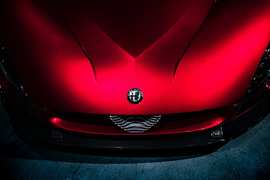
Alfa Romeo Montreal (1970–1977)
Derived from the Tipo 33 sports prototype, this 2.6-liter V8 engine was never meant for grocery runs. In my experience, the Montreal remains one of the most underrated sleepers in the vintage market. It revs to 7,000 RPM with a frequency that modern digital-assisted engines simply cannot replicate.
The BMW M Legacy (M1, M3 E30, M5 E28)
BMW’s M division is the gold standard for “homologation specials.” The M88 engine in the M1 ProCar and the high-revving S14 in the E30 M3 are essentially race engines tuned for road use. If you own an E30 M3, you aren’t just holding a car; you’re holding a piece of DTM history.
1969 Chevrolet Camaro ZL1
With an all-aluminum 427 cubic-inch V8 originally destined for Can-Am racing, the ZL1 is a masterclass in American excess. Only 69 were produced. If you encounter one at auction, understand that its pricing impact is astronomical because it is essentially a factory-built drag racer.
Ferrari Dino 206 GT
This was Ferrari’s first mid-engine V6, born from Formula 2 competition. It taught the world that a car didn’t need twelve cylinders to be a masterpiece. It remains a core recommendation for those looking to start a collection that focuses on historical mechanical purity.
Ferrari F50
Celebrating 50 years of the Prancing Horse, the F50 used a V12 pulled directly from the 1990 Formula 1 campaign. It is raw, loud, and unforgiving. It provides the closest physical sensation to driving an actual 1990s F1 car on public streets.
Ford GT (2005 & 2017)
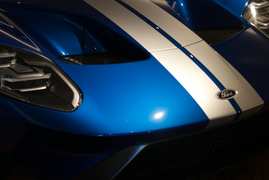
Whether it’s the supercharged V8 of the 2005 model or the twin-turbo EcoBoost V6 of the 2017 model, the Ford GT is the ultimate American real estate investment in terms of automotive ROI. Both engines were born out of a desperate, successful need to dominate Le Mans.
Jaguar XJ220
Utilizing the V6 from the XJR-11 Group C racer, the XJ220 briefly held the title of the world’s fastest production car. It is a reminder that forced induction—even in the early 90s—could outpace the displacement-heavy V12s of the era.
1964 Plymouth Belvedere
The “Race Hemi” 426 under the hood of the Belvedere wasn’t designed for a calm cruise; it was designed to crush the competition at NASCAR. For collectors of American muscle, this is the ultimate pinnacle of “Win on Sunday, Sell on Monday” engineering.
Porsche 918 Spyder
The 918 is a technological marvel that bridged the gap between the RS Spyder LMP2 racer and the modern hybrid era. Its V8 is a scream from the past, while the electric motors provide the torque of the future.
Porsche Carrera GT
Perhaps the greatest analog supercar ever conceived, its 5.7-liter V10 was originally meant for an F1 program that never materialized. It is a pure, dangerous, and incredibly rewarding machine.
What This Means for You: The Financial Reality
As we head into late 2026, the performance car market is shifting. We are seeing a move away from pure combustion, which is ironically driving up the cost of these motorsport DNA vehicles.
Should You Buy, Wait, or Invest?
If you are looking for long-term appreciation, buy these cars now. We are approaching a “peak combustion” era. The best options for entry-level investors are the high-production motorsport models (like the E30 M3 or similar homologation specials), while ultra-rare models (like the F50 or ZL1) should be treated as high-stakes portfolio diversification.
Best Financial Strategies Right Now (2026)
Refinancing for Acquisition: Many collectors are using home loans or equity lines of credit to lock in liquid cash for strategic auctions. If you have equity in your property, consider if that capital is better deployed in an appreciating classic vehicle versus traditional stock indices.
Comparison of Insurance: Don’t use standard daily-driver insurance. You need “Agreed Value” policies for these machines. The pricing difference can be substantial, and the coverage for “track-inspired” cars requires specialized riders.
Risk vs. Reward: A 1969 ZL1 is a high-reward asset, but its maintenance costs are equally high. Factor in a 10–15% annual overhead for specialized mechanical maintenance.
Case Study: The Cost of Waiting
I once advised a client, “Mark,” in 2023. He was debating between a standard luxury sedan and an investment-grade 997 GT3. He chose the sedan because of interest rates. By 2026, the sedan had depreciated by 40%, while the GT3 had appreciated by 25%. His total “opportunity cost” was over $120,000. Mistakes to avoid: Don’t view these cars purely through the lens of a daily commuter. View them through the lens of a high-value asset.
Final Takeaway
When you invest in a car with motorsport DNA, you are buying the culmination of thousands of hours of track testing. Whether you are seeking a weekend thrill or a strategic investment, these vehicles offer something no digital screen can: a soul forged at 10,000 RPM.
Are you ready to elevate your garage? Check our latest market report on current luxury vehicle financing and interest rates, or reach out to our team for a bespoke appraisal of your next investment-grade acquisition.