
Beyond the Circuit: 10 Iconic Production Cars with Pure Motorsport DNA
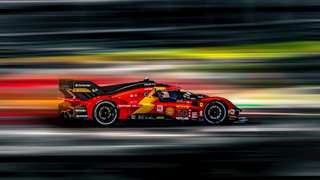
There is an undeniable, visceral thrill that comes from piloting a vehicle engineered for the podium. We aren’t simply talking about aggressive body kits or stiffened suspension settings; we are referring to machines that carry the beating hearts of true competition vehicles. These power plants, forged in the crucible of high-stakes racing, bring high-revving, adrenaline-inducing performance to public roads. When you turn the key on a car powered by authentic motorsport DNA, you aren’t just driving—you are maintaining a direct, mechanical connection to the history of the track.
In this deep dive, we explore 10 legendary production vehicles that successfully blurred the lines between track-only racers and daily-driver sports cars. From screaming V12s to turbocharged engineering marvels, these machines prove that race-bred technology is the gold standard for automotive performance.
The Engineering Symbiosis: Racing and Road Tech
The relationship between motorsport and production vehicle manufacturing is symbiotic. Racing serves as the ultimate engineering laboratory, pushing materials and thermal efficiency to the breaking point where failure is not an option. Lessons learned on the asphalt—whether regarding lightweight metallurgy, advanced aerodynamics, or forced induction efficiency—inevitably migrate to the cars we drive.
Why do manufacturers invest millions into this cycle? Beyond the prestige of the “Win on Sunday, Sell on Monday” philosophy, it serves as a high-octane branding exercise. When a vehicle dominates the 24 Hours of Le Mans or a Formula 1 season, the trickle-down effect makes their road-going fleet significantly more desirable. For the enthusiast, the payoff is tangible: you get a taste of professional racing caliber in a package that, with some patience, you can park in your own garage.
Alfa Romeo Montreal: The Tipo 33 Legacy
The Alfa Romeo Montreal is a masterclass in elegant, track-inspired design. Hidden beneath its iconic Marcello Gandini-penned exterior lies a 2.6-liter V8 engine derived from the Tipo 33 endurance prototype. Having cut its teeth on punishing circuits like the Targa Florio and Daytona, this engine was detuned for the road while retaining its aggressive 7,000 RPM redline. Producing roughly 200 horsepower, the Montreal remains one of the most underrated examples of a street-legal prototype engine.
BMW M Power: The M88 and S14 Dynasties
BMW’s M division is essentially a racing laboratory disguised as an automaker. The legendary M88 inline-six, which powered the M1 ProCar, famously made its way into the E28 M5 and E24 M6, defining the “super sedan” category. Perhaps even more iconic is the E30 M3, featuring the S14 engine. This powerplant was inextricably linked to BMW’s M12 Formula 1 engineering and its dominance in DTM touring car racing. These engines weren’t just “inspired” by racing; they were the very architectures that claimed championships across the globe.
Chevrolet Camaro ZL1 (1969): The Can-Am Muscle
In the late 60s, Chevrolet’s ZL1 package was the answer to a prayer for drag racers and SCCA Trans-Am competitors. The 427-cubic-inch all-aluminum V8 was designed specifically for the raw power requirements of Can-Am series racing. By keeping the engine weight low while maintaining massive displacement, the ZL1 became a street-legal terror. With only 69 original examples produced, it remains one of the most significant pieces of high-performance automotive history in the United States.
Ferrari Dino 206 GT: Formula 2 Precision
Named in honor of Enzo Ferrari’s son, the Dino 206 GT marked a pivotal shift for the brand. Its 2.0-liter V6 was a direct descendant of Ferrari’s Formula 2 program. It prioritized balance and high-frequency revving over raw, untamed displacement. Weighing in at just over 2,000 pounds, the Dino felt like a mid-engine racer for the public, setting the blueprint for the mid-engine Ferraris that would follow for decades.
Ferrari F50: F1 on the Streets
If you want to experience the closest thing to a 1990-era Formula 1 car without a superlicense, you drive the Ferrari F50. Its 4.7-liter naturally aspirated V12 was fundamentally derived from the Tipo 641 racer driven by Alain Prost. With an 8,500 RPM redline and a chassis that uses the engine as a stressed member, the F50 is an unfiltered, visceral experience. It represents an era where regulations were loose enough to allow genuine racing technology into a consumer vehicle.
Ford GT: The Modern Endurance Standard
The Ford GT is perhaps the most faithful homage to racing heritage in the 21st century. The 2005 model utilized a 5.4-liter supercharged V8 born from Ford’s Daytona Prototype efforts. Its successor, the 2017 GT, shifted to a 3.5-liter twin-turbocharged EcoBoost V6—a engine configuration that propelled Ford back to the top of the podium at Le Mans. This vehicle serves as a bridge between the raw, mechanical muscle of the past and the precision-tuned efficiency of modern turbocharged racing.
Jaguar XJ220: Group C Dominance
The Jaguar XJ220 holds a special place in the annals of speed. Originally intended to be a V12, it ultimately found its soul in a 3.5-liter twin-turbo V6 sourced from the XJR-11 Group C race car. This decision proved fortuitous, as the engine allowed the XJ220 to briefly claim the title of the world’s fastest production car. It remains a stunning example of how endurance racing hardware can be successfully translated into a low-volume supercar.
Plymouth Belvedere: The NASCAR Hemi
The 1964 Plymouth Belvedere brought the “Race Hemi” directly from the high-banked ovals of NASCAR to the local drag strip. This 426-cubic-inch V8 was engineered to endure the sustained high-RPM torture of stock car racing. When dropped into the Belvedere, it gave everyday drivers a platform that was fundamentally more capable than anything else on the road, cementing the Hemi’s status as a legend of American automotive performance.
Porsche 918 Spyder: Hybrid Hypercar Evolution
The Porsche 918 Spyder represents the pinnacle of modern performance hybridization. Its 4.6-liter V8 engine is a direct relative of the engine powering the RS Spyder, which conquered the LMP2 class at Le Mans. By integrating high-output electric motors with a race-derived internal combustion engine, the 918 achieves performance figures that defy physics. It is the perfect marriage of historical racing DNA and future-facing electrification.
Porsche Carrera GT: The F1 V10 Dream
The Carrera GT is often heralded as the greatest analog supercar of all time. Its 5.7-liter V10 was an engineering marvel originally conceived for Porsche’s ill-fated Formula 1 project and subsequently refined for a Le Mans prototype that never turned a wheel in anger. By utilizing this race-developed V10 in a production vehicle, Porsche created a sensory experience—from the 8,000 RPM scream to the carbon-fiber chassis—that remains unrivaled.
The Value of Race-Bred Engineering

Investing in a vehicle with legitimate motorsport lineage is more than just a financial decision; it is an investment in mechanical history. Whether you are browsing for high-CPC performance parts or searching for a legacy investment vehicle, understanding the origins of these engines is crucial. If you are looking to elevate your own driving experience or want to learn more about how to maintain these track-derived machines, we invite you to browse our comprehensive automotive maintenance guides or contact our expert team today to schedule an appraisal for your next performance upgrade.