
High-Octane Heritage: 10 Iconic Production Cars with Race-Bred Engines
There is a visceral, unmistakable thrill that comes from piloting a machine infused with motorsport DNA. We aren’t merely discussing carbon-fiber accents or aggressive body kits; we are talking about the mechanical heart of the beast. For the true enthusiast, the ultimate prize is owning a vehicle that houses a race-bred engine—a powerplant originally forged in the crucible of professional competition and later adapted for the street. These high-revving, adrenaline-pumping units offer a direct, unfiltered connection to the legendary circuits of Le Mans, Daytona, and Monaco.
In the high-stakes world of luxury performance vehicle sales, the “Win on Sunday, Sell on Monday” mantra remains a cornerstone of brand equity. Automakers invest billions into racing programs not just for the trophy cabinet, but to push the boundaries of automotive engineering under extreme duress. What begins as a prototype component in a 24-hour endurance race eventually trickles down to the consumer market, manifesting as advanced aerodynamics, lightweight alloys, and, most importantly, legendary powertrains.
As we navigate the landscape of 2025, where hybridization and electrification are the new norms, these ten production vehicles stand as monuments to internal combustion excellence. From screaming Italian V12s to American big-block monsters, these cars deliver a genuine track-to-street performance experience that few modern machines can replicate.
Alfa Romeo Montreal: The Endurance Prototype Legacy
The Alfa Romeo Montreal is perhaps one of the most aesthetically striking cars of the 1970s, but its true beauty lies beneath the hood. It features a 2.6-liter V8 engine that traces its lineage directly to the Tipo 33 sports prototype. This was no mere “inspired” design; it was a detuned version of an engine that competed in grueling events like the Targa Florio and the 24 Hours of Daytona.
Equipped with SPICA mechanical fuel injection, the Montreal’s V8 produces 200 hp and maintains a redline of 7,000 RPM. While the chassis was more of a grand tourer than a nimble racer, the engine’s motorsport DNA provided a mechanical symphony that elevated the driving experience. For collectors looking for high-value classic car investments, the Montreal remains an underrated gem with a genuine racing pedigree.
BMW’s M Division: M1, M3, and the M88 Masterpiece
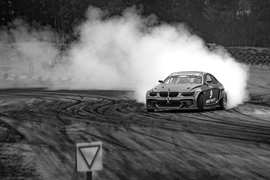
When discussing high-performance German engineering, BMW’s M Division is the gold standard. The story begins with the BMW M1, the mid-engine supercar powered by the 3.5-liter M88 inline-six. This engine was a direct descendant of the M1 ProCar series, a dedicated racing league that supported Formula 1 weekends.
The M88 was so versatile and robust that it eventually found its way into the E24 M6 and the original E28 M5, effectively creating the “Super Sedan” segment. Not to be outdone, the iconic E30 M3 utilized the S14 inline-four, which was essentially the M88 with two cylinders removed. This high-revving unit was designed specifically to dominate DTM (German Touring Car) racing, making the E30 M3 one of the most successful touring cars in history.
1969 Chevrolet Camaro ZL1: The Can-Am Monster
In the late 1960s, the “C.O.P.O.” (Central Office Production Order) system allowed savvy dealers to bypass corporate bans on large engines. The result was the 1969 Chevrolet Camaro ZL1, a car featuring a 427-cubic-inch (7.0-liter) all-aluminum V8. This engine was originally purpose-built for the Can-Am racing series, where weight and raw power were the only metrics that mattered.
While officially rated at 430 hp to appease insurance companies, real-world dyno tests often pushed North of 500 hp. This race-bred engine turned the Camaro into a street-legal dragster. With only 69 units produced, the ZL1 is a cornerstone of exotic car auctions, often commanding prices in the seven-figure range. It represents the pinnacle of American muscle fused with professional racing technology.
Ferrari Dino 206 GT: The Formula 2 Spirit
The Ferrari Dino 206 GT holds a unique place in Maranello’s history. Named after Enzo Ferrari’s son, it was the first mid-engine production car from the brand, though it famously lacked the “Prancing Horse” badge. At its core was a 2.0-liter V6 engine developed by legendary engineer Vittorio Jano for Formula 2 competition.
The road-going Dino produced 180 hp, which, when paired with a featherweight curb weight of just over 2,000 pounds, offered surgical handling. Its high-revving nature and distinct exhaust note provided a track-to-street performance feel that helped define the modern junior supercar. Today, the Dino is a blue-chip collectible, appreciated for its purity and its direct link to Ferrari’s open-wheel racing efforts.
Ferrari F50: A Formula 1 Car in a Tuxedo
If the F40 was a raw turbocharged experiment, the Ferrari F50 was a love letter to Formula 1. Created for the company’s 50th anniversary, the F50 utilized a 4.7-liter V12 engine—designated the Tipo F130B—which was derived directly from the 1990 Ferrari 641 F1 car driven by Alain Prost.
This was not a marketing gimmick; the engine was a stressed member of the chassis, just like in a Grand Prix car. It screams to a staggering 8,500 RPM and produces 513 hp without the help of forced induction. Driving an F50 is the closest a civilian can get to the F1 racing experience, offering a level of mechanical intimacy and noise that modern turbocharged Ferraris simply cannot match.
Ford GT: From Le Mans to Your Garage
The Ford GT is a nameplate synonymous with “beating Ferrari at their own game.” The 2005 revival featured a 5.4-liter supercharged V8 that drew heavily from Ford’s Daytona Prototype and endurance racing programs. It was a rugged, high-torque masterpiece that solidified the GT as a world-class supercar.
Fast forward to 2017, and Ford returned to the Le Mans podium with the latest iteration of the GT. This model is powered by a 3.5-liter twin-turbocharged EcoBoost V6, an engine that was developed concurrently with the Le Mans-winning GTE Pro race car. This race-bred engine proves that displacement isn’t the only way to achieve dominance, utilizing anti-lag technology and advanced cooling systems straight from the paddock.
Jaguar XJ220: The Group C Speed King
The Jaguar XJ220 remains one of the most misunderstood yet impressive supercars of the 1990s. While customers originally expected a V12, Jaguar delivered a 3.5-liter twin-turbo V6 sourced from the Jaguar XJR-11 Group C racer. This decision was controversial at the time, but the performance figures spoke for themselves.
The XJR-11-derived engine produced 542 hp, catapulting the XJ220 to a top speed of 217 mph—a world record for a production car at its launch. Its motorsport DNA gave it a brutal power delivery and a level of engineering sophistication that surpassed nearly everything else on the road. Today, the XJ220 is finally receiving the recognition it deserves among ultra-high-net-worth car collectors.
Plymouth Belvedere: The NASCAR “Race Hemi”
In the 1960s, NASCAR was the ultimate proving ground for American engineering. The 1964 Plymouth Belvedere became the vessel for the legendary 426 Hemi V8, an engine designed with a single goal: to dominate the high banks of Daytona. The “Race Hemi” was so dominant that NASCAR eventually changed the rules to force Chrysler to sell a specific number of these engines to the public.
The street-legal Belvedere Hemi produced a conservative 425 hp and 490 lb-ft of torque. It was a massive, heavy-breathing beast that required a skilled hand to manage. This engine didn’t just win races; it created a cultural phenomenon, establishing the Hemi as the definitive high-performance engine of the muscle car era.
Porsche 918 Spyder: Hybridization Meets Le Mans
The Porsche 918 Spyder redefined what a hypercar could be. While its electric motors provided instant torque, the soul of the car was its 4.6-liter naturally aspirated V8. This engine was a direct evolution of the powerplant found in the Porsche RS Spyder, a car that dominated the LMP2 class in the American Le Mans Series and at the 24 Hours of Le Mans.
The 918’s V8 is a masterpiece of automotive engineering, capable of revving to 9,150 RPM and producing 608 hp on its own (887 hp when combined with the hybrid system). By taking a championship-winning endurance racing engine and pairing it with 21st-century battery technology, Porsche created a machine that offers track-to-street performance with daily-driver reliability.
Porsche Carrera GT: The Shelved F1 Project
Many enthusiasts consider the Porsche Carrera GT to be the greatest analog driving machine ever produced. Its heart is a 5.7-liter V10 that possesses one of the most hauntingly beautiful exhaust notes in history. Interestingly, this engine was originally designed for a Footwork Formula 1 project in the early 1990s. When that project was canceled, the engine was redesigned for a Le Mans prototype, which was also shelved.
Refusing to let such a masterpiece go to waste, Porsche’s engineers slotted the V10 into the Carrera GT. Producing 603 hp and featuring a carbon-fiber reinforced silicon carbide (CGSIC) clutch, the car is notoriously difficult to master but infinitely rewarding. It represents the purest expression of a race-bred engine finding a permanent home on the road.
The Future of Performance Engineering
As we look toward the future of luxury automotive trends, the era of the pure, high-revving race-bred engine is becoming a rarity. Emissions regulations and the shift toward electrification mean that these mechanical marvels are transitioning from showrooms to climate-controlled private collections. However, the influence of motorsport remains the primary driver of innovation. Whether it’s through regenerative braking systems or advanced synthetic fuels, the lessons learned on the track will always dictate the quality of the cars in our driveways.
Owning a car with a racing heart isn’t just about the 0-60 mph times—it’s about the heritage, the engineering, and the soul of the machine. These ten vehicles serve as a bridge between the glory of the racetrack and the freedom of the open road.
Are you ready to experience the raw power of a track-inspired masterpiece? Explore our latest inventory of high-performance vehicles and find the machine that speaks to your driving soul.