
The Soul of the Circuit: 10 Street-Legal Icons Powered by Authentic Race Engines
There is a visceral, unmistakable thrill that comes from piloting a machine infused with genuine motorsport DNA. We aren’t merely discussing aesthetic body kits or stiffened suspension setups; we are talking about the mechanical heart of the beast. These are the rare gems of the automotive world—production vehicles housing engines originally forged for the uncompromising world of professional racing.
When a power plant is birthed in the heat of endurance racing or the high-revving theater of Formula 1, it brings an intoxicating level of high-performance driving to the public pavement. For the enthusiast, these cars represent the ultimate “Win on Sunday, Sell on Monday” reality. As we move through 2025, the value of these analog and track-bred machines has skyrocketed, as they offer a raw, mechanical connection that modern digital supercars often lack.
From screaming naturally aspirated V12s to turbocharged monsters, let’s explore 10 production vehicles that effectively blurred the lines between the paddock and the driveway.
Why Manufacturers Invest in Race-Bred Engineering
The bridge between the track and the showroom is paved with billions of dollars in R&D. For a manufacturer, motorsport is the ultimate laboratory. Under the extreme stress of competition, engineers discover the limits of thermal management, friction reduction, and structural integrity. This race-derived technology eventually trickles down into consumer models, improving everything from fuel efficiency to safety.
Historically, innovations like carbon-ceramic brakes, dual-clutch transmissions, and active aerodynamics were honed on the circuit before they ever touched a dealership floor. Furthermore, the prestige of a podium finish creates a halo effect, driving brand loyalty and increasing the resale value of road-going counterparts. When you buy a car with a racing heart, you aren’t just buying a mode of transportation; you are buying a piece of competitive history.
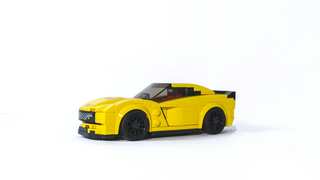
Alfa Romeo Montreal: The Endurance Prototype Legacy
The Alfa Romeo Montreal is a masterclass in 1970s style, but its true beauty lies beneath the hood. It utilizes a 2.6-liter V8 that was directly evolved from the legendary Tipo 33 sports prototype. The Tipo 33 was a titan of endurance racing, conquering grueling events like the Targa Florio and the 24 Hours of Daytona.
While the Montreal’s version was slightly detuned for better street manners and longevity, it kept its high-revving soul. Pushing 200 horsepower and screaming up to a 7,000 RPM redline, the Montreal offered a symphonic V8 exhaust note that few cars of its era could match. Today, it remains a connoisseur’s choice for those seeking Italian flair with a genuine racing pedigree.
The BMW M Dynasty: M1, M3, and the M5 Heritage
BMW’s “M” division is perhaps the most famous example of bringing the track to the street. It started with the BMW M1, which featured the M88 inline-six. This 3.5-liter masterpiece was designed specifically for the M1 ProCar Championship. The M88 was so successful that BMW later dropped it into the E24 M6 and the original E28 M5, effectively creating the “super sedan” segment.
The legend continued with the E30 M3. Its S14 four-cylinder engine wasn’t just a random parts-bin creation; it was essentially a shortened version of the M88, sharing the same basic head design. Built to satisfy DTM touring car homologation rules, the S14 turned the E30 into a balanced, high-revving icon that dominated tracks across Europe while remaining a docile daily driver.
1969 Chevrolet Camaro ZL1: The All-Aluminum Drag Beast
In the late 60s, American muscle was at its zenith, and the Chevrolet Camaro ZL1 was its undisputed king. At its core was a 427 cubic-inch (7.0-liter) V8 originally developed for the high-stakes Can-Am racing series. Unlike the heavy iron blocks of the time, the ZL1 was an all-aluminum masterpiece, significantly reducing front-end weight and improving handling.
While it was officially rated at 430 hp to satisfy insurance companies, most tuners found it produced closer to 500 hp right out of the box. Only 69 of these units were ever produced, making the ZL1 one of the most profitable classic car investments for collectors. It was a street-legal dragster that utilized Can-Am technology to humiliate almost anything it encountered at a stoplight.
Ferrari Dino 206 GT: The Formula 2 Connection
The Dino 206 GT holds a special place in Maranello’s history. Named after Enzo Ferrari’s son, it featured a 2.0-liter V6 that had its origins in Formula 2. This engine was a departure from Ferrari’s traditional V12 obsession, but it proved that smaller displacements could still offer world-class performance.
The Dino’s V6 was remarkably lightweight and mounted mid-ship, providing a level of agility that redefined the sports car category. Producing 180 hp in a chassis weighing just over 2,000 pounds, the Dino 206 GT felt like a surgical instrument on winding roads. It paved the way for every mid-engine Ferrari that followed, proving that racing technology could be scaled down without losing its magic.
Ferrari F50: An F1 Car with a License Plate
If you want to know what it feels like to drive a 1990s Formula 1 car, the Ferrari F50 is your only real answer. To celebrate the brand’s 50th anniversary, Ferrari took the Tipo F130B V12 engine directly from the Ferrari 641 F1 car driven by Alain Prost.
They increased the displacement to 4.7 liters for better torque, but the engine remained a stressed member of the chassis—just like in a race car. This meant every vibration and every mechanical note from the 513-hp V12 was transmitted directly to the driver’s spine. With an 8,500 RPM limit, the F50 remains one of the most visceral and “raw” driving experiences ever offered to the public.
Ford GT: From Le Mans to Your Garage
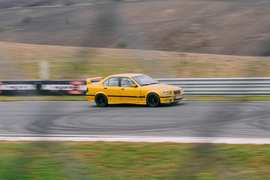
The Ford GT was never just a retro styling exercise; it was a tribute to the car that beat Ferrari at Le Mans. The 2005 generation utilized a 5.4-liter supercharged V8 that shared significant architecture with Ford’s modular racing engines used in Daytona Prototypes.
Fast forward to 2017, and Ford did it again. The second-generation GT featured a 3.5-liter twin-turbo EcoBoost V6 derived directly from the CGR (Chip Ganassi Racing) endurance program. This engine was developed on the track first and then adapted for the road, resulting in a compact, highly efficient power plant that pushed the Ford GT to a top speed of 216 mph. It is a testament to how turbocharged performance has evolved from the circuit to the street.
Jaguar XJ220: The Group C Survivor
The Jaguar XJ220 is a car of legendary controversy. Originally promised with a V12, it eventually reached customers with a 3.5-liter twin-turbocharged V6. While some buyers were initially disappointed, those who drove it quickly realized the engine was a masterpiece. It was plucked straight from the Jaguar XJR-11 Group C racer.
This race-bred V6 allowed the XJ220 to claim the title of the world’s fastest production car, reaching 217 mph. The engine was incredibly advanced for its time, featuring a compact design that allowed for better aerodynamics and weight distribution. Today, the XJ220 is celebrated for its daring engineering and its direct link to Jaguar’s golden era of endurance racing.
Plymouth Belvedere: The “Race Hemi” Revolution
The 1964 Plymouth Belvedere might look like a modest sedan, but in ’64, it was the host for one of the most feared engines in history: the 426 Hemi V8. Developed specifically to dominate NASCAR, the “Race Hemi” was so dominant that it forced rule changes in the sport.
To keep the engine legal for competition, Plymouth had to offer it in production models. The street version was slightly modified for drivability but still churned out a massive 425 hp and 490 lb-ft of torque. This car laid the groundwork for the Mopar muscle car craze, proving that a dedicated racing engine could turn a heavy steel sedan into a legendary street warrior.
Porsche 918 Spyder: The LMP2 Hybrid Pioneer
The Porsche 918 Spyder represented the dawn of the “Holy Trinity” of hypercars. While it is famous for its hybrid system, the core of its performance is a 4.6-liter naturally aspirated V8. This engine is a direct descendant of the unit found in the RS Spyder, a car that won its class at Le Mans and dominated the American Le Mans Series.
By pairing a high-revving, race-proven V8 with sophisticated electric motors, Porsche achieved a total output of 887 hp. This allowed the 918 to achieve a 0-60 mph time of just 2.2 seconds. It proved that sustainable performance doesn’t have to be boring, especially when it’s backed by a engine that spent its formative years screaming around the Circuit de la Sarthe.
Porsche Carrera GT: The Shelved F1 Masterpiece
Many consider the Porsche Carrera GT to be the greatest supercar of all time, largely due to its 5.7-liter V10. This engine has one of the most fascinating backstories in automotive history. It started as a secret Formula 1 project in the early 90s, then was redesigned for a Le Mans prototype (the LMP2000) that was ultimately canceled.
Refusing to let such a magnificent engine go to waste, Porsche’s engineers built the Carrera GT around it. The result was a 612-hp, carbon-fiber masterpiece that revs to 8,000 RPM with a haunting, high-pitched wail reminiscent of a Grand Prix grid. Without driver aids like stability control, the Carrera GT is a pure, unadulterated race car for the road that demands respect from even the most seasoned drivers.
The Future of Race-Bred Performance
As the automotive industry shifts toward electrification, these vehicles serve as a permanent record of what happens when engineers are given the freedom to bring the track to the street. The connection between motorsport and road cars is evolving, focusing more on software and battery management, but the soul of a high-revving, race-derived internal combustion engine remains the gold standard for driving enthusiasts.
Ready to find your next high-performance machine or learn more about the engineering behind these legends? Subscribe to our newsletter for exclusive insights into the world of luxury automotive investments and expert track-day tips.