
From Circuit to Street: 10 Iconic Cars with True Motorsport DNA
There is an undeniable, visceral thrill that comes from piloting a vehicle engineered for the track. As an automotive professional with a decade of experience in performance testing and powertrain evaluation, I have always argued that the most compelling production cars are those that don’t just look the part, but carry the actual mechanical soul of a racer. When an automaker takes an engine forged in the crucible of high-stakes competition and installs it in a street-legal chassis, they aren’t just selling a car; they are selling a direct, unfiltered connection to history.

The phenomenon of motorsport DNA in road cars goes beyond aesthetic decals or stiffened suspension. It’s about the hardware—the high-revving, blueprinted power plants that demand focus and reward the driver with sensory overload. In this exploration, we’ll dive into 10 extraordinary production vehicles that bridge the gap between the podium and the public road, and why this engineering crossover remains the pinnacle of automotive desire.
Why Manufacturers Invest in Motorsport DNA
The cost of developing a race-winning engine is astronomical. Yet, global manufacturers continue to pour billions into racing programs. Why? Because the track serves as the ultimate high-speed laboratory. In the world of endurance racing and Formula 1, mechanical failure is a catastrophic business event. Therefore, the innovations developed under these extreme conditions—advanced metallurgy, thermal management, and precision friction reduction—trickle down into the cars consumers buy today.
By integrating motorsport DNA into flagship models, brands elevate their prestige. A victory on Sunday, as the old adage goes, truly does translate into sales on Monday. This strategy creates a “halo effect,” where the average enthusiast feels a sliver of the performance prowess commanded by professional drivers. When you hear the mechanical symphony of a race-bred engine, you aren’t just driving; you are participating in a legacy.
Alfa Romeo Montreal: The Tipo 33 Legacy
Before the modern era of high-tech supercars, Alfa Romeo proved that endurance racing heritage could be bottled for the road. The Montreal utilized a 2.6-liter V8 engine derived from the legendary Tipo 33 sports prototype. While the race version was built to conquer the Targa Florio, the road version offered a screaming 7,000 RPM redline and 200 horsepower—a massive figure for the early 1970s. It remains a masterclass in how Italian engineering prioritizes character over raw output.
The BMW M Legacy: M88 and S14 Excellence
If you want to understand the modern definition of performance automotive engineering, look no further than BMW’s M division. The M88 inline-six, which powered the iconic M1 ProCar, later migrated into the E24 M6 and the E28 M5. It established the “sedan that thinks it’s a sports car” template. Simultaneously, the E30 M3 featured the S14 engine, a four-cylinder masterpiece born from M12 turbocharged F1 technology. These engines transformed BMW’s identity, turning everyday coupes into DTM-dominating legends.
Chevrolet Camaro ZL1 (1969): The Can-Am Titan
In the late 60s, the “win on Sunday” mantra reached a fever pitch. The 1969 Camaro ZL1 featured a 7.0-liter, all-aluminum 427 V8 originally designed for the brutal Can-Am racing series. By shedding heavy iron, this engine turned the Camaro into a drag-strip weapon. With only 69 units produced, the ZL1 is the holy grail for collectors seeking pure, unfiltered high-performance engine technology.
Ferrari Dino 206 GT: Formula 2 Roots
The Dino 206 GT is a reminder that displacement isn’t everything. Its 2.0-liter V6 was a direct descendant of Ferrari’s Formula 2 program. Weighing just over 2,000 pounds, the Dino’s chassis allowed the driver to exploit every ounce of the engine’s high-revving nature. It proved that a race-bred engine in a balanced mid-engine layout could provide more driving joy than a heavier, high-horsepower cruiser.
Ferrari F50: F1 for the Street
To celebrate their 50th anniversary, Ferrari essentially handed buyers an F1 car with a license plate. The F50’s 4.7-liter V12 was pulled directly from the 1990 Tipo 641 F1 car. With an 8,500 RPM limit and a rigid carbon-fiber monocoque, the F50 wasn’t just inspired by racing; it was a race car wearing a suit. It serves as the benchmark for any manufacturer attempting to bring F1 excitement to public thoroughfares.
Ford GT: Le Mans Pedigree
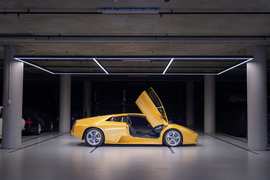
The Ford GT story is one of the most successful examples of automotive engineering cycles. The 2005 iteration utilized a supercharged V8 tied to the endurance engines of the Daytona Prototypes, while the 2017 model pushed boundaries with a 3.5-liter twin-turbo EcoBoost V6 derived from Ford’s modern Le Mans efforts. Both generations prove that whether it’s the roar of a V8 or the precision of forced induction, Ford understands how to package competition tech for the road.
Jaguar XJ220: Group C Power
The XJ220 holds a special place in history as the fastest production car of its era, hitting 217 mph. Its power came from a 3.5-liter twin-turbo V6 lifted from the XJR-11 Group C racer. It was a brutal, uncompromising machine that translated the high-speed requirements of Le Mans directly into a commercial product, showcasing that high-speed performance tuning requires more than just power—it requires aerodynamic mastery.
Plymouth Belvedere: The NASCAR Hemi
The 1964 Belvedere is a lesson in domestic racing dominance. The 426 Hemi V8 was built specifically for NASCAR, a “Race Hemi” that transformed Plymouth’s street presence overnight. Producing 425 hp, it was a terrifyingly quick muscle car that dominated local drag strips and backroads alike, cementing the Hemi’s status as an icon of American automotive innovation.
Porsche 918 Spyder: Hybrid Hypercar Tech
Porsche is arguably the master of transferring race tech to production. The 918 Spyder’s 4.6-liter V8 was a direct descendant of the RS Spyder LMP2 endurance racer. By pairing this naturally aspirated masterpiece with hybrid electric motors, Porsche achieved a 0-60 time of 2.2 seconds. It represents the future of high-CPC automotive trends, proving that hybridization is not the death of the enthusiast car, but its evolution.
Porsche Carrera GT: The Analog Apex
Finally, we have the Carrera GT. Its 5.7-liter V10 was originally meant for the F1 grid, only to be repurposed for a Le Mans prototype that never turned a wheel in anger. Porsche, recognizing the brilliance of the design, dropped it into the Carrera GT. With 612 hp and an 8,000 RPM scream, it is widely considered the most rewarding—and dangerous—supercar ever built. It is a monument to the era of analog, race-derived perfection.
The Future of Race-Inspired Engineering
As we move toward a future defined by electrification and autonomous safety, the value of these machines is only going to increase. True motorsport DNA is about the experience—the vibration of the chassis, the response of the throttle, and the pedigree of the engineering.
If you are looking to elevate your own collection or seek a vehicle that offers a genuine connection to the track, now is the time to invest in these heritage platforms. Whether you are hunting for a vintage V8 or a modern hybrid hypercar, understanding the provenance of the powertrain is key to finding a true driver’s car.
Are you ready to experience what true racing engineering feels like from the driver’s seat? Contact our specialist team today to schedule an appraisal of your current performance vehicle or to get guidance on finding your next track-inspired masterpiece.