
From Track to Tarmac: 10 Iconic Production Cars with Genuine Motorsport DNA
There is an undeniable, visceral thrill that comes from driving a vehicle engineered with pure motorsport DNA. We aren’t talking about cosmetic racing stripes, aerodynamic body kits, or “sport-tuned” suspension settings designed for marketing fluff. We are talking about genuine race-bred powerplants—engines conceived in the crucible of high-stakes competition—dropped into the chassis of production vehicles. These mechanical marvels bring high-revving, adrenaline-inducing performance to public roads, offering a tangible connection to the legendary machines that inspired them.
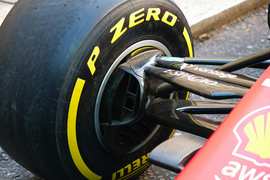
As an automotive engineer with over a decade of experience in performance vehicle development, I have seen firsthand how the rigorous demands of endurance racing and Formula 1 push internal combustion technology to its absolute limit. In this analysis, we will explore 10 production vehicles that blur the lines between race and road, examining how these manufacturers successfully bridged the gap. Before we list these legends, it is essential to understand why companies invest millions into the volatile world of motorsport and how that R&D eventually trickles down into the high-performance cars we drive today.
The Symbiotic Relationship Between Racing and Production
Motorsport acts as the ultimate laboratory for automotive innovation. When a manufacturer commits to series like the FIA World Endurance Championship or Formula 1, they operate in an environment where mechanical failure is not a secondary concern—it is an existential threat to the brand. This pressure forces engineers to innovate with lightweight materials, advanced heat dissipation, and complex forced-induction systems.
The “Win on Sunday, Sell on Monday” strategy remains the gold standard in the industry. Innovations like dual-clutch transmissions, ceramic composite brakes, and paddle shifters were forged on the circuit long before they became staples of the modern commuter vehicle. When a brand dominates, they effectively market the durability and engineering prowess of their entire product lineup. For the enthusiast, however, the real prize is owning a vehicle that houses a “detuned” version of an actual race-winning heart.
Alfa Romeo Montreal (1970–1977)
The Montreal is a masterclass in Italian design, but its soul is found in its 2.6-liter V8. Derived from the Tipo 33 endurance racer—a car that saw battle at the Targa Florio and the 24 Hours of Daytona—this engine was a technical revelation for the 1970s. It features a dry-sump lubrication system and spins up to a frantic 7,000 RPM. Despite being massaged for road-going civility, it remains one of the most charismatic race-derived engines of its era.
BMW M1, M5 (E28), and M6 (E24)
BMW’s M Division is practically synonymous with racing pedigree. The legendary M88 straight-six engine is the crown jewel here. Originally designed for the M1 ProCar series, this 3.5-liter masterpiece later powered the E28 M5 and the E24 M6. Its throttle response is razor-sharp, a direct byproduct of its racing lineage. Similarly, the E30 M3 utilized the S14 engine, which leaned heavily on the lessons learned from BMW’s M12 Formula 1 program. These vehicles are the benchmark for how a street car can handle with the poise of a DTM champion.
Chevrolet Camaro ZL1 (1969)
The 1969 Camaro ZL1 is essentially a drag-strip monster with license plates. Its all-aluminum 427-cubic-inch V8 was built for the Can-Am series, designed to prioritize high-RPM horsepower over long-term reliability. With only 69 units produced, this remains a holy grail for collectors. The sheer audacity of putting a Can-Am race engine into a production Camaro changed the landscape of American muscle, proving that factory-backed high performance could compete with exotic European imports.
Ferrari Dino 206 GT
While purists sometimes debate the “Ferrari” badge, the Dino 206 GT is indisputably one of the most significant cars in Maranello’s history. Its 2.0-liter V6 was a direct descendant of Ferrari’s Formula 2 racing engines. It was compact, lightweight, and offered an intoxicating soundtrack that belied its small displacement. It established the mid-engine layout as the standard for Ferrari’s performance vehicles, a configuration that defines the brand to this day.
Ferrari F50

If you want to experience an F1 car with a windshield, the Ferrari F50 is the answer. Built for the 50th anniversary of the company, its 4.7-liter V12 is a stressed member of the chassis, directly evolved from the Tipo 641 F1 car driven by Alain Prost. This is not a “road car with a race-style engine”—it is a race engine with a body wrapped around it. It provides an unfiltered, raw connection to the asphalt that modern computerized supercars struggle to replicate.
Ford GT (2005 & 2017)
The Ford GT is the ultimate tribute to the Ford GT40, the car that famously toppled Ferrari at Le Mans. The 2005 model utilized a 5.4-liter supercharged V8 with architecture shared with Ford’s Daytona Prototype program. The 2017 iteration pivoted to a 3.5-liter twin-turbocharged EcoBoost V6, a direct descendant of the powerplant used in the IMSA endurance circuit. These vehicles prove that Ford’s commitment to winning endurance racing is directly reflected in the performance specs of their halo cars.
Jaguar XJ220
The XJ220 suffered a tumultuous development cycle, but the result was a technological triumph. While initially promised as a V12, it eventually debuted with a 3.5-liter twin-turbocharged V6 derived from the XJR-11 Group C racer. This engine propelled the XJ220 to a top speed of 217 mph, momentarily holding the title of the world’s fastest production car. It remains a testament to what happens when you take a prototype-class engine and refine it for top-speed dominance.
Plymouth Belvedere (1964)
The 1964 Belvedere represents the peak of American factory-race engineering. Equipped with the legendary 426 Hemi “Race” engine, it was a NASCAR powerhouse. By homologating this engine for the street, Plymouth created a vehicle that was effectively a weekend track car for the average consumer. The Hemi remains one of the most recognizable and high-CPC keywords in the classic car market, representing an era of unparalleled power and displacement.
Porsche 918 Spyder
The 918 Spyder is a masterclass in hybrid engineering. Its 4.6-liter naturally aspirated V8 is a derivative of the RS Spyder, which dominated the LMP2 class at Le Mans. By integrating electric motors, Porsche created a hypercar that defied the laws of physics, hitting 60 mph in roughly 2.2 seconds. It captures the spirit of endurance racing by providing sustainable, high-intensity performance that can handle both the track and the daily commute.
Porsche Carrera GT
Perhaps the most beloved supercar of the 21st century, the Carrera GT features a 5.7-liter V10 that was originally shelved from a Formula 1 development program. Porsche later repurposed this screaming engine for a Le Mans prototype that never saw the grid, ultimately deciding to place it in their flagship street car. With no electronic stability aids to buffer the driver, the Carrera GT remains one of the most demanding and rewarding cars ever built.
Final Thoughts on Motorsport Engineering
Investing in vehicles with racing DNA is more than just a purchase; it is an investment in history. Whether you are looking for high-performance automotive assets or seeking expert vehicle restoration services to maintain these rare machines, the value of these cars lies in their pedigree. As the automotive world shifts toward electrification, these naturally aspirated and track-derived combustion powerplants will only increase in scarcity and desirability.
Are you ready to experience the true potential of performance engineering? Whether you are looking to acquire your first race-derived classic or need specialized maintenance for a high-output engine, the time to act is now. Contact our performance consultation team today to learn how you can add a piece of motorsport history to your private collection.