
The Evolution of Porsche’s Track Weapon: Tracing the Heritage of the 911 GT3 RS
Since its debut, the Porsche 911 GT3 RS has occupied an elite niche in the automotive world—a road-legal homologation special engineered to dominate the racetrack. When Porsche first introduced the GT3 in 1999, it was widely perceived as the pinnacle of the 911 lineup. Its lightweight construction, race-tuned powertrain, and FIA-inspired engineering represented the ultimate expression ofPorsche’s commitment to motorsport. Yet, the obsessive engineers in Stuttgart always saw room for improvement.
With the introduction of the facelifted 996.2 generation, Porsche refined the GT3 formula, pushing the boundaries of what was possible in a road-legal track car. They shed further weight through innovative materials, enhanced the flat-six engine’s output, and subtly tweaked aerodynamics. The result was the GT3 RS, a machine that made the standard GT3 look tame by comparison. For over two decades, the GT3 RS has remained the benchmark for track enthusiasts, a living legend in the world of motorsport.
The current iteration, the 992.1 GT3 RS, takes the track-focused philosophy to even more extreme heights. Its carbon-fiber hood features a central radiator and distinctive “nostril” outlets designed to channel airflow over the roof, a design inspired by Porsche’s racing prototypes. The car incorporates a hydraulically adjustable front splitter and underbody flaps, similar to the 911 Turbo S, while the massive swan-neck rear wing incorporates DRS (Drag Reduction System), mirroring Formula 1 cars and hypercars like the McLaren P1.
This extreme focus on performance extends to the chassis. The GT3 RS features adjustable race-derived suspension, dynamic engine mounts, aggressive air intakes, and deep side skirts. Powering the 992.1 is a 4.0-liter naturally aspirated flat-six engine producing 525 horsepower. This engineering marvel delivers blistering performance: a 0-62 mph acceleration time of 3.2 seconds, 860 kg of downforce at 177 mph, and a lap time of 6:44.85 at the Nürburgring. It is a machine that stands in stark contrast to the everyday 911, embodying the pure spirit of motorsport.
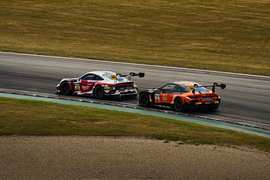
The Evolution of Excellence: A Glimpse into the Future of the GT3 RS
As the automotive landscape continues to evolve, Porsche remains at the forefront of innovation. Recent spy shots have captured the camouflaged 992.2 GT3 RS undergoing testing at the legendary Nürburgring, a testament to its rigorous development process. As with every iteration of the 911, the upcoming model appears to build upon its predecessor’s strengths while incorporating subtle refinements.
The new 992.2 GT3 RS retains many of the signature features of the 992.1, including the central radiator, “nostril” outlets, and the imposing swan-neck rear wing with DRS. The overall silhouette remains aggressive and aerodynamic, with the same air intakes and side skirts that define its track-focused nature. Even the door handles appear to be carried over from the outgoing model.
One notable change observed in the 992.2 is the relocation of the blinker lights, which are now integrated into the headlights, mirroring other models in the 992.2 range. The rear diffuser has also been subtly redesigned, featuring new, small intakes on either side of the exhaust. Whether the new model will feature the digital dashboard introduced in other 992.2 variants remains to be seen, but for the most part, it appears to be a refinement of the proven GT3 RS formula—an aggressive, yet highly effective, track machine.
Powering the Beast: The Debate Over the Next-Generation Powertrain
Speculation has circulated that the new GT3 RS might adopt the 3.6-liter twin-turbo hybrid flat-six engine that powers many 992.2 models. This upgrade would certainly boost power well beyond the outgoing 4.0-liter naturally aspirated engine. However, this approach contradicts the core philosophy of the GT3 RS.
If Porsche were intent on standardizing the hybrid powertrain, it would likely have been implemented in the standard GT3, which it has not. Furthermore, while the Stuttgart engineers have worked wonders with this new hybrid unit, it is still heavier than the naturally aspirated flat-six—a critical factor for a car that prioritizes weight reduction above all else.
Ultimately, forcing a hybrid engine into the GT3 RS simply for the sake of increased horsepower dilutes the very essence of the car. The GT3 and GT3 RS are designed to thrill drivers with their pure, mechanical connection to the road. They are not supercars built solely to break lap records; they are precision instruments engineered for the ultimate driving experience.
The Natural Competitor: How the GT3 RS Stacks Up Against the AMG GT R
To understand the GT3 RS’s enduring appeal, one must look at the competition. Recently, Mercedes-AMG released spy shots of its upcoming track-focused AMG GT R, a vehicle that will undoubtedly challenge either the GT3 RS or the forthcoming GT2 RS. While the AMG GT R appears impressive, it faces a significant uphill battle to compete with the GT3 RS.
For over two decades, the GT3 RS has been the benchmark for track performance. Its legacy is built on a relentless pursuit of perfection, a philosophy that has earned it a legendary status among enthusiasts. As the automotive world transitions towards electrification and hybrid powertrains, the 992.2 GT3 RS stands at a crossroads.
Will it follow the path of electrification, or will it remain true to its naturally aspirated heritage? Porsche’s commitment to the GT3 RS tradition suggests that the new model will continue to embody the spirit of motorsport—a pure, mechanical thriller designed to thrill, not just to break records. With the end of the naturally aspirated era in sight, the 992.2 GT3 RS has the potential to be the ultimate swansong for this iconic engine, a final, roaring testament to the power of motorsport engineering.
The Legacy of the 911 GT3 RS

For two decades, the Porsche 911 GT3 RS has been the benchmark for track-focused performance, a legendary machine that embodies the pinnacle of Porsche’s engineering prowess. Its lightweight construction, race-tuned engine, and aerodynamic design have earned it a legendary status among automotive enthusiasts. As the automotive world transitions towards electrification, the GT3 RS remains at the forefront of innovation, pushing the boundaries of what is possible in a road-legal track car.
The End of an Era?
The automotive landscape is constantly evolving, with new technologies and powertrain concepts emerging. As Porsche looks to the future, the company must decide how to balance innovation with tradition. The 992.2 GT3 RS represents a critical inflection point for the GT3 RS legacy. Will it follow the path of electrification, or will it remain true to its naturally aspirated heritage?
Porsche’s commitment to the GT3 RS tradition suggests that the new model will continue to embody the spirit of motorsport—a pure, mechanical thriller designed to thrill, not just to break records. With the end of the naturally aspirated era in sight, the 992.2 GT3 RS has the potential to be the ultimate swansong for this iconic engine, a final, roaring testament to the power of motorsport engineering.
The Ultimate Track Machine
In the quest for the ultimate track-focused sports car, the Porsche 911 GT3 RS stands alone. Its relentless pursuit of perfection, its uncompromising focus on performance, and its legacy of motorsport excellence have earned it a legendary status among automotive enthusiasts. As the automotive world transitions towards electrification, the GT3 RS remains at the forefront of innovation, pushing the boundaries of what is possible in a road-legal track car.
The Future of the GT3 RS
The automotive landscape is constantly evolving, with new technologies and powertrain concepts emerging. As Porsche looks to the future, the company must decide how to balance innovation with tradition. The 992.2 GT3 RS represents a critical inflection point for the GT3 RS legacy. Will it follow the path of electrification, or will it remain true to its naturally aspirated heritage?
Porsche’s commitment to the GT3 RS tradition suggests that the new model will continue to embody the spirit of motorsport—a pure, mechanical thriller designed to thrill, not just to break records. With the end of the naturally aspirated era in sight, the 992.2 GT3 RS has the potential to be the ultimate swansong for this iconic engine, a final, roaring testament to the power of motorsport engineering.
The Next Level of Performance
The automotive world is constantly evolving, with new technologies and powertrain concepts emerging. As Porsche looks to the future, the company must decide how to balance innovation with tradition. The 992.2 GT3 RS represents a critical inflection point for the GT3 RS legacy. Will it follow the path of electrification, or will it remain true to its naturally aspirated heritage?
Porsche’s commitment to the GT3 RS tradition suggests that the new model will continue to embody the spirit of motorsport—a pure, mechanical thriller designed to thrill, not just to break records. With the end of the naturally aspirated era in sight, the 992.2 GT3 RS has the potential to be the ultimate swansong for this iconic engine, a final, roaring testament to the power of motorsport engineering.
The Evolution of Excellence

The automotive world is constantly evolving, with new technologies and powertrain concepts emerging. As Porsche looks to the future, the company