
The Pagani Utopia 2025: An Expert Review of Horacio Pagani’s Latest Masterpiece
Executive Summary
The Pagani Utopia 2025 represents the apex of hypercar engineering, seamlessly blending the visceral thrill of analog driving with cutting-edge automotive technology. As the successor to the legendary Huayra and the third distinct model line from Horacio Pagani’s workshop in over 25 years, the Utopia builds upon the foundational DNA of the Zonda and Huayra while forging a unique identity centered on harmony, precision, and mechanical purity.
This comprehensive analysis delves into the core philosophies that define the Pagani Utopia, exploring its exquisite design, revolutionary engineering, and driving experience that challenges the modern paradigm of hypercar performance. We examine how this £2.2 million machine navigates the complex intersection of heritage and innovation, its place in the hypercar market, and the defining characteristics that set it apart from its electric contemporaries and established rivals.
The Genesis of the Utopia: A Philosopher’s Vision
Horacio Pagani’s vision for the Utopia is deeply rooted in philosophy and art, inspired by Sir Thomas More’s seminal work that explored the concept of a perfect society. In the automotive world, this philosophy translates to a pursuit of automotive perfection, where beauty and engineering are inseparable. The Utopia is not merely a car; it is a sculpted masterpiece that prioritizes mechanical engagement and visceral driving sensations over the sterile, detached performance of electric powertrains.
While the hypercar landscape is increasingly dominated by electrification, Pagani has deliberately steered a different course. The Utopia’s design shuns the aggressive aerodynamics and massive wings favored by competitors, opting instead for a purer, more organic form that celebrates the inherent beauty of its materials and structure. This aesthetic choice is central to Pagani’s philosophy, reflecting a commitment to craftsmanship that extends beyond mere performance metrics.
The development of the Utopia was a painstaking process, marked by the same meticulous attention to detail that has become synonymous with the Pagani brand. Pagani’s San Cesario sul Panaro facility, a hub of innovation and craftsmanship, serves as the birthplace of these automotive marvels. The Art & Science Research Centre and the main Atelier work in tandem to produce machines that transcend the boundaries of automotive engineering.
Exterior Design: The Art of Automotive Architecture
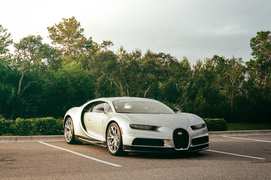
The Pagani Utopia’s exterior is a masterclass in automotive sculpture, characterized by its elegance, proportion, and attention to detail. Eschewing the visual clutter of wings, diffusers, and scoops common in modern hypercars, the Utopia embraces a form-follows-function approach that is both timeless and visually stunning.
The car’s proportions are balanced and harmonious, with flowing lines and smooth surfaces that emphasize its sculptural qualities. The overall silhouette is understated yet powerful, hinting at the performance hidden beneath its skin. This design philosophy aligns with Pagani’s belief that the beauty of a car lies in its purity of form, rather than the aggressive aesthetics often associated with speed.
3.1. Material Innovation: The All-New Pagani Carbo-Titanium
At the heart of the Utopia’s design lies the revolutionary Pagani Carbo-Titanium (Carbo-TPT), an advanced composite material that represents a significant leap forward in automotive engineering. This proprietary composite combines the rigidity of carbon fiber with the resilience of titanium, creating a structure that is both lightweight and incredibly strong.
The Carbo-TPT chassis is a testament to Pagani’s commitment to pushing the boundaries of material science. Its unique weave and layering structure not only enhance structural integrity but also contribute to the car’s exceptional torsional stiffness and safety profile. This allows the Utopia to achieve precise handling and ride comfort without the need for heavy reinforcement, a crucial factor in a car where weight is a primary performance metric.
3.2. Aerodynamic Efficiency: Invisible Downforce
The Utopia’s aerodynamics are a subtle dance between form and function. While the car lacks the aggressive wings of other hypercars, it employs advanced aerodynamic principles to generate downforce efficiently. The bodywork is sculpted to optimize airflow, minimizing drag while maximizing stability at high speeds.
This approach reflects Pagani’s commitment to a holistic design philosophy, where every element contributes to the overall harmony of the car. The resulting aerodynamic package is not just visually striking; it is a crucial component of the Utopia’s performance, ensuring that the car remains planted and predictable even at its limits.
Interior Design: A Sanctuary of Analog Excellence
The interior of the Pagani Utopia is a stunning showcase of mechanical artistry and luxurious craftsmanship. It is a cockpit designed to immerse the driver in the driving experience, celebrating the tactile and auditory sensations of traditional analog motoring.
4.1. Mechanical Ballet: The Analog Instrumentation and Gear Shifter
True to Pagani’s philosophy, the Utopia features a symphony of mechanical components that captivate the senses. The analogue instrumentation is encased in precision-machined portholes, allowing drivers to glimpse the inner workings of the gauges as they would a fine Swiss watch. This approach reflects a deep respect for the engineering behind the car, making the driving experience a truly holistic endeavor.
The centerpiece of the interior is the machined-from-solid gear shifter for the optional seven-speed manual gearbox. Rising from the transmission tunnel like a piece of sculpture, the complex linkage is proudly displayed beneath a transparent cover. This dedication to mechanical purity is a defining characteristic of the Utopia, celebrating the art of driving in a way that digital interfaces cannot replicate.
4.2. The Philosophy of Leonardo da Vinci: Intertwined Art and Science
Pagani’s passion for beautifully wrought engineering is inspired by Leonardo da Vinci, the Renaissance polymath who first espoused the principle of art and science being inextricably linked. The Utopia is a testament to this philosophy, with every component showcasing the seamless integration of artistic creativity and scientific precision.
The steering wheel, in particular, exemplifies this principle. One of more than 750 individual components machined in Modena Design’s state-of-the-art CNC facility, the wheel begins as a 43kg billet of high-grade alloy. After 28 hours of five-axis machining to tolerances of just 0.5 microns, followed by meticulous hand-polishing, the finished wheel weighs a mere 1.6kg. This process highlights the complexity and craftsmanship involved in every aspect of the Utopia’s creation.
The Engine: A Bespoke V12 Powerhouse

The heart of the Pagani Utopia is a bespoke 6-liter twin-turbocharged V12 engine, developed in partnership with AMG. This engine is a masterpiece of engineering, delivering a potent and visceral driving experience that is characteristic of Pagani’s unique approach to performance.
5.1. A Refined Symphony of Power
The Utopia’s V12 engine is not designed to be the most powerful in its class; instead, it is tuned to deliver a refined and balanced power delivery that complements the car’s exceptional handling and ride comfort. With 852 bhp and 811 lb-ft of torque, the engine provides colossal potency while maintaining a degree of control and restraint that enhances the driving experience.
5.2. The Engineering Marvel of the Transverse Engine
The Utopia utilizes a 6.0-liter twin-turbocharged V12 engine that is mounted transversely behind the cockpit. This design choice allows for optimal weight distribution and contributes to the car’s agile handling characteristics. The engine is designed to deliver a smooth and linear power delivery, with a linear torque curve that provides effortless acceleration at all speeds.
5.3. The Performance Profile: Beyond the Numbers
While the Utopia’s power output places it in the upper echelon of hypercars, its performance is defined by its engagement rather than its raw numbers. The car’s lightweight construction and precise handling allow it to deliver a level of agility and responsiveness that is unmatched by heavier electric hypercars.
Handling and Dynamics: A Driver’s Machine
The Pagani Utopia is a driver’s machine, designed to provide an engaging and visceral driving experience that challenges the modern trend of automated performance. The car’s handling is characterized by its precision, responsiveness, and feedback, allowing drivers to connect with the road in a way that is increasingly rare in modern automotive engineering.
6.1. The Seven-Speed Manual: A Relentless Delight
One of the defining features of the Utopia is the availability of a seven-speed manual gearbox, a rare and highly coveted feature in modern hypercars. Pagani has engineered this gearbox to deliver a smooth, crisp, and mechanical shift feel, allowing drivers to fully engage with the driving experience.
The shift linkage is a marvel of mechanical engineering, with precise detents and positive feedback that make shifting gears a joy. The gearbox’s design is a testament to Pagani’s commitment to analog driving, offering a level of interaction and control that is often lost in automated transmissions.
6.2. Advanced Suspension Systems: A Balance of Comfort and Control
The Utopia features advanced suspension systems that provide a balance of comfort and control. The semi-active TracTive dampers offer a range of dynamic modes, allowing drivers to tailor the car’s handling to their preferences.
With ride comfort being a primary focus for Pagani, the Utopia’s suspension is tuned to deliver a smooth and compliant ride, while still providing the agility and responsiveness needed for spirited driving. This balance of comfort and control allows drivers to push the car to its limits without sacrificing refinement.
Technological Integration: Sophisticated Electronics for Enhanced Dynamism
While Pagani prioritizes analog driving, the Utopia benefits from advanced electronics that enhance the driving experience. The car features a comprehensive suite of electronic aids, including dynamic modes, traction control, and electronic differential control, which provide a balance of performance and safety.
7.