
The Ferrari 296 GTB: A Hybrid Benchmark in the Modern Supercar Era
For years, the trajectory of high-performance automobiles has been defined by an insatiable quest for horsepower, a dominance often heralded by the guttural roar of a V12 or the earth-shattering bellow of a massive V8. However, as the automotive landscape undergoes its most significant technological paradigm shift in generations, a different kind of power is emerging—one that seamlessly marries the raw, emotive charisma of combustion with the electrifying force of electric propulsion. Leading this charge is the Ferrari 296 GTB, a revolutionary masterpiece that has redefined what a hybrid supercar should be. Launched in 2022, this marvel from Maranello stands at the intersection of tradition and innovation, proving that the heart of a true Ferrari can beat to the rhythm of both combustion and electricity.
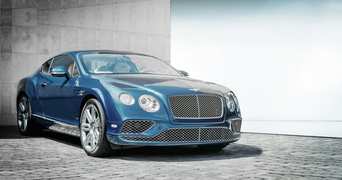
While the automotive world has witnessed a steady march toward electrification, the Ferrari 296 GTB arrived as a defiant statement. It eschewed the well-trodden path of its multi-award-winning V8 predecessors, opting instead for a high-revving, twin-turbocharged V6 engine augmented by a cutting-edge electric motor. This courageous move positioned the 296 GTB as the pioneering vanguard of an emerging hypercar segment that is gradually embracing hybrid technology. Its arrival immediately set the benchmark for rivals, most notably the formidable McLaren Artura and the burgeoning challenge posed by Lamborghini’s upcoming Temerario.
A Departure from Convention: The Birth of the V6 Hybrid
The 296 GTB represents more than just a technological leap; it signifies a fundamental shift in Ferrari’s philosophy. Dispensing with the twin-turbo V8—an engine that had powered the 488 and F8 into legendary status—the engineers at Maranello introduced a 120-degree V6 engine. This architecture is not merely a scaled-down V8; it is a bespoke unit engineered for maximum thermal efficiency and a naturally aspirated feel. Coupled with an electric motor, this powertrain delivers an astonishing 819 horsepower, a figure that catapulted the Ferrari 296 GTB into a league of its own.
Unlike its stablemate, the all-wheel-drive SF90 Stradale, the 296 GTB retains a strictly rear-wheel-drive configuration. This deliberate choice ensures that the driver remains fully engaged with the dynamics of the car, preserving the visceral thrill that defines the Ferrari experience. The V6 engine, positioned centrally within a new aluminium chassis, is mounted low down, contributing to a lower center of gravity and enhanced agility. With a wheelbase shortened by 50mm compared to its V8 predecessors, the 296 GTB feels remarkably compact and responsive, despite its headline-grabbing power figures.
Engineering Excellence: The Power and Precision of the 296 GTB
The engineering behind the Ferrari 296 GTB is nothing short of breathtaking. The engine itself is a masterpiece of compact design, incorporating a ‘hot-vee’ turbocharger arrangement where the exhaust manifolds are nestled within the valley of the V6 cylinders. This layout minimizes turbo lag, ensuring near-instantaneous throttle response that makes the car feel alive from the moment the driver presses the accelerator. The electric motor generates an additional 165 horsepower and 232 lb-ft of torque, pushing the total system output to a staggering 819 horsepower. While Ferrari refrains from quoting a combined peak torque figure—likely due to the intricate electronic coordination between the engine and motor—it is safe to say that the torque output is prodigious.
Beyond the headline figures, the V6 engine offers a significant weight advantage, saving approximately 30 kilograms over a conventional V8. This weight saving contributes to the car’s exceptional power-to-weight ratio, which stands at a formidable 566bhp per tonne (dry weight). The powertrain is mated to a highly sophisticated eight-speed dual-clutch transmission, a unit renowned for its smooth, lightning-fast shifts. Nestled behind the passenger cell lies a long, oblong battery pack that enables a pure electric driving range of approximately 15 miles, allowing drivers to glide silently through urban environments or bypass emissions zones with zero-emission capabilities.
The Six-Axis Sensor and ABS-evo: A Revolution in Chassis Control
No Ferrari is complete without a suite of advanced electronic chassis systems, and the Ferrari 296 GTB is no exception. The company has developed a revolutionary six-axis sensor, known as 6w-CDS, capable of measuring acceleration and rotational velocity across all three spatial axes. This advanced sensor replaces the conventional yaw sensor, working in tandem with a sensor mounted on the steering rack to provide the car with an unparalleled understanding of driver inputs and available grip. The system intelligently orchestrates the Side Slip Control (SSC) and active E-Diff, maximizing cornering speed while maintaining absolute stability.
One of the most significant advancements enabled by the 6w-CDS is the ABS-evo system. Operating in RACE mode and above, this system utilizes brake-by-wire technology to deliver unprecedented stopping performance. It significantly shortens braking distances while simultaneously improving stability during trail braking—the practice of modulating the brakes while turning into a corner. This technology transforms the 296 GTB into a sharper, more responsive weapon on the track, allowing drivers to push the limits of adhesion with confidence and precision.
Active Aerodynamics: From Drag Reduction to Downforce Generation
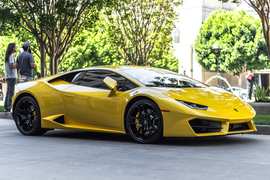
For the first time in a production Ferrari road car, active aerodynamics are utilized not to minimize drag, but to maximize downforce. The Ferrari 296 GTB features a deployable rear wing that can generate up to 100 kilograms of downforce, contributing to a total of 360 kilograms at 155 mph. This innovative approach ensures that the car remains planted and stable at high speeds, providing drivers with a tangible connection to the road and a sense of security at the limit.
The car’s cooling system is equally sophisticated. The nose features two radiators for engine and gearbox cooling, alongside two condensers dedicated to battery cooling. Hot air is expelled from the underbody to prevent interference with the intercoolers located along the flanks. Small apertures below the headlights draw cooling air to the brakes, while a wing integrated at the rear roofline channels air over the engine bay, creating a ‘virtual’ rear screen that enhances aerodynamic efficiency.
The majority of the 296 GTB’s downforce is generated beneath the car. Particular attention has been paid to channeling airflow through the underbody and rear diffuser, as well as optimizing the ride height to maximize the effectiveness of these aerodynamic surfaces. This holistic approach to aerodynamics ensures that the Ferrari 296 GTB is not just powerful, but also remarkably efficient and stable.
The Assetto Fiorano Pack: Forged in the Fires of GT Racing
While the standard Ferrari 296 GTB is already a formidable machine, the Assetto Fiorano pack takes its performance to a whole new level. This package, which was fitted to all the cars we tested at the launch, replaces the standard dampers with Multimatic units inspired by GT racing cars. It also adds further carbon aerodynamic devices on the nose, increasing front downforce by 20 kilograms.
The cabin features additional carbon fiber components, such as the door panels, and the exterior gains further carbon accents. These enhancements contribute to an overall weight saving of 12 kilograms, which increases to 15 kilograms if the optional Lexan rear engine cover is specified. For those seeking the ultimate track-day experience, the Fiorano pack can be ordered with Michelin Pilot Sport Cup 2 R tyres, replacing the standard Pilot Sport 4S tyres. As a nod to heritage, Fiorano cars can also be equipped with an exterior graphics package inspired by the iconic 250LM of the 1960s, further accentuating the car’s classic racing pedigree.
Having spent considerable time with the 296 GTB in the metal, we can confirm that it is a visually stunning machine. With or without the divisive graphics pack, it stands apart from anything else in the segment, its clean lines evoking the timeless elegance of the 250LM.
Performance and Drivability: A Masterclass in Balance
The driving experience of the Ferrari 296 GTB is nothing short of revolutionary. To start the car, simply give the bottom of the steering wheel boss a double press and engage first gear. The 296 always defaults to Hybrid mode, allowing for silent, electric-only propulsion until the driver demands more power. Haptic driver mode buttons on the left side of the wheel allow for easy selection of EV, Performance, or Qualifying modes.
In EV mode, the 296 GTB glides through urban environments with serene grace, its electric motor providing smooth, silent acceleration. The damping is so sophisticated that the car is surprisingly comfortable for long-distance cruising, and there is even a reasonable luggage area in the ‘frunk’—a welcome addition compared to the SF90. But the true magic of the 296 GTB reveals itself when both the engine and electric motor are engaged.
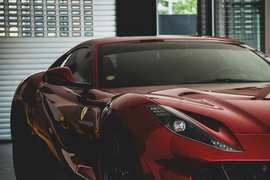
Planting the throttle at low revs in a high gear results in a seismic surge of acceleration. There is no lag, no hesitation—just a relentless wave of torque that makes you question the necessity of gears. Yet, with eight ratios to play with and an engine that revs to 8,500 rpm, the experience is far from linear. When the Ferrari 296 GTB is fully unleashed, the effect is absolutely breathtaking. The 0-6