
The Edge of Engineering: Road Cars Borrowing From the Race Track
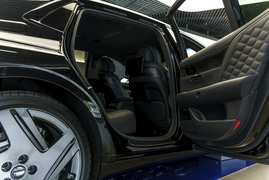
There’s an undeniable allure to the raw intensity of motorsport, a visceral connection that excites drivers worldwide. But what happens when that same heart-pounding power is liberated from the track and unleashed onto public roads? Manufacturers invest staggering amounts into motorsport for reasons beyond mere competition; they do it to innovate, to push boundaries, and ultimately, to transfer that cutting-edge engineering to the vehicles we drive every day. This list dives into ten production vehicles where the line between race car and road-going machine becomes beautifully blurred. From the howling V12s to the highly boosted engines, these are the road cars that give everyday drivers a true taste of motorsport DNA.
The Symbiotic Relationship Between Racing and Road Cars
Motorsport and road cars have always shared a deep, symbiotic relationship. Racing serves as the ultimate proving ground for automotive technology. It’s a crucible where components are subjected to extreme forces, high temperatures, and the unforgiving logic of competition where failure is simply not an option. The lessons learned in this relentless environment inevitably trickle down to the vehicles rolling off production lines for the average consumer. Whether we’re talking about advances in aerodynamic efficiency, the development of advanced lightweight materials, or trickled-down engine technology, innovation forged on the track paves the way for better, more capable road cars.
The most straightforward translation of racing to the street often comes in the form of revolutionary components. Consider the disc brake and paddle shifter systems, once exclusive to top-tier racing machines. Today, they are standard features in countless consumer vehicles, proving the efficacy of motorsports-derived technologies. Furthermore, success on the racetrack significantly impacts a manufacturer’s brand perception. When a company’s racing divisions dominate at marquee events, their production vehicles are perceived as inherently more desirable, reliable, and performance-oriented. While most of us will likely never experience the extreme performance of a Formula 1 car or a Le Mans prototype, the inclusion of race-bred engines ensures we can still feel connected to the action, particularly when a motorsport heart is roaring under the hood.
The \”Win on Sunday, Sell on Monday\” Strategy Endures
There’s a clear resurgence in OEM participation in motorsport, and according to many industry analysts, it may be the most positive development for the car industry in decades. The “Win on Sunday, Sell on Monday” philosophy remains a guiding principle for manufacturers. Racing serves as a rigorous testbed for new technologies, particularly those related to performance and efficiency. The extreme conditions of professional racing, such as the Dakar Rally or Endurance racing, allow manufacturers to stress-test components far beyond the limits of a public road, identifying weaknesses that can be engineered out before a product reaches the consumer.
This continuous feedback loop is crucial for developing durable, high-performance engines. When a manufacturer invests heavily in developing an engine for a top-tier racing series, the performance gains, fuel efficiency improvements, and durability innovations are often repurposed for their production models. The intense financial commitment to motorsport is, therefore, not just a marketing exercise, but a long-term investment in engineering excellence. This article explores some of the most striking examples of how this philosophy has brought world-class performance to the everyday driver, providing a bridge between the spectator and the world of elite competition.
Alfa Romeo Montreal: A V8 Heart from the Endurance Wars
The Alfa Romeo Montreal housed a 2.6-liter V8 engine originally derived from Alfa’s Tipo 33 sports prototype. This endurance racer competed in prestigious events such as the Targa Florio and the 24 Hours of Daytona. Although significantly detuned for road use, the engine in the Montreal retained much of its motorsport DNA, capable of revving to 7,000 RPM and producing 200 horsepower. The roar of its V8, coupled with its striking, unique styling, made the Montreal one of the coolest and most underrated cars to ever carry Alfa’s esteemed badge.
The production of the Montreal was influenced by Alfa Romeo’s racing legacy. When the car was first conceived, Alfa Romeo was heavily involved in endurance racing with its Tipo 33 and 33/3 prototypes, competing for top honors at the 24 Hours of Le Mans and other major races. The development of a lightweight aluminum chassis and a high-revving V8 engine was directly influenced by the demands of these racing programs. The goal was to create a car that would not only turn heads with its design but also perform exceptionally on the open road, carrying the competitive spirit of its racing stablemates into the hands of discerning drivers.
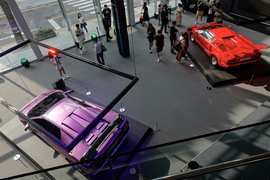
BMW M Division: The Legacy of M1, M3 (E30), M5 (E28), and M6 (E24)
BMW’s racing pedigree is profoundly evident in its iconic M models. The BMW M1, in particular, was powered by a 3.5-liter inline-six M88 engine, which was directly derived from the brand’s extensive racing programs, specifically utilized in BMW’s M1 ProCar series. Later, the same engine would power the E24 M6 and E28 M5 models. Meanwhile, the E30 M3’s highly successful four-cylinder S14 engine was also based on the M88 and its turbocharged Formula 1 derivative, the M12 engine. It drew heavy inspiration from BMW’s dominant touring car racing efforts, sharing parts and engineering with the cars that consistently achieved victory in the DTM series.
The development of the BMW M1 was a direct response to motorsport regulations. The original plan was to homologate a car for Group 5 racing, which required a certain number of production examples to be built. However, a partnership with Lamborghini to manufacture the car dissolved, and BMW ended up producing the M1 in-house, albeit in limited numbers. The engine itself was developed by BMW Motorsport GmbH, initially intended for racing. The performance specifications of these early M cars reflected their racing origins, with precise handling, responsive powertrains, and a focus on lightweight construction, all hallmarks of BMW’s commitment to motorsport excellence.
Chevrolet Camaro ZL1: A Street Legal Drag Stripping Beast
The 1969 Chevrolet Camaro ZL1 featured a potent 427 cubic-inch (7.0-liter) V8 engine that was originally designed for Can-Am racing. Constructed entirely from aluminum, this engine was remarkably lightweight for its displacement and produced a stunning amount of power. While it generated approximately 500 hp, it was deliberately detuned to 430 hp for the road-going version. The ZL1 package transformed the Camaro into a street-legal drag strip monster, and its powerful engine lived on in various race cars competing in the SCCA Trans-Am series. With only 69 units ever produced, the Camaro ZL1 remains an incredibly rare and highly sought-after model in the collector car market today.
The 427 cubic-inch ZL1 engine had deep roots in Chevrolet’s racing division. The engine block and heads were made of aluminum to reduce weight, a critical factor in racing where every pound counts. The engine featured solid lifters, high-performance pistons, and a high-lift camshaft, which enabled it to rev high and produce significant horsepower. This engine was used in Chevrolet’s racing cars in the late 1960s and early 1970s and was considered one of the most potent engines available at the time. By offering this race-derived engine in the Camaro ZL1, Chevrolet provided consumers with a genuine taste of high-performance racing technology, directly linking the production car to the competitive world of Can-Am racing.
Ferrari Dino 206 GT: Racing Engineering for the Masses
The Ferrari Dino 206 GT utilized a 2.0-liter V6 engine that was initially developed for Ferrari’s Formula 2 cars during the 1960s. Even after being detuned for road use, the engine retained its high-revving nature, imbuing the Dino with a true racing spirit that made it an absolute joy to drive on twisty roads. It produced 180 hp, which was more than sufficient for a car weighing just over 2,000 pounds. The Dino was one of the rare instances where a Ferrari model didn’t carry the official Prancing Horse badge and represented the Italian marque’s first major venture into mid-engine V6 sports cars, setting a precedent for future models in the Ferrari lineup.
The development of the Dino 206 GT was directly influenced by Ferrari’s commitment to racing, specifically Formula 2. Enzo Ferrari was keen on developing a production car that would serve as the foundation for the company’s racing ambitions in this series. The Dino V6 engine was conceived to be lighter and more compact than the V12 engines typically used in Ferrari’s grand tourers, which would improve the handling and balance of the car. The race-derived engine produced ample power for its intended use as a sports GT, and the Dino proved to be a successful venture, laying the groundwork for future mid-engine Ferrari models that would go on to dominate racing circuits around the world.
Ferrari F50: A Supercar with a Formula 1 Heart

Created to celebrate the Italian marque’s 50th anniversary, the Ferrari F50 elevated the concept of a race-derived engine to an entirely new level. Its 4.7-liter V12 was derived directly from Ferrari’s 1990 Formula 1 car, the Tipo 641 (later renamed to F1-90), famously driven by the legendary Alain Prost. This naturally aspirated powerhouse revs