
Title: Motorsports to Main Street: 10 Production Cars with Pure Racebred Power
Motorsport history is paved with engineering breakthroughs born from the crucible of competition. From the high-octane drama of the 24 Hours of Le Mans to the visceral roar of Formula 1’s V10 era, the race track has long served as a laboratory for pushing automotive technology to its absolute limits. These technological advancements—aerodynamic innovation, lightweight materials, and drivetrain technology—don’t stay confined to the grid. They trickle down, often refined for road use, bringing the adrenaline-pumping performance and emotional thrills of the circuit to everyday drivers.
Understanding the symbiosis between racing and road cars helps contextualize the allure of these vehicles. Automakers invest vast resources into motorsport for strategic reasons that extend far beyond the checkered flag. The “Win on Sunday, Sell on Monday” mantra remains potent; a manufacturer’s success on track legitimizes its engineering capabilities, boosting brand prestige. For consumers, this translates into acquiring vehicles that offer a tangible connection to the machines that dominate the most extreme forms of automotive competition. Owning a car with a race-derived powertrain transforms the driving experience, offering a unique blend of heritage and performance that road-legal cars often lack.
The relationship between racing and road cars is one of continuous evolution. Take disc brakes and paddle shifters, technologies that originated in high-stakes racing before becoming standard features in modern production vehicles. These examples highlight a recurring pattern: the most extreme testing grounds yield technologies that enhance performance, safety, and efficiency for consumers. This trickle-down effect justifies the enormous expenditure on developing cutting-edge race engines, as the innovations often set new standards for road-going performance.
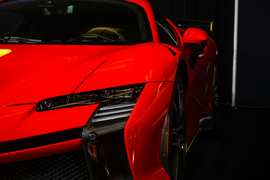
The resurgence of manufacturer entries in professional motorsport is a testament to the enduring power of racing as a marketing and engineering tool. By pushing the boundaries of speed, efficiency, and durability, automakers validate their commitment to innovation, which enhances the desirability of their consumer product lines. While the average driver may never experience the thrill of piloting a Le Mans prototype, they can still feel the race-bred essence of these machines through road-legal models that capture the soul of the circuit.
Race-Bred Power Plants in Road Cars
The history of automotive engineering is rich with instances where racing-derived engines found their way into production vehicles, creating icons of performance that resonate with enthusiasts to this day. These motors often represent the zenith of engineering capability, representing years of development in demanding environments. Whether it’s the raw power of an American V8 or the exotic precision of a European V12, these engines embody the spirit of racing while offering a tangible connection to automotive heritage.
Alfa Romeo Montreal
One of the most evocative examples of race technology trickling down to a production car is the Alfa Romeo Montreal. This distinctive 2+2 coupe, designed by Marcello Gandini, was equipped with a 2.6-liter naturally aspirated V8 engine. This power plant was derived from Alfa’s renowned Tipo 33 racing program, an endurance prototype that competed in prestigious events such as the Targa Florio and the 24 Hours of Daytona.
Although detuned for road legality, the Montreal’s engine retained much of its motorsport character. It could rev to 7,000 RPM and deliver a respectable 200 horsepower, making it a thrilling machine to drive, especially on winding roads. The aggressive sound of the V8, combined with the car’s sharp styling, solidified its reputation as one of the coolest and most underrated cars in Alfa Romeo’s history.
While the Alfa Romeo brand has experienced fluctuations in its market presence over the years, the Alfa Romeo Montreal remains a cherished icon among collectors and driving enthusiasts.
BMW M1, M3 (E30), M5 (E28), M6 (E24)
BMW’s dedication to motorsport is indelibly etched in the legacy of its M division, evident in several iconic production vehicles. The BMW M1 stands out as a prime example, featuring the formidable 3.5-liter inline-six M88 engine. This powerplant was a direct descendant of BMW’s racing programs, specifically utilized in the M1 ProCar racing series. This engine later found its way into the E24 BMW M6 and the E28 BMW M5, establishing a lineage of high-performance vehicles derived from the track.
Simultaneously, the BMW M3 (E30) featured a compact yet potent four-cylinder S14 engine. This engine was also based on the M88 and the turbocharged BMW M12 Formula 1 engines, drawing inspiration from BMW’s touring car racing. The S14 shared components and engineering with the cars that dominated DTM (Deutsche Tourenwagen Meisterschaft) racing, a period of intense competition that further cemented BMW’s reputation as a manufacturer of high-performance driving machines.
Chevrolet Camaro ZL1
The 1969 Chevrolet Camaro ZL1 represents a legendary piece of American muscle car history, a vehicle that blurred the lines between street and strip. Under its hood was a massive 427 cubic-inch (7.0-liter) V8 engine that was originally designed for Can-Am (Canadian-American Challenge Cup) racing. With its all-aluminum construction, this engine was revolutionary for its time, offering a significant power-to-weight advantage.
The production version of the ZL1 produced a staggering 430 horsepower, but the actual rating of the engine was closer to 500 horsepower, showcasing its race pedigree. This engine effectively turned the Camaro into a street-legal drag strip monster, a reputation that carried forward through Chevrolet’s racing lineage. Its performance capabilities made the 1969 Chevrolet Camaro ZL1 one of the most potent and sought-after muscle cars of the era, with only 69 examples ever produced, making them highly collectible today.
The Chevrolet Camaro has maintained its place as a premier performance vehicle, and the ZL1 has become an iconic model in its own right, representing the pinnacle of engineering and power from Chevrolet.
Ferrari Dino 206 GT
The Ferrari Dino 206 GT, often regarded as one of the most underrated Ferraris, features a 2.0-liter V6 engine that has its roots in Ferrari’s Formula 2 racing program during the 1960s. Although tuned down for street use, the engine maintained its high-revving nature, giving the Dino a racing spirit that made it incredibly engaging to drive on twisty roads. It produced 180 horsepower, which was substantial for a car that weighed just over 2,000 pounds.
The Dino marked Ferrari’s foray into mid-engine V6 sports cars, and it was one of the few cars from the Italian marque that did not carry the Ferrari badge, as the company preferred to reserve the name for V12-powered models. Despite this, the Dino has since become a legendary model, and its innovative design has influenced Ferrari’s future lineups.
Ferrari F50
To commemorate the Italian marque’s 50th anniversary, Ferrari introduced the F50, a supercar that pushes the concept of a race-derived engine to its ultimate conclusion. The 4.7-liter V12 engine powering the F50 was directly derived from Ferrari’s Formula 1 race car, the Tipo 641 (later renamed F1-90), which was driven by the legendary Alain Prost during the 1990 season.
This naturally aspirated V12 monster revs up to 8,500 RPM and produces 513 horsepower, bringing the raw, unfiltered essence of a Formula 1 car directly to the streets. With minimal modifications required to meet road regulations, the F50 was as close as a production Ferrari could get to Formula 1 at the time, making it one of the most desirable supercars ever built. The Ferrari F50 remains a highly sought-after model among collectors, representing the pinnacle of automotive engineering and Ferrari heritage.
Ford GT
The Ford GT is an automotive icon that serves as a powerful homage to one of the most legendary race cars of all time: the Le Mans-winning Ford GT40. The 2005 Ford GT features a 5.4-liter supercharged V8 engine whose roots are deeply embedded in the development of Ford’s endurance racing engines. This powerplant is related to the motor used in Ford’s Daytona Prototype race cars, showcasing the brand’s commitment to motorsport.
Similarly, the newer Ford GT (2017) boasts motorsport-inspired performance, powered by a twin-turbocharged 3.5-liter V6 engine derived from Ford’s EcoBoost program used in endurance racing. This engine represents a modern evolution of Ford’s commitment to performance and innovation, showcasing Ford’s ability to translate cutting-edge technology from the track to the road.
Jaguar XJ220
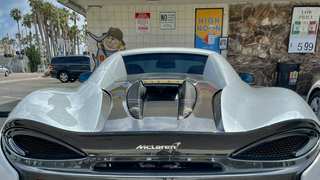
The Jaguar XJ220 is one of the most iconic cars of the British marque, and its story is as legendary as its performance. Initially intended to be powered by a V12 engine, the XJ220 ended up utilizing a 3.5-liter twin-turbocharged V6 engine sourced from the Jaguar XJR-11