
The Pantheon of Speed: World’s Fastest Road Cars in 2026
For a decade, I’ve tracked the evolution of hypercars, watching the industry transition from raw mechanical brute force to the sophisticated, electrified powerhouses of 2026. While the average commuter spends their time navigating traffic at 60 mph, a select group of engineers is obsessed with a different metric: fastest road cars.
Top speed remains the ultimate litmus test for engineering prowess. It’s not about utility; it’s about pushing the boundaries of physics, fluid dynamics, and material science. To build one of the world’s fastest road cars is to secure a permanent place in automotive history. As we look at the landscape in 2026, the playing field has shifted. The fastest road cars are no longer just products of traditional racing heritage; they are high-tech, aerodynamic marvels that challenge our perception of what a production vehicle can achieve.
The Evolution of the 300 MPH Barrier
In the 90s, the race to 200 mph was the defining challenge for icons like the McLaren F1. Today, that target has evolved. Manufacturers are now consistently punching past the 300 mph mark, a feat that requires exponential increases in power and drastic reductions in drag. With the integration of high-density battery technology and advanced electric drivetrains, new players are emerging, proving that you no longer need a century of history to build a record-breaking machine.
The Top 20 Fastest Road Cars of 2026
Yangwang U9 Xtreme (308 mph) – The disruptor. With 2,978 hp from four electric motors and a 1,200V architecture, it proves the future is electric.
Koenigsegg Jesko Absolut (Target: 310 mph) – A masterclass in drag reduction. By removing the rear wing and refining the body, Koenigsegg aims to reclaim the crown.
Bugatti Chiron Super Sport 300+ (304.8 mph) – The first to shatter the 300 mph barrier, this remains a benchmark for internal combustion performance.
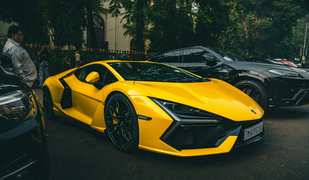
SSC Tuatara (282.9 mph) – After rigorous testing, this American-built beast confirmed its place among the elite.
Bugatti Mistral (282.05 mph) – Currently the world’s fastest road-legal convertible, utilizing the iconic quad-turbo W16.
Koenigsegg Agera RS (277.87 mph) – A legend that set the standard for public-road speed runs.
Bugatti Tourbillon (277 mph est.) – The successor to the Chiron era, utilizing a revolutionary hybrid V16 engine.
Hennessey Venom F5 (271.6 mph) – A raw, American-engineered monster with 1,817 hp.
Bugatti Veyron Super Sport (268 mph) – The car that changed everything. It remains a timeless engineering triumph.
Rimac Nevera R (268 mph) – An electric titan. With 2,078 hp, it’s not just fast; it’s one of the quickest accelerating cars ever built.
Rimac Nevera (258 mph) – The base model that proved EV hypercars are here to stay.
SSC Ultimate Aero (256.18 mph) – The car that famously wrestled the record away from Bugatti years ago.
Koenigsegg Regera (255 mph) – A hybrid masterpiece using a unique single-speed transmission.
Czinger 21C V Max (253 mph+) – A testament to 3D-printed manufacturing and hybrid efficiency.
McLaren Speedtail (250 mph) – The spiritual successor to the F1, optimized for high-speed aero efficiency.
Ultima RS (250 mph) – The ultimate “underdog.” A kit-car spirit meeting hypercar performance.
Aspark Owl (249 mph) – A Japanese electric hypercar focused on record-breaking acceleration.
Koenigsegg Gemera / CCXR (248 mph) – Versatility meets power, from family-friendly hyper-hybrids to supercharged classics.
Saleen S7 Twin Turbo (248 mph) – An American icon that brought serious twin-turbo performance to the mainstream.
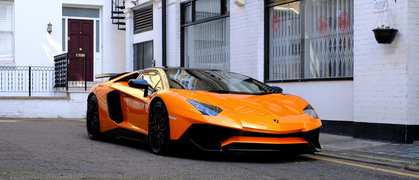
W Motors Fenyr Supersport (245 mph) – A Dubai-based marvel known for its aggressive styling and Ruf-tuned power.
Why Speed Still Matters in 2026
You might ask, why does this matter? For the average buyer, these fastest road cars act as “halo” projects. The high-CPC keywords in this sector, such as hypercar investment and ultra-luxury performance, highlight that these vehicles are as much about asset appreciation as they are about engineering.
The integration of high-voltage battery systems in the fastest road cars has lowered the barrier to entry, allowing firms like Yangwang and Rimac to compete with century-old giants. This technological shift is accelerating the development of the fastest road cars faster than ever before. We are witnessing the democratization of extreme performance, where high-performance electric motors are becoming the primary driver of speed, often outclassing traditional V16 or W16 engines in both 0-60 times and top-end stability.
The Technical Challenge: Aerodynamics and Drivetrain
Achieving a 300 mph top speed isn’t just about horsepower. It’s about managing air. At such velocities, air acts like a physical barrier. The aerodynamic efficiency of cars like the Koenigsegg Jesko Absolut or the McLaren Speedtail is paramount. These vehicles undergo thousands of hours of wind tunnel testing to ensure the top speed performance is stable and safe for the driver.
Furthermore, the high-CPC market for these vehicles is supported by collectors looking for the ultimate automotive engineering achievement. The shift toward hybrid systems—combining combustion engines with electric torque fill—has allowed manufacturers to maintain the “soul” of a V8 or V16 while achieving the instant power delivery of an EV.
Looking Toward the Horizon
As we move through 2026 and beyond, the battle for the title of the fastest road car will likely move into the realm of fully autonomous or AI-assisted speed runs, ensuring that the driver is as safe as possible at triple-digit speeds. For those seeking the pinnacle of human achievement, investing in or simply witnessing these machines is a privilege.
Are you ready to explore the world of ultra-performance engineering or interested in learning more about the next generation of hypercar technology? Contact our performance consulting team today to discuss the latest industry developments and how you can experience the future of automotive excellence.