
The Definitive Guide to the World’s Fastest Road Cars in 2026
For a decade, I’ve tracked the relentless pursuit of velocity within the automotive industry. While the average commuter car cruises comfortably at 70 mph, the realm of the hypercar is defined by something far more primal: the quest for the world’s fastest road cars. In 2026, the leaderboard is no longer just about raw horsepower; it is a sophisticated dance of aerodynamics, material science, and the rapidly shifting landscape of electric powertrain efficiency.
Top speed remains the ultimate metric for engineering dominance. It’s the “bragging rights” statistic that separates boutique manufacturers from legacy titans. Achieving speeds beyond 250 mph while maintaining road-legal status is an immense technical challenge, yet as we move further into 2026, the boundaries continue to dissolve.
The Evolution of the Hypercar Hierarchy
In the 1990s, the battle to crack the 200 mph barrier felt like a monumental event. Today, we are encroaching on the 300 mph mark—a threshold that, until recently, seemed physically impossible for a production vehicle. We are currently witnessing a shift where high-output electric motors are challenging the internal combustion engine’s long-standing reign. These fastest cars in the world represent the pinnacle of human ingenuity.
Here is the definitive ranking of the elite machines currently pushing the limits of physics.
McLaren F1 (240.1 mph)
A timeless icon. Even in 2026, the McLaren F1 remains the yardstick for analog performance. With its naturally aspirated V12 and central seating position, it proved that top-tier engineering transcends eras.
W Motors Fenyr SuperSport (245 mph)
Designed in Dubai and utilizing Porsche-derived twin-turbo technology, the Fenyr is as much a stylistic statement as it is a performance piece. It remains a rare, aggressive entrant in the hypercar market.
Saleen S7 Twin Turbo (248 mph)
An American legend. With 750bhp, this machine brought massive turbo-forced induction to the mainstream. While its top speed claims remain the subject of debate among enthusiasts, its raw, visceral character is undeniable.
Koenigsegg Gemera & CCXR (248 mph)
The Gemera is the world’s first “Mega-GT,” blending extreme hybrid efficiency with 400 km/h capability. It sits alongside the legendary CCXR, showcasing Koenigsegg’s consistent ability to innovate across decades.
Aspark Owl (249 mph)
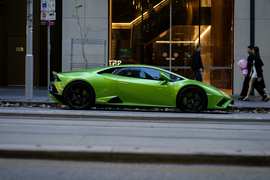
The Aspark Owl brings Japanese precision to the electric hypercar segment. With its record-breaking acceleration and 1,985bhp, it proves that electric torque is the new king of the track.
Ultima RS (250 mph)
The “everyman’s” speed demon. As a kit car, it defies conventional industry logic, achieving elite status through a relentless focus on power-to-weight ratios rather than complex electronic aids.
McLaren Speedtail (250 mph)
The spiritual successor to the F1, the Speedtail utilizes a hybrid powertrain to achieve consistent 250 mph runs. Its teardrop-shaped body is a masterclass in drag reduction.
Czinger 21C V Max (253 mph+)
Czinger utilizes AI-driven 3D printing for its chassis, proving that the world’s fastest road cars are increasingly being built in the digital realm. The V Max variant is a stripped-down, aero-optimized monster.
Koenigsegg Regera (255 mph)
The Regera changed the game with its “Direct Drive” transmission, eliminating the need for a traditional gearbox. It remains one of the most sophisticated hybrids ever built.
SSC Ultimate Aero (256.18 mph)
This American brute held the crown by daring to bypass traction control. It represents a raw, analog era of speed that remains deeply respected by veteran collectors.
Rimac Nevera / Nevera R (258 mph / 268 mph)
The current benchmark for electric performance. With 2,078bhp in the R variant, Rimac has effectively closed the gap between EVs and traditional combustion supercars, proving that the future of speed is electric.
Bugatti Veyron Super Sport (268 mph)
A landmark in automotive history. The Veyron turned the “1,000hp” dream into a drivable reality and set a standard for grand touring at impossible speeds.
Hennessey Venom F5 (271.6 mph)
Hennessey’s pursuit of 300+ mph continues. The F5 is a lightweight, twin-turbo V8 rocket designed for pure, unadulterated straight-line stability.
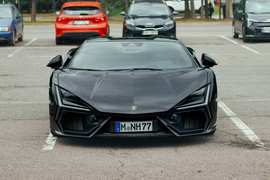
Bugatti Tourbillon (277 mph – Est.)
The future of the brand. By moving to a V16 hybrid system, Bugatti is signaling that they have no intention of surrendering their throne in the luxury hypercar segment.
Koenigsegg Agera RS (277.87 mph)
This machine cemented Koenigsegg’s reputation for public-road record-breaking. It remains a legendary example of what happens when a manufacturer obsesses over every gram of weight.
Bugatti Mistral (282.05 mph)
The fastest convertible ever produced. The Mistral captures the W16 engine’s swan song, delivering an open-top experience at speeds that would tear the roof off almost any other car.
SSC Tuatara (282.9 mph)
After overcoming early controversy, the Tuatara proved its mettle with independent verification. It is a testament to American engineering tenacity and high-speed aerodynamics.
Bugatti Chiron Super Sport 300+ (304.8 mph)
The car that shattered the barrier. The “Longtail” design is an engineering marvel, allowing it to pierce the 300 mph ceiling with remarkable stability.
Koenigsegg Jesko Absolut (310 mph – Target)
The Jesko Absolut is designed for one purpose: to be the lowest-drag hypercar in history. With 1,600bhp and a world-class transmission, it is the most likely candidate to hold the title of the absolute fastest vehicle in the coming years.
Yangwang U9 Xtreme (308 mph)
Shocking the industry, the U9 Xtreme utilizes a 1,200V architecture and four high-output motors to redefine the limits of production electric vehicles. It is the new king of the hill, proving that the world’s fastest road cars now emerge from unexpected pioneers.
Final Thoughts
The quest for top speed is more than just an engineering exercise; it is an exploration of what is possible. As we look toward the remainder of 2026, the competition between internal combustion, hybrid, and full-electric powertrains will only intensify.
Are you ready to experience the next evolution of automotive performance? Contact our specialist team today to stay updated on the latest hypercar releases and secure your place in the future of high-speed motoring.