
From Paddock to Pavement: 10 Legendary Road Cars Born from Motorsport DNA
There is an undeniable, visceral thrill that comes with piloting a machine engineered for the crucible of professional racing. As an automotive industry veteran with a decade of experience in performance engineering, I have found that the most captivating vehicles aren’t just designed for the street; they are forged through the high-stakes demands of the track. We aren’t talking about mere aesthetic nods to racing—aggressive splitters or carbon-fiber trim—but the beating heart of the machine. These are production vehicles that pack engines originally conceptualized for endurance racing, Grand Prix circuits, and championship-level drag strips.
When an automaker decides to bridge the gap between motorsport DNA and street-legal performance, the result is a machine that offers an unfiltered connection to the legacy of competition. These cars don’t just mimic the performance of a racer; they deliver a genuine, high-revving taste of the track to your daily drive.
Why Manufacturers Invest in Track-to-Street Technology
The automotive industry operates on a philosophy of “Win on Sunday, Sell on Monday.” Beyond the obvious marketing prestige, racing is the ultimate R&D laboratory. When manufacturers pour millions into high-performance engineering and motorsport programs, the data harvested from those extreme environments is invaluable. Thermal management, lightweight alloy development, and advanced aerodynamic efficiency are all matured under the pressure of professional competition.
By integrating this motorsport DNA into consumer vehicles, manufacturers do more than boost their brand image—they offer enthusiasts a tangible slice of engineering excellence. Whether it’s the evolution of direct fuel injection or the refinement of dual-clutch transmission systems, the trickle-down effect of racing makes the modern road car faster, safer, and infinitely more engaging.
Alfa Romeo Montreal (Tipo 33 Origins)
The Alfa Romeo Montreal is a masterpiece of the late 60s, housing a 2.6-liter V8 engine derived from the Alfa Tipo 33 endurance prototype. While the street-spec version was detuned to 200 horsepower to ensure reliability, the engine retains the sharp, high-revving soul of its predecessor. It remains a classic example of how performance automotive design can blend Italian elegance with raw track capabilities.
BMW M1, M5, and M6 (The M88 Legacy)
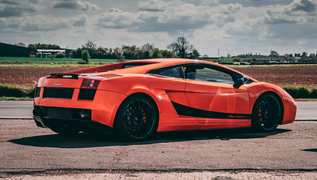
BMW’s M division is the gold standard for many, and the M88 inline-six engine is its crown jewel. Originally built for the M1 ProCar series, this powerplant later found its way into the legendary E28 M5 and E24 M6. The S14 engine found in the E30 M3 also owes its existence to this lineage, sharing critical engineering components with the engines that dominated the DTM touring car series. It is a masterclass in precision mechanical engineering.
Chevrolet Camaro ZL1 (1969)
For American muscle enthusiasts, the 1969 Camaro ZL1 is the holy grail. Its 427 cubic-inch, all-aluminum V8 was engineered specifically for the brutal, high-speed demands of Can-Am racing. Delivering roughly 430 hp in road trim, it turned the Camaro into a street-legal drag strip monster. Even today, the rarity of this high-performance engine makes it one of the most significant assets in any automotive collection.
Ferrari Dino 206 GT
While the Dino nameplate may lack the “Ferrari” badge on some iterations, its spirit is undeniable. The 2.0-liter V6 was birthed from Ferrari’s Formula 2 program. It was a high-revving, lightweight marvel that taught the world that a mid-engine layout wasn’t just for heavy 12-cylinders. It remains a hallmark of automotive innovation, proving that displacement doesn’t dictate passion.
Ferrari F50
If you want to talk about true Formula 1 DNA, the Ferrari F50 is the benchmark. Its 4.7-liter V12 was plucked directly from the Ferrari 641 F1 car. By mounting the engine as a stressed member of the chassis, Ferrari delivered an unfiltered, 8,500 RPM experience. For anyone seeking the ultimate luxury performance vehicle, the F50 stands as a monument to engineering excess.
Ford GT (2005 & 2017)
The Ford GT is a recurring reminder of Ford’s dominance at Le Mans. The 2005 model utilized a supercharged V8 rooted in Daytona Prototype racing, while the 2017 model pushed boundaries with a twin-turbo 3.5-liter EcoBoost V6 derived from the Ford Racing endurance program. These cars showcase how modern vehicle aerodynamics and forced induction can create world-beating speed.
Jaguar XJ220
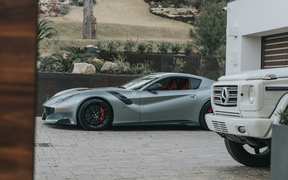
Jaguar’s XJ220 is a story of ambition. Intended to be a V12, it ultimately found its fame with a 3.5-liter twin-turbo V6 lifted from the XJR-11 Group C race car. At the time, its 217 mph top speed was mind-bending. This vehicle represents the pinnacle of supercar speed and power from the early 90s, blending endurance racing tech with iconic design.
Plymouth Belvedere (426 Hemi)
Known simply as “The Elephant Engine,” the 426 Hemi V8 was a NASCAR dominator. When Plymouth stuffed this 7.0-liter powerhouse into the Belvedere, they effectively created a street-legal racer. It is a quintessential piece of American automotive engineering history, capturing the raw, unbridled power that defined the muscle car era.
Porsche 918 Spyder
The 918 Spyder is the definitive bridge between the analog past and the electric future. Its 4.6-liter V8 is derived from the RS Spyder LMP2 prototype. By pairing this track-proven combustion engine with modern electric motors, Porsche created a vehicle that defies physics, hitting 0–60 mph in roughly 2.2 seconds. It is arguably the most advanced hybrid supercar ever produced.
Porsche Carrera GT
Perhaps the greatest analog supercar of all time, the Carrera GT features a 5.7-liter V10 that was originally shelved from a Formula 1 project and a canceled Le Mans prototype. With an 8,000 RPM redline and a manual transmission, it offers a level of driver engagement that modern electronic aids simply cannot replicate.
Final Thoughts on Motorsport DNA
These vehicles are more than just a list of specs; they are time capsules of automotive technological advancement. Whether you are looking for a high-net-worth investment asset or the ultimate track-day vehicle, choosing a car with a genuine racing heritage ensures that you are driving something with a soul.

If you are looking to upgrade your driving experience or add a piece of racing history to your garage, the market for these performance legends is constantly shifting. Don’t let your passion for high-performance engineering sit in neutral. Contact our specialist team today for a consultation on sourcing or maintaining the world’s most exclusive race-bred machines.