
From Paddock to Pavement: 10 Legendary Road Cars Born from Motorsport DNA
There is an unmistakable, raw electricity that surges through a vehicle engineered not just for a commute, but for the podium. As an automotive professional with over a decade of experience in the industry, I have spent years peeling back the layers of performance engineering. While many vehicles claim “sporty” handling, there is a rarefied air surrounding cars that possess genuine motorsport DNA. These are not mere aesthetic exercises; they are machines powered by engines forged in the crucible of track competition, bringing high-revving, adrenaline-drenched performance to the public street.
The synergy between racing and road cars is the driving force of innovation. Manufacturers invest billions into motorsport to push thermal efficiency, structural rigidity, and power-to-weight ratios to their breaking points. When a company dominates on the circuit, it validates their engineering prowess, creating a halo effect for their consumer lineup. Today, let’s explore ten iconic production vehicles that successfully bridged the gap between a checkered flag and a red light.
The Engineering Philosophy: Why Racing Matters
“Win on Sunday, sell on Monday” isn’t just a catchy marketing slogan; it is a foundational pillar of the automotive sector. When an OEM develops a racing program, the technology that survives the 24-hour grind of Le Mans or the high-RPM demands of Formula 1 eventually trickles down into the vehicles we drive. Innovations such as advanced aerodynamics, dual-clutch transmissions, and high-performance carbon-ceramic braking systems have their roots in racing. When you drive a car with a race-bred engine, you aren’t just driving a machine; you are experiencing the distilled essence of a decade’s worth of research and development.
Alfa Romeo Montreal: The Endurance Prototype
The Alfa Romeo Montreal is a masterpiece of Italian design, housing a 2.6-liter V8 engine derived from the legendary Tipo 33 sports prototype. This endurance racer was built to conquer the Targa Florio and the 24 Hours of Daytona. While the production version was slightly detuned for street comfort, the soul of the engine remained, capable of screaming up to 7,000 RPM. Producing 200 hp, it remains one of the most charismatic and underrated vintage sports cars in history.
BMW M Power: The M1, M5, and E30 M3
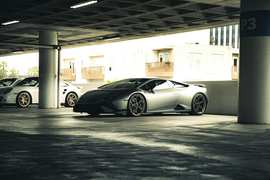
BMW’s M Division is the gold standard for transforming touring car success into production excellence. The legendary M88 inline-six, which powered the iconic M1, was a direct descendant of BMW’s high-stakes racing programs. This engine architecture would go on to define the E28 M5 and E24 M6, providing a level of reliability and power that was unheard of in the 1980s. The E30 M3, meanwhile, utilized the S14 engine, a four-cylinder marvel that shared engineering DNA with the M12 turbo engines that once dominated the Formula 1 grid.
Chevrolet Camaro ZL1: The Can-Am Beast
In 1969, Chevrolet introduced the world to the ZL1—a car so potent it felt out of place on public roads. Its 7.0-liter (427 cubic-inch) all-aluminum V8 was engineered for the ferocious Can-Am racing series. By utilizing aluminum rather than cast iron, Chevy kept the weight down while unlocking 430 hp. Today, the ZL1 remains one of the most desirable vehicles for collectors, representing a moment in time when track-only technology was squeezed into a street-legal muscle car.
Ferrari Dino 206 GT: The Formula 2 Pioneer
The Dino 206 GT proved that you didn’t need twelve cylinders to make a masterpiece. Featuring a 2.0-liter V6 engine developed for Ferrari’s Formula 2 efforts, this car captured the essence of high-revving Italian performance. It was mid-engine, lightweight, and balanced, marking Ferrari’s bold move into the V6 sports car market—a strategy that arguably saved the company by making its racing technology accessible to a wider audience.
Ferrari F50: F1 Power for the Road
If you want the most authentic Formula 1 experience in a street-legal chassis, the Ferrari F50 is your answer. Created for the brand’s 50th anniversary, its 4.7-liter V12 was fundamentally the same engine that powered Alain Prost’s 1990 Ferrari 641 F1 car. With an 8,500 RPM redline and 513 hp, the F50 isn’t just inspired by a race car; it is a race car that happened to be given a VIN plate.
Ford GT: Le Mans Pedigree
The Ford GT is the ultimate tribute to the Blue Oval’s historic victory at Le Mans. The 2005 iteration utilized a 5.4-liter supercharged V8 born from endurance racing prototypes, while the 2017 successor leaned into the future with a 3.5-liter twin-turbocharged EcoBoost V6. The latter engine was a derivative of the powerhouse used in Ford’s championship-winning IMSA race program, proving that modern turbocharging can be just as visceral as displacement.
Jaguar XJ220: Group C Domination
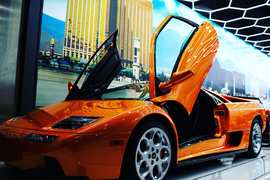
The Jaguar XJ220 remains a polarizing legend. Originally envisioned with a V12, it eventually debuted with a 3.5-liter twin-turbo V6 taken directly from the XJR-11 Group C racer. This transplant helped the XJ220 achieve a top speed of 217 mph, a world-record figure at the time. It is a prime example of an automaker utilizing a proven racing power plant to create a supercar that defied conventional wisdom.
Plymouth Belvedere: The NASCAR Hemi
The 1964 Plymouth Belvedere reminds us that muscle cars were once the true kings of the oval track. Its 426 “Race Hemi” V8 was engineered explicitly for NASCAR supremacy. With 425 hp on tap, the Hemi provided the kind of low-end torque and high-end stability that dominated stock car racing for years, making the Belvedere a terrifying presence on both the track and the drag strip.
Porsche 918 Spyder: The Hybrid Revolution
The Porsche 918 Spyder turned the supercar world on its head by marrying a 4.6-liter V8—derived from the RS Spyder LMP2 race car—with cutting-edge electric propulsion. The result was a combined output of 887 hp and a 0-60 sprint of roughly 2.2 seconds. It demonstrated that racing hybrid technology could create a vehicle that was faster, more efficient, and more emotionally engaging than anything that came before it.
Porsche Carrera GT: The V10 Legend
Often cited as the greatest analog supercar of the 21st century, the Carrera GT is centered around a 5.7-liter V10 engine that was initially destined for Formula 1. When that racing program pivoted, Porsche repurposed the high-strung masterpiece for their flagship supercar. With 603 hp and an iconic, wailing exhaust note, the Carrera GT provides a direct connection to the V10 era of motorsport that enthusiasts still crave today.
The Future of High-Performance Engineering
As we move further into 2025, the industry is witnessing a shift toward electrification and sustainable fuels, yet the desire for motorsport-derived performance remains stronger than ever. Whether it is through hybrid systems, sophisticated active aerodynamics, or new materials science, the cars of tomorrow will continue to find their roots on the racetrack.
If you are a true automotive enthusiast, you know that the best driving experiences are found in cars that refuse to compromise. These ten vehicles are more than just collector’s items; they are pieces of engineering history. Are you ready to elevate your own garage with a vehicle that carries the spirit of the circuit? Connect with us today to discuss how you can find the perfect performance machine that aligns with your passion for driving excellence.