
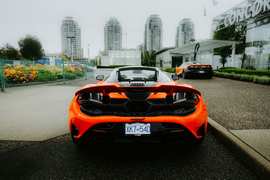
Ferrari 296 GTB Review: The Benchmark Every Supercar Must Chase
For over a decade, I have stood trackside and behind the wheel of the world’s most potent performance machines, but few vehicles have shifted the goalposts quite like the Ferrari 296 GTB. As we navigate the landscape of 2025, the supercar segment is undergoing a violent transition toward electrification. With the Lamborghini Temerario looming on the horizon—promising 903bhp and a 10,000rpm redline—it is easy to view the 296 GTB as a “transitional” model. That would be a grave mistake. The Ferrari 296 GTB remains the most sophisticated, intuitive, and electrifying driver’s car currently wearing the Prancing Horse.
The Hybrid Paradigm Shift
When Maranello swapped the multi-award-winning twin-turbo V8 for a 120-degree, twin-turbo V6 hybrid, the purists were skeptical. Yet, the Ferrari 296 GTB proved that downsizing, when paired with intelligent electrical augmentation, can amplify rather than diminish the soul of a supercar. Delivering a combined 819bhp, the 296 GTB doesn’t just match the performance of its V8 predecessors; it obliterates the traditional supercar conventions of power delivery and chassis balance.
The heart of the beast is that 2,992cc V6. Mounted low in an aluminum chassis—with a wheelbase 50mm shorter than the previous F8 Tributo—the car achieves a level of agility that makes older supercars feel heavy and cumbersome. This isn’t just a high-performance vehicle; it is a masterclass in packaging. The 165bhp electric motor works in seamless harmony with the internal combustion engine, providing instant torque that renders turbo lag an ancient memory.
Technical Brilliance: Beyond the Spec Sheet
What truly sets this car apart is how it manages its own potency. The integration of the 6w-CDS (six-axis sensor) technology is revolutionary. By measuring acceleration and rotation across the X, Y, and Z planes, the car effectively “predicts” the driver’s intent. Whether you are attacking a mountain pass or carving through a circuit, the Ferrari 296 GTB communicates grip levels at the contact patch with startling clarity.
This sensor suite feeds into the active E-Diff and the ingenious ABS-evo system. If you have ever felt the intrusive “nanny” controls of older electronic stability systems, the 296 GTB will be a revelation. The transition from pure mechanical grip to electronic assistance is imperceptible, allowing the driver to explore the outer limits of performance with genuine confidence.
Aerodynamics and the Assetto Fiorano Advantage
Ferrari has pivoted its aerodynamic focus here. Instead of solely chasing drag reduction, the 296 GTB uses its form to generate 360kg of downforce at 155mph. Much of this is managed by the “virtual” rear screen and the meticulously sculpted underbody, which channels air to maximize the ground effect.
For those demanding more, the Assetto Fiorano pack is the gold standard for track enthusiasts. With Multimatic dampers derived from GT racing and carbon-fiber aero appendages, the Assetto Fiorano configuration increases front downforce by 20kg. It transforms the 296 GTB from a high-speed grand tourer into a surgical instrument. When paired with the optional Michelin Pilot Sport Cup 2 R tires, the car’s turn-in precision is arguably the best in the current market.
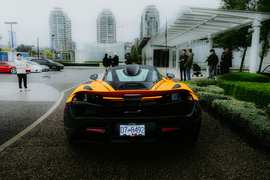
Driving Dynamics: The Real-World Experience
Does it work on the road? In a word: yes. Starting in Hybrid mode, the 296 GTB glides through town in near silence. The plug-in hybrid range of roughly 15 miles is a convenient urban feature, but it’s merely a preamble. Flicking the haptic drive-mode selector on the steering wheel to “Qualifying” mode unlocks the full, unadulterated fury of the powertrain.
Acceleration is violent. The 0-62mph time of 2.9 seconds is merely a number; the visceral sensation of the power surge, accompanied by the V6’s high-pitched, metallic rasp, is what defines the experience. It feels light, organic, and incredibly responsive to throttle inputs. Unlike some high-horsepower rivals that can feel detached or overly digital, the 296 GTB remains a driver-centric machine.
The Interior and Digital Challenges
If there is a chink in the armor, it is the cabin interface. Borrowed heavily from the SF90, the purely digital dashboard and haptic steering wheel controls remain a polarizing feature. In a car that demands 100% of your focus, navigating menus to adjust basic settings can be an exercise in frustration. However, once you are moving, the driving position and the sense of occasion inside the cockpit are undeniably “Ferrari.”
The Road Ahead: The Rivalry
As we look toward the arrival of the Lamborghini Temerario, the competition is heating up. The industry is currently witnessing an arms race for high-output hybrid supremacy. While the Temerario will undoubtedly bring a new level of brute force, the Ferrari 296 GTB has already proven that the future of the high-performance luxury car isn’t just about output figures—it is about the synthesis of technology and feeling.
The 296 GTB has set a benchmark for the mid-engined sports car that focuses on handling fidelity and driver feedback. Whether it’s the McLaren 750S or the upcoming Lamborghini flagship, they all have a massive hurdle to clear: the sheer emotional resonance of the Ferrari.
Final Verdict: Is It Worth the Investment?
Investing in a car like the 296 GTB is about more than just buying a vehicle; it’s about securing a piece of automotive history. With the high-performance hybrid market evolving at breakneck speed, the 296 GTB represents the perfect bridge between the combustion era and the future of performance. It is fast, technically brilliant, and—most importantly—it is genuinely fun to drive.
If you are considering stepping into the world of electrified Italian exotics, there is no better starting point. The market for premium supercar sales remains competitive, but the Ferrari 296 GTB stands in a class of its own.
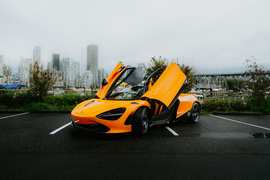
Are you ready to experience the pinnacle of V6 hybrid engineering? Visit your local authorized Ferrari dealership today to schedule a private demonstration and discover why the 296 GTB remains the car the rest of the industry is scrambling to catch.