
The World’s Fastest Road Cars: 2026 Edition
For automotive enthusiasts and performance engineering experts, the pursuit of top speed remains the ultimate yardstick of mechanical superiority. While modern traffic regulations render these velocities largely theoretical on public roads, the quest to build the fastest road cars is a battle for prestige, innovation, and global status. In 2026, the industry is witnessing a fascinating convergence: traditional internal combustion titans are being challenged by high-voltage electric hypercars, redefining the limits of physics and high-speed stability.
As we look at the current landscape, the barrier to entry has shifted. Engineering a machine capable of exceeding 300 mph—a “holy grail” of the industry—requires a sophisticated synthesis of advanced aerodynamics, exotic materials, and unprecedented powertrain density. Whether you are an investor looking at high-performance vehicle assets or an enthusiast tracking the latest hypercar market trends, the following list details the most formidable machines currently dominating the tarmac.
Yangwang U9 Xtreme – 308 mph
Leading the charge into the new era is the Yangwang U9 Xtreme. Shattering the notion that speed requires an eight-figure price tag, this electric marvel utilizes a 1,200V architecture to deliver an staggering 2,978 bhp. By leveraging BYD’s advanced battery technology, the U9 Xtreme proves that the future of ultra-high-speed electric vehicles is already here, balancing thermal management with raw power output.
Koenigsegg Jesko Absolut – 310 mph (Target)
Christian von Koenigsegg continues to push the envelope with the Jesko Absolut. Designed specifically for low-drag stability, this machine represents the pinnacle of Swedish engineering. By removing the rear wing and utilizing the world’s lightest crankshaft, the Absolut is meticulously tuned to pierce the 300 mph barrier with its 1,600 bhp twin-turbo V8. It remains the most anticipated contender for the crown.
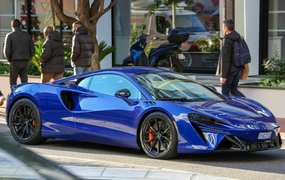
Bugatti Chiron Super Sport 300+ – 304.8 mph
The Chiron Super Sport 300+ redefined expectations when it officially broke the 300 mph threshold. Featuring an elongated “longtail” body to mitigate airflow turbulence and an uprated 8.0-litre W16 engine producing 1,578 bhp, this vehicle remains a masterclass in luxury hypercar engineering. It is a testament to the decades of R&D invested by the Volkswagen Group into the W16 platform.
SSC Tuatara – 282.9 mph
American ingenuity remains a force to be reckoned with. After rigorous validation and refined testing, the SSC Tuatara firmly secured its place on the leaderboard. Its 5.9-litre twin-turbo V8 sends 1,750 bhp to the rear wheels, housed within a lightweight carbon-fiber chassis. It is one of the purest examples of a “driver’s car” built for absolute straight-line velocity.
Bugatti Mistral – 282.05 mph
As the fastest open-top vehicle in production, the Bugatti Mistral serves as the swan song for the iconic W16 engine. Achieving 282 mph with the top down is a monumental feat of aero-stability, marking the Mistral as an essential acquisition for high-net-worth collectors seeking the final chapter of a legendary powertrain.
Koenigsegg Agera RS – 277.87 mph
The Agera RS set a benchmark for public road speed records in Nevada that held for years. Its ability to maintain composure at nearly 280 mph while on a public highway remains a benchmark for the brand’s chassis dynamics and active aerodynamics.
Bugatti Tourbillon – 277 mph (Est.)
With the transition toward electrification, the upcoming Tourbillon introduces a hybrid system featuring a 986 bhp V16 engine. Expected to dominate in 2026, this vehicle represents the next leap in hybrid hypercar performance, combining heritage with 21st-century powertrain efficiency.
Hennessey Venom F5 – 271.6 mph
Hennessey continues to evolve its American-built monsters. With 1,817 bhp from a twin-turbo V8, the Venom F5 is engineered for sheer, visceral acceleration. Its record-breaking attempts underscore the company’s commitment to challenging the traditional European hegemony in the luxury automotive sector.
Bugatti Veyron Super Sport – 268 mph
Even in 2026, the Veyron Super Sport is revered as a historical icon. It was the first vehicle to force the industry to reconsider the limitations of road-legal tires and cooling systems at extreme speeds, setting the foundation for every car on this list.
Rimac Nevera R – 268 mph
The Rimac Nevera R represents the aggressive maturation of electric hypercars. With 2,078 bhp and a sub-2 second 0-60 mph time, it is not just one of the fastest road cars in existence, but also arguably the most technologically advanced, featuring proprietary torque-vectoring systems that turn heavy batteries into a handling advantage.
SSC Ultimate Aero – 256.18 mph
Before the Tuatara, there was the Ultimate Aero. A raw, unassisted brute of a machine, it proved that a smaller, boutique American manufacturer could dethrone the established global giants.
Koenigsegg Regera – 255 mph
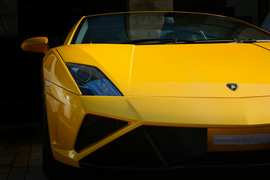
Featuring an innovative Direct Drive system, the Regera bypassed the traditional gearbox, offering a seamless surge of power. It remains a masterclass in hybrid integration and elegant design.
Czinger 21C V Max – 253 mph+
Utilizing AI-driven manufacturing and a high-revving V8 hybrid setup, the 21C is a modern marvel of advanced automotive additive manufacturing. Its V Max variant optimizes every surface for high-speed efficiency.
McLaren Speedtail – 250 mph
As the spiritual successor to the F1, the Speedtail focused on “hyper-GT” comfort combined with record-breaking aero. Hitting 250 mph repeatedly at the Kennedy Space Center proved its reliability and engineering depth.
Ultima RS – 250 mph
Proof that engineering spirit outweighs deep corporate pockets, the Ultima RS provides a DIY approach to hypercar performance. It is the most accessible entry on this list, relying on sheer power-to-weight ratios.
Aspark Owl – 249 mph
The Japanese-engineered Owl claims the title of fastest-accelerating production car. With its ultra-low profile and high-density battery pack, it is a formidable entry in the electric performance car market.
Koenigsegg Gemera & CCXR – 248 mph
The Gemera is the world’s first “Mega-GT,” providing four seats and hybrid power, while the CCXR remains a historic legend of Swedish engineering. Both represent Koenigsegg’s versatility in design.
Saleen S7 Twin Turbo – 248 mph
A true icon of the early 2000s, the S7 demonstrated that the “American Muscle” ethos could be adapted for the world stage of high-performance luxury vehicles.
W Motors Fenyr SuperSport – 245 mph
Hailing from the UAE, the Fenyr SuperSport highlights the growing influence of the Middle East in the luxury hypercar landscape, utilizing German-tuned powertrains for immense reliability.
McLaren F1 – 240.1 mph
The legend that started it all. Even decades after its debut, the McLaren F1 remains the gold standard for tactile feedback and naturally aspirated perfection. Its status as an appreciating automotive investment asset is unmatched.
Invest in the Future of Performance
The race for top speed is no longer just about the engine; it is about the integration of software, battery density, and aerodynamic efficiency. As we look toward the remainder of 2026, these manufacturers will continue to push the boundaries of what is possible. If you are looking to secure a place in the next generation of hypercar ownership or simply want to stay updated on the best luxury car investments, the time to act is now.

Are you ready to experience the pinnacle of automotive engineering? Contact our concierge team today to discuss exclusive allocation opportunities and the latest trends in the world of high-performance hypercars.