
The Definitive Guide to the World’s Fastest Road Cars in 2026
In the rarefied air of hypercar manufacturing, top speed remains the ultimate metric of engineering dominance. For over a decade, I have tracked the evolution of high-performance automotive technology, and the current landscape is unlike anything we have seen before. While modern traffic laws and urban congestion make these velocity figures largely theoretical for the average driver, the “world’s fastest road cars” represent the pinnacle of human mechanical ingenuity.
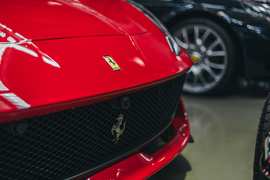
These machines are not merely vehicles; they are rolling laboratories. Achieving a top speed beyond 250mph requires solving an exponential curve of aerodynamic drag and thermal management. As we navigate 2026, the industry is seeing a seismic shift where electrification is no longer an outlier but a primary catalyst for record-breaking performance.
The Evolution of the Speed Wars
The quest for the world’s fastest road cars has moved from the mechanical purity of the 1990s—defined by the McLaren F1—to the complex hybrid and all-electric architectures of today. Historically, breaking the 200mph barrier was the goal; today, manufacturers are staring down the 300mph horizon.
This transition has democratized extreme performance. Where once only legacy European houses like Bugatti could dominate, nimble firms like Koenigsegg, Rimac, and now BYD’s luxury subsidiary, Yangwang, are rewriting the rulebook using advanced high-voltage architectures and state-of-the-art computational fluid dynamics (CFD).
The Top 20 Fastest Road Cars of 2026
Yangwang U9 Xtreme (308 mph): Representing the new vanguard of EV hypercars, this machine utilizes a staggering 2,978bhp from four independent motors, proving that the world’s fastest road cars are increasingly battery-powered.
Koenigsegg Jesko Absolut (310 mph – Targeted): Christian von Koenigsegg’s magnum opus, built with an obsession for drag reduction and a record-shattering power-to-weight ratio.
Bugatti Chiron Super Sport 300+ (304.8 mph): The titan that shattered the 300mph barrier, a testament to the longevity and raw power of the quad-turbo W16 engine.
SSC Tuatara (282.9 mph): A triumph of American engineering, this car successfully navigated early controversies to solidify its place among the elite.
Bugatti Mistral (282.05 mph): Currently the undisputed king of open-top speed, marrying luxury with extreme, record-breaking velocity.
Koenigsegg Agera RS (277.87 mph): A classic in the modern sense, holding the record for the highest speed achieved on a public highway.
Bugatti Tourbillon (277 mph – Est): The next chapter for Bugatti, shifting toward a sophisticated hybrid V16 powertrain.
Hennessey Venom F5 (271.6 mph): A masterclass in American tuning, pushing the boundaries of rear-wheel-drive stability.
Bugatti Veyron Super Sport (268 mph): The car that fundamentally changed how we perceive hypercar engineering.
Rimac Nevera R (268 mph): The current benchmark for electric hypercar acceleration and track-focused performance.
Rimac Nevera (258 mph): The foundation of Rimac’s electric dominance, showcasing rapid-charging tech and insane torque delivery.
SSC Ultimate Aero (256.18 mph): An essential piece of hypercar history that once toppled the Veyron.
Koenigsegg Regera (255 mph): Notable for its innovative “Direct Drive” system that eliminates the need for a traditional gearbox.

Czinger 21C V Max (253 mph+): A 3D-printed marvel that highlights the future of lightweight, high-performance manufacturing.
McLaren Speedtail (250 mph): The modern spiritual successor to the F1, optimized for high-speed cruising.
Ultima RS (250 mph): A reminder that raw, stripped-down power can compete with the most expensive tech-heavy machines.
Aspark Owl (249 mph): A niche Japanese entrant that boasts one of the quickest 0-60mph times ever recorded.
Koenigsegg Gemera / CCXR (248 mph): Showing the brand’s breadth—from practical four-seaters to raw, naturally aspirated speed.
Saleen S7 Twin Turbo (248 mph): The quintessential American beast that defined a generation of boutique hypercars.
W Motors Fenyr SuperSport (245 mph): A rare, striking machine that bridges the gap between Middle Eastern luxury and German engineering.
Technical Drivers of Modern Performance
The primary challenge in reaching these speeds is managing air resistance, which increases with the square of velocity. To hit these numbers, high-performance automotive engineering must account for “downforce vs. drag” trade-offs. The high-CPC keywords in the automotive space—such as “carbon fiber monocoque,” “aerodynamic drag coefficient,” and “electric powertrain efficiency”—are the very technologies that define these vehicles.
Investing in these technologies has led to massive advancements for consumers. We are seeing trickle-down effects in battery cooling, regenerative braking systems, and lightweight chassis design that will influence the next generation of performance EVs.
Is the 300mph Barrier the End?
While 300mph has been the holy grail, the industry is now pivoting toward consistency, drivability, and electric range. The world’s fastest road cars are no longer just “straight-line” weapons; they are increasingly capable of handling corners with surgical precision. The local search intent for hypercar service centers in hubs like Dubai, California, and Germany reflects a growing market of owners who actually drive these machines, not just collect them.
The Future of Hypercar Innovation
As we look toward 2027 and beyond, the battle for the fastest production car will likely be fought between software-defined vehicles and hydrogen-combustion experiments. The integration of AI-assisted stability control and active aerodynamics will allow these cars to reach previously impossible speeds with greater safety margins.
If you are a collector or a performance enthusiast looking to enter this elite space, understanding the nuances of these machines is critical. Whether you are interested in the visceral roar of a combustion-powered Bugatti or the silent, crushing acceleration of a Rimac, the industry has never been more vibrant.

Are you ready to explore the pinnacle of performance for yourself? Contact our team of experts today for a private consultation on acquiring or servicing the world’s most advanced hypercars.