
Racing Soul, Road-Legal Body: The Ultimate Guide to Motorsport-Derived Supercars
There is a visceral, almost primal thrill that comes from piloting a machine born on the race track. As an automotive engineer who has spent a decade navigating the intersection of high-performance manufacturing and consumer-grade engineering, I can tell you that a motorsport-derived engine offers more than just raw horsepower. It provides a direct, tactile link to the legends of Le Mans, Formula 1, and the grueling circuits of the WEC. When an automaker takes a powerplant forged in the fires of professional competition and drops it into a production chassis, the result is rarely just a car—it is a sensory experience.
For the enthusiast, owning a vehicle with motorsport DNA is the pinnacle of automotive fulfillment. These aren’t simply cars with sporty aesthetic packages; these are street-legal vessels that house the heart of a champion. In this guide, we explore the engineering marvels that blur the lines between pit lane and pavement.

Why Manufacturers Invest in Motorsport Technology
The “Win on Sunday, Sell on Monday” mantra is more than a marketing slogan; it is a fundamental pillar of automotive R&D. When a brand like Porsche, Ferrari, or Ford commits to professional racing, they are essentially running an extreme laboratory. Conditions on the track are unforgiving—vibration, thermal stress, and aerodynamic drag act as the ultimate audit for new components.
By transferring these innovations into production cars, manufacturers improve the longevity and performance of their consumer line-up. From the development of advanced high-performance engine technology to the implementation of lightweight carbon-fiber composites and complex drivetrain cooling, racing drives the state-of-the-art. For a buyer, this means your investment in a high-revving sports car benefits from the millions of dollars spent in pursuit of milliseconds on the clock.
10 Production Vehicles That Bring the Track to Your Garage
The Alfa Romeo Montreal
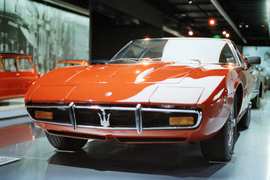
Often hailed as an underrated masterpiece, the Montreal is a stylistic triumph, but its soul lies in the Tipo 33 naturally aspirated V8. Derived directly from endurance racing prototypes, this 2.6-liter unit delivers a mechanical symphony that climbs to 7,000 RPM. It remains a benchmark for how designers can blend delicate aesthetics with race-hardened engineering.
BMW M1, M5 (E28), and M6 (E24)
BMW’s M division is built on a foundation of track supremacy. The M88 inline-six engine is the stuff of legend. Initially designed for the M1 ProCar series, it possessed such a balanced power delivery and thermal efficiency that BMW adapted it for their high-performance sedans and coupes. It is the gold standard for how a racing engine can maintain daily usability without sacrificing its high-strung character.
Chevrolet Camaro ZL1 (1969)
The 1969 ZL1 represents the raw, American spirit of Can-Am racing. Equipped with a 7.0-liter 427 V8, this engine was essentially a drag-strip monster detuned for the street. Its all-aluminum construction was revolutionary for the time, marking a significant leap in power-to-weight ratios for production muscle cars.
Ferrari Dino 206 GT
While it lacks the “Ferrari” nameplate, the Dino is arguably one of the most important cars the brand ever produced. Its 2.0-liter V6 engine was a direct byproduct of Ferrari’s Formula 2 dominance. By bringing mid-engine racing architecture to a road car, it set the structural blueprint for nearly every supercar that followed.
Ferrari F50
If you want to understand the true essence of motorsport-derived engines, look no further than the F50. Its 4.7-liter V12 was plucked from the 1990 Ferrari F1-90 race car. It is a raw, unadulterated F1 experience, complete with an 8,500 RPM redline and a chassis that uses the engine as a stressed member.
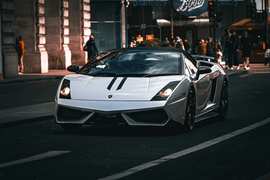
Ford GT (2005 & 2017)
Ford’s commitment to endurance racing is unparalleled, and the GT serves as the perfect bridge. The 2005 model utilized a supercharged 5.4-liter V8 inspired by Daytona Prototypes, while the 2017 iteration showcased the prowess of the 3.5-liter twin-turbocharged EcoBoost V6. Both represent the absolute bleeding edge of Ford’s competitive racing program.
Jaguar XJ220
Before the era of hyper-hybrids, Jaguar shocked the world with the XJ220. By utilizing the XJR-11 twin-turbo V6—a powerhouse taken from Group C race cars—Jaguar proved that forced induction could deliver legendary status. It was the fastest production car in the world for a reason: it was a race car in a tuxedo.
Plymouth Belvedere
In the 1960s, NASCAR was the ultimate proving ground. The 426 Hemi V8 was designed to dominate the oval tracks, and its inclusion in the Plymouth Belvedere brought genuine track capability to the street. It remains one of the most influential high-displacement engines in history.
Porsche 918 Spyder
The 918 Spyder is a masterclass in hybrid engineering. Its 4.6-liter V8 engine is essentially an evolution of the LMP2-winning RS Spyder racing engine. By coupling this with sophisticated electric motors, Porsche achieved a 0-60 time that redefined what we thought possible in a production vehicle.
Porsche Carrera GT
Before the 918, there was the Carrera GT. Its 5.7-liter V10 has a tragic but fascinating history, having been developed for Formula 1 and later adapted for Le Mans. When the project stalled, Porsche engineers refused to let the engine die, turning it into the heart of their flagship supercar. The result is an analog experience that is widely considered the greatest sounding road car ever made.
Expert Insight: Why High-End Performance Matters
When choosing a vehicle with a racing pedigree, consider the total cost of ownership (TCO) and the availability of specialized performance tuning. These vehicles are built to run at the limit, which means they require meticulous maintenance. If you are looking to invest in a machine that carries this kind of motorsport DNA, prioritize models with verified provenance and service records.
The market for these high-performance supercars is currently witnessing a surge in value as collectors recognize that we are entering an era of electrified and digitized performance. Owning a car that represents the “Golden Age” of combustion racing technology is not just a hobby; it’s a preservation of automotive history.
Take the Wheel
Are you ready to elevate your driving experience from mundane to extraordinary? Whether you are hunting for a classic Hemi-powered muscle car or looking to secure a modern hypercar with F1-derived technology, the time to act is now.
Contact our performance consulting team today to discuss sourcing your dream motorsport-derived vehicle or to learn more about professional track-day training programs. Let’s get you into the driver’s seat of your own piece of racing history.