
From the Paddock to the Pavement: 10 Legendary Road Cars Born on the Track
There is an undeniable, visceral thrill that comes from driving a vehicle built with genuine motorsport DNA. We aren’t talking about cosmetic decals or stiffened suspension settings designed for the street; we are talking about authentic race-bred power plants that were forged in the high-stakes crucible of professional competition. When an automaker drops an engine originally engineered for the track into a production chassis, the result is a machine that feels alive, offering a direct, unfiltered connection to the legends of Le Mans, Formula 1, and NASCAR.
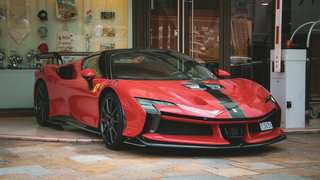
Over my decade in the automotive industry, I’ve seen trends come and go, but the hunger for race-derived performance remains constant. Integrating high-performance engineering into street-legal vehicles isn’t just a marketing ploy—it is the ultimate expression of automotive passion. Let’s explore 10 production vehicles that bridge the divide between the grandstand and the driveway.
The Symbiotic Relationship Between Racing and Production
Motorsport acts as the most rigorous testing ground on the planet. When engineers develop a powertrain for competition, they are solving problems under the most extreme thermal and mechanical loads imaginable. What we learn on the track today defines the automotive engineering of tomorrow. Features that we now consider standard—such as advanced disc brake systems, dual-clutch transmissions, and lightweight carbon fiber materials—all owe their existence to the “win on Sunday, sell on Monday” mantra.
Investing millions into racing isn’t just about trophies; it’s about brand prestige and technical trickle-down. When a manufacturer dominates a series, it elevates the perceived value of their entire lineup. For the enthusiast, however, the real prize is the engine. When you sit behind the wheel of a car powered by a race-derived motor, you aren’t just driving; you are piloting a piece of history.
Alfa Romeo Montreal: The Tipo 33 Legacy
Few cars capture the aesthetic and mechanical elegance of the late 60s like the Alfa Romeo Montreal. Beneath its striking exterior lies a 2.6-liter V8 engine derived directly from the Tipo 33 sports prototype—a machine that tasted victory in endurance races like the Targa Florio. While detuned for public roads, this power plant still sings a high-revving tune, capable of reaching 7,000 RPM. It remains a masterclass in classic sports car design, proving that race-bred performance and Italian style are a timeless combination.
BMW’s M-Division Icons (M1, E30 M3, E28 M5)
BMW’s “M” designation is synonymous with racing excellence. The legendary M88 inline-six, which powered the M1 and later the E28 M5, was born from the ProCar series. Similarly, the E30 M3’s S14 engine utilized architecture from BMW’s M12 Formula 1 program. These engines weren’t just fast; they were precision instruments. By utilizing high-performance components shared with DTM touring cars, BMW created a lineage of street vehicles that redefined the “ultimate driving machine.”
1969 Chevrolet Camaro ZL1: The Can-Am Titan
In the world of American muscle, the 1969 Camaro ZL1 is a holy grail. Its 7.0-liter (427 cubic-inch) V8 was designed for the brutal, high-speed demands of Can-Am racing. Utilizing an all-aluminum block to save weight, this monster produced an underrated 430 horsepower. It was, for all intents and purposes, a drag-strip weapon made legal for the highway. Today, with only 69 produced, it stands as a testament to the era when high-performance engines were plucked straight from the racing stables.
Ferrari Dino 206 GT: The Formula 2 Heritage
The Dino 206 GT is a pivotal chapter in Ferrari history. Its 2.0-liter V6 was a direct descendant of the Maranello team’s Formula 2 program. Weighing in at just over 2,000 pounds, the Dino’s racing spirit was unmistakable. It brought the mid-engine layout and high-revving agility of a pure racer to a chassis meant for the winding roads of the Italian countryside. It set the blueprint for every mid-engine luxury supercar Ferrari would produce in the decades to follow.
Ferrari F50: F1 Performance for the Road
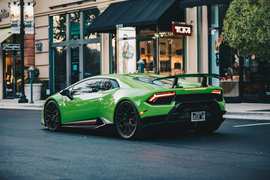
If the Dino was an introduction, the Ferrari F50 was a manifesto. To celebrate the brand’s 50th anniversary, Ferrari utilized a 4.7-liter V12 derived straight from the 1990 Tipo 641 Formula 1 car. Capable of hitting 8,500 RPM, the F50 offered an experience that was as close to a Grand Prix car as any human could legally drive. It is a masterpiece of automotive performance tuning, providing raw, tactile feedback that modern vehicles struggle to replicate.
Ford GT (2005 & 2017): Le Mans Engineering
Ford has a storied history at Le Mans, and the Ford GT models serve as modern tributes to that grit. The 2005 model utilized a supercharged 5.4-liter V8 based on their Daytona Prototype endurance engines. The 2017 iteration pivoted to a twin-turbo 3.5-liter EcoBoost V6, leveraging the same advanced forced-induction tech found in Ford’s championship-winning endurance racers. These vehicles represent the peak of modern automotive engineering, proving that efficiency and sheer speed can coexist.
Jaguar XJ220: The Group C Survivor
The XJ220 is a fascinating study in ambition. Originally slated for a V12, it ultimately found its heart in a twin-turbo V6 taken from the Jaguar XJR-11 Group C race car. This competition pedigree propelled it to a 217 mph top speed, a record-breaking feat at the time. It is a rare example of a manufacturer using a specialized racing engine to dominate the production landscape, leaving an indelible mark on the supercar hall of fame.
Plymouth Belvedere: The NASCAR Hemi
The 1964 Belvedere is a reminder that NASCAR was once a series for cars you could actually buy at a dealership. The 426 “Race Hemi” V8 was engineered solely to crush the competition on oval tracks. When Plymouth placed it into the Belvedere, they turned a mid-sized sedan into a 425-horsepower terror. This era birthed the high-performance muscle car culture that still dominates American automotive enthusiast circles today.
Porsche 918 Spyder: The Hybrid Revolution
Porsche has always been at the forefront of motorsport, and the 918 Spyder is the bridge to the future. Its 4.6-liter V8 is based on the RS Spyder, an LMP2 prototype that dominated endurance racing. When combined with modern electric hybrid technology, the 918 achieves blistering 0-60 times. It’s a perfect example of how sustainable high-performance technology can be refined through the crucible of competitive racing.
Porsche Carrera GT: The Analog Apex
The Carrera GT remains the gold standard for analog driving experiences. The 5.7-liter V10 was originally slated for F1, then shifted to a Le Mans prototype project, before finding its true home in the Carrera GT. It is a temperamental, loud, and rewarding beast that demands total driver engagement. It stands as a beacon of automotive excellence, representing an era where raw, mechanical feedback was the primary goal of the engineering team.
Take the Wheel
Owning a car with motorsport DNA isn’t just about transport; it’s about experiencing the culmination of years of hard-fought technical progress. Whether you are searching for a classic investment or a modern track-day weapon, the connection between racing and the road is stronger than ever.
Are you ready to elevate your driving experience? Contact our specialist team today to explore our curated selection of high-performance vehicles or schedule an consultation to find the perfect addition to your garage.