
Engineering the Legend: 10 Street-Legal Machines with Pure Motorsport DNA
There is an undeniable, visceral thrill that comes from driving a vehicle infused with true motorsport DNA. We aren’t merely talking about aesthetic body kits or sport-tuned suspension settings; we are discussing the rare breed of automobiles that house power plants forged in the furnace of professional racing. These engines, born from the demands of high-stakes competition, bring raw, high-revving performance to the public road, offering a direct, mechanical connection to the legendary machines that inspired them.
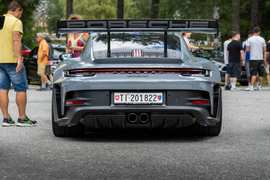
In the industry, we often track how “motorsport DNA” trickles down into consumer vehicles. While the primary goal of racing is to cross the finish line first, the secondary goal—often more lucrative—is engineering advancement. When manufacturers invest millions into track-tested innovations, the byproduct is often a performance surge for the average enthusiast.
In this comprehensive guide, we examine 10 iconic production vehicles that blur the lines between race-day brutality and street-legal comfort. Let’s explore how the world’s most elite automakers leverage these engineering triumphs to define the pinnacle of high-performance automotive excellence.
Why Racing Pedigree Matters
Motorsport remains the ultimate laboratory. When engineers operate under the constraint that failure is not an option—where every ounce of weight and every millisecond of throttle response counts—innovation is inevitable. Techniques regarding advanced aerodynamics, lightweight metallurgy, and thermal efficiency are refined on the track and eventually manifest in the cars we drive daily.
Technologies like carbon-ceramic disc brakes, direct fuel injection, and sophisticated paddle-shift transmissions were once exotic racing secrets. Today, they are standard expectations for modern performance buyers. Furthermore, “motorsport DNA” serves as a powerful marketing lever. A win on Sunday truly translates to a sale on Monday, as consumers align their brand loyalty with the manufacturers dominating the podiums of Le Mans, Formula 1, and the DTM.
Alfa Romeo Montreal: The Endurance Prototype Heart
The Alfa Romeo Montreal is a masterpiece of design, but its soul lies in its 2.6-liter V8 engine. Derived directly from the Tipo 33 sports prototype—a titan that conquered endurance racing at the Targa Florio and Daytona—this engine was a technical revelation. Though detuned for the road to prioritize longevity and emissions, the Montreal engine retains a high-revving nature that screams all the way to 7,000 RPM. Producing 200 horsepower in a 1970s chassis, it remains one of the most underrated examples of a race-bred engine finding its way into a grand tourer.
BMW M1, M5, and M6: The M-Division Legacy
BMW’s Motorsport division is the gold standard for blending track and street. The M88 inline-six engine is perhaps the most famous example. Originally powering the M1 ProCar, this legendary 3.5-liter unit found a second life in the E28 M5 and E24 M6. Its throttle response is razor-sharp, a trait inherited from its racing ancestors. Simultaneously, the iconic E30 M3 utilized the S14 engine, a four-cylinder masterpiece that shared lineage with the M12 turbo engines used in Formula 1. These vehicles demonstrate that motorsport DNA isn’t just about displacement; it’s about precision.
Chevrolet Camaro ZL1 (1969): The Drag Strip Conqueror
Before the modern era of refined aerodynamics, the 1969 Chevrolet Camaro ZL1 was a brute-force instrument of war. Its 427-cubic-inch (7.0-liter) V8 was engineered specifically for the high-revving demands of Can-Am road racing. Built with an all-aluminum block to shed weight, this monster produced 430 horsepower in road trim—an astronomical figure for the late 1960s. Today, these rare machines, with only 69 examples ever produced, are prized assets for collectors seeking the rawest form of American racing heritage.
Ferrari Dino 206 GT: The Formula 2 Connection
The Dino 206 GT represents a pivotal moment for Ferrari. Its 2.0-liter V6 was developed directly from the brand’s Formula 2 program. Weighing in at just over 2,000 pounds, the Dino felt less like a heavy grand tourer and more like an open-wheel racer stripped for the streets. Its mid-engine configuration and high-revving V6 set the template for the modern supercar, proving that a smaller engine with a racing background could outperform larger, heavier rivals.
Ferrari F50: F1 Performance for the Road
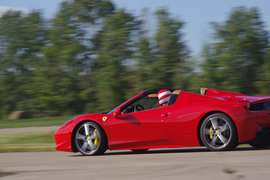
If you want to understand the extreme end of the spectrum, look at the Ferrari F50. Created for the brand’s 50th anniversary, the F50’s 4.7-liter V12 was essentially a race-tuned engine derived from the 1990 F1-90 Formula 1 car. With an 8,500 RPM redline and 513 horsepower, it provides an unfiltered, violent, and glorious driving experience. Unlike many road cars that “take inspiration” from racing, the F50 is a race car that happens to have headlights and a license plate.
Ford GT: From Le Mans to the Driveway
The Ford GT story is a masterclass in modern engineering. The 2005 model utilized a 5.4-liter supercharged V8 born from the research used in Ford’s Daytona Prototype program. Fast forward to 2017, and the supercar evolved into a twin-turbo 3.5-liter EcoBoost V6 beast. By utilizing the same architecture that dominated endurance racing, Ford delivered a car that wasn’t just fast—it was aerodynamically and mechanically identical to the machines competing at Le Mans.
Jaguar XJ220: The Group C Survivor
The Jaguar XJ220 is a testament to the fact that sometimes plans change, leading to something even better. Originally intended for a V12, the XJ220 eventually utilized the 3.5-liter twin-turbo V6 from the Jaguar XJR-11 Group C racer. This engine was so potent that it helped propel the XJ220 to a top speed of 217 mph, a record-breaking feat for the early 90s. It remains the gold standard for how a competition engine can transform a production vehicle into an icon of speed.
Plymouth Belvedere: The NASCAR Legend
The 1964 Plymouth Belvedere highlights the “Race Hemi” phenomenon. Developed exclusively for the high-banked ovals of NASCAR, the 426 Hemi V8 was a 7.0-liter titan that defined an entire era of muscle car dominance. By forcing this racing powerplant into a production chassis, Plymouth created a car that could arguably outrun anything on the street. It is a prime example of a manufacturer taking a track-only development and giving it to the masses.
Porsche 918 Spyder: Hybrid Racing Innovation
The Porsche 918 Spyder is the definitive bridge between the analog past and the electric future. Its 4.6-liter V8 engine is a direct evolution of the RS Spyder, an LMP2 prototype that dominated endurance racing. When combined with modern electric motors, the 918 delivers nearly 900 horsepower and blistering acceleration. It’s the ultimate expression of how Porsche transfers its unparalleled endurance racing success to a street-legal platform.
Porsche Carrera GT: The Analog Apex
Finally, the Porsche Carrera GT sits at the top of the enthusiast pyramid. Its 5.7-liter V10 was originally developed for Formula 1 and later adapted for a Le Mans prototype that never saw the track. Porsche refused to let this masterwork of engineering go to waste, placing it into the Carrera GT. With 603 horsepower and an 8,000 RPM redline, the Carrera GT is notoriously challenging to drive, demanding the same focus and respect as a professional race car.
Invest in Excellence
Owning a vehicle with legitimate motorsport DNA is more than just a purchase; it is an investment in automotive history. These cars capture the essence of the track and translate it into a unique, sensory-rich experience that modern, sterile cars simply cannot replicate.
Are you ready to experience the pinnacle of performance engineering? Whether you are looking for a classic collector piece or a modern supercar, our team of experts is ready to help you navigate the market and find the perfect machine to ignite your passion. Contact our dealership today to schedule a private consultation and take the first step toward putting a legendary piece of motorsport history in your garage.