Unleashing the Roar: Production Cars Born from the Racetrack
For those of us who live and breathe automotive performance, there’s an undeniable allure to the visceral connection established when a production car carries genuine motorsport DNA. This isn’t merely about cosmetic embellishments or minor performance upgrades; we’re talking about vehicles that proudly house powertrains originally conceived for the unforgiving crucible of competitive racing. These engines, forged in the heat of intense battles on circuits worldwide, translate their high-revving, adrenaline-inducing prowess directly to the asphalt beneath our tires, offering a tangible link to their legendary racing brethren.
In this exploration, we’re delving into ten production vehicles that artfully blur the demarcation lines between the race circuit and the public road. From the ear-splitting symphony of naturally aspirated V12s to the ferocious growl of turbocharged powerhouses, these ten road-legal machines deliver an authentic taste of purebred race cars to everyday drivers. But before we immerse ourselves in their mechanical marvels, it’s crucial to understand why automotive manufacturers invest so heavily in the costly and demanding world of motorsport and how those profound investments ultimately shape the vehicles accessible to the discerning motorist.
The Symbiotic Relationship: Motorsport Prowess Shaping Road-Going Machines
The intricate dance between motorsport and road car development is as old as the automobile itself. The relentless pursuit of victory on the track serves as an unparalleled proving ground, pushing the absolute boundaries of engineering. Here, vehicles and their components are subjected to extreme conditions where the margin for error is vanishingly small, and failure is simply not an option. The invaluable lessons learned, the groundbreaking innovations pioneered, and the robust solutions developed on the racetrack inevitably find their way into the cars we interact with daily. Whether it’s the implementation of advanced aerodynamic principles, the utilization of lightweight yet incredibly strong materials, or the direct trickle-down of sophisticated engine technologies, the innovations born from the fiery intensity of racing pave a direct path toward creating superior road cars.
Consider, for instance, the widespread adoption of technologies like disc brakes and paddle shifters. Both were revolutionary innovations initially developed and refined for the demands of competitive racing before seamlessly transitioning to become standard features in production vehicles. Furthermore, the prestige and brand equity derived from motorsport success play an instrumental role in shaping consumer perception. When a manufacturer’s race car consistently dominates on the circuit, its road-going counterparts are inherently perceived as more desirable, more capable, and more aspirational. While the vast majority of us will likely never have the privilege of piloting a Formula 1 machine or a Le Mans prototype, the profound impact of these endeavors allows us to experience a vicarious thrill. This feeling is amplified exponentially when the heart of our own vehicle beats with a race-bred engine, roaring with a heritage of competition.
Ten Titans of Track and Street
The allure of a car built with a racing soul is undeniable. These machines represent the pinnacle of automotive engineering, where performance is not just a metric but a philosophy. Let’s explore ten production vehicles that embody this ethos, bringing the raw excitement of the race track to your doorstep. We’ll look at their lineage, their groundbreaking engineering, and what makes them truly special.
Alfa Romeo Montreal
Engine: Tipo 33 Naturally Aspirated V8
Displacement: 2.6-liter
Horsepower: 200 hp
Torque: 173 lb-ft
The Alfa Romeo Montreal is a captivating testament to the enduring appeal of race-derived engineering. At its core lies a 2.6-liter V8 engine, a powerplant that traces its lineage directly back to Alfa’s formidable Tipo 33 sports prototype. This endurance racer, a formidable competitor in legendary events like the Targa Florio and the grueling 24 Hours of Daytona, provided the foundation for the Montreal’s unique character. Although meticulously detuned to meet the demands of road legality and everyday usability, the engine within the Montreal retains a significant portion of its motorsport spirit. It willingly spins to a spirited 7,000 RPM, delivering a potent 200 horsepower. The distinctive, exhilarating roar of its V8, coupled with its undeniably sharp and avant-garde styling, solidified the Montreal’s status as one of the most stylish and criminally underrated vehicles to ever bear the esteemed Alfa Romeo badge.
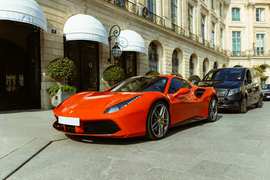
BMW M1, M3 (E30), M5 (E28), M6 (E24)
Model: BMW M1, M5, M6; BMW M3
Engine: M88 Inline-Six; S14 Inline-Four
Displacement: 3.5-liter; 2.3-liter
Horsepower: 273 hp (M1); 282 hp (M5, M6); 197 hp (M3)
Torque: 251 lb-ft; 243 lb-ft
BMW’s commitment to motorsport excellence is vividly etched into the DNA of its most iconic M-division models. The legendary BMW M1 stands as a paramount example, powered by the formidable 3.5-liter inline-six M88 engine. This powerplant was a direct beneficiary of the brand’s extensive racing endeavors, notably finding extensive application in the BMW M1 ProCar series. This same robust engine later found a home in the esteemed E24 M6 and the E28 M5, cementing their status as performance benchmarks. Concurrently, the quartet of cylinders powering the iconic E30 M3, the S14 engine, also drew heavily from the sophisticated engineering principles established by the M88 and the turbocharged F1 engines developed under the M12 banner. This engine was intrinsically linked to BMW’s touring car racing programs, sharing critical components and cutting-edge engineering with the machines that achieved outright dominance in the Deutsche Tourenwagen Masters (DTM) series. The “Win on Sunday, Sell on Monday” mantra was alive and well within BMW’s engineering philosophy.
Chevrolet Camaro ZL1 (1969)
Engine: 427 Naturally Aspirated V8
Displacement: 7.0-liter
Horsepower: 430 hp
Torque: 450 lb-ft
The 1969 Chevrolet Camaro ZL1 was not just an automotive icon; it was a street-legal missile. Its heart was the formidable 427 cubic-inch (7.0-liter) V8, an engine originally conceived and developed for the fiercely competitive Can-Am racing series. Featuring an all-aluminum construction, this engine was remarkably lightweight for its colossal displacement, delivering a staggering output of power. While factory figures often cited a conservative 500 horsepower, the road-going variant was officially rated at 430 horsepower. The ZL1 package transformed the already potent Camaro into a drag strip monster capable of exhilarating street performance. Its engine lived on to power numerous race cars in the highly competitive SCCA Trans-Am series. With a production run limited to a mere 69 units, the 1969 Camaro ZL1 remains an exceptionally rare and highly coveted collector’s item in today’s automotive landscape, representing a peak of American muscle car engineering.
Ferrari Dino 206 GT
Engine: Dino Naturally Aspirated V6
Displacement: 2.0-liter
Horsepower: 180 hp
Torque: 138 lb-ft
The Ferrari Dino 206 GT, while perhaps not bearing the iconic Prancing Horse emblem on its exterior, harbors a powerplant that is deeply rooted in Ferrari’s racing heritage. Its 2.0-liter V6 engine was originally developed for Ferrari’s potent Formula 2 racing cars of the 1960s. Though carefully recalibrated for the demands and regulations of road use, the engine retained its thrilling high-revving nature, imbuing the Dino with a distinct racing spirit that made it an absolute joy to pilot through winding country roads. Producing a respectable 180 horsepower, this output was more than adequate for a car that tipped the scales at just over 2,000 pounds. The Dino represented a significant departure for Ferrari, marking its initial foray into mid-engine V6 sports cars and setting a crucial precedent for future innovative models, all while offering a taste of F2 performance.
Ferrari F50
Engine: Tipo F130B Naturally Aspirated V12
Displacement: 4.7-liter
Horsepower: 513 hp
Torque: 347 lb-ft
To commemorate Ferrari’s 50th anniversary, the F50 elevated the concept of a track-derived engine to an entirely new stratum of automotive legend. Its heart is a magnificent 4.7-liter naturally aspirated V12, a powerplant that was a direct descendant of Ferrari’s highly advanced 1990 Formula 1 car, the Tipo 641, famously piloted by the legendary Alain Prost. This naturally aspirated behemoth screams its way to a breathtaking 8,500 RPM, unleashing a formidable 513 horsepower and delivering the raw, unfiltered sensation of driving an F1 car on public roads. With only minimal modifications required to adhere to road-legal regulations, the F50 stands as arguably the closest a street-legal Ferrari has ever come to replicating the pure essence of Formula 1. It remains an engineering marvel and a high-performance supercar that commands significant attention in the collector market, with high-performance Ferrari models always being a focus for enthusiasts.
Ford GT (2005 & 2017)
Model: Ford GT (2005); Ford GT (2017)
Engine: Modular Supercharged V8; Twin-Turbo EcoBoost V6
Displacement: 5.4-liter; 3.5-liter
Horsepower: 550 hp; 647 hp
Torque: 500 lb-ft; 550 lb-ft
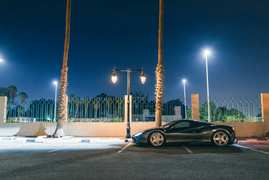
The Ford GT is far more than just a modern supercar; it’s a profound homage to one of the most iconic and victorious race cars in history: the legendary Le Mans-winning Ford GT40. The 2005 iteration of the GT housed a potent 5.4-liter supercharged V8, whose developmental roots were deeply intertwined with the automaker’s extensive endurance racing engine programs. This engine shared significant DNA with the powerplants utilized in Ford’s Daytona Prototype race cars, showcasing a clear lineage. Similarly, the subsequent 2017 Ford GT continued this tradition of motorsport-inspired performance. It is powered by a twin-turbocharged 3.5-liter EcoBoost V6, a sophisticated engine derived directly from Ford’s highly successful EcoBoost program, which has seen extensive application and development in endurance racing. The Ford GT continues to be a symbol of American performance and a prime example of modern supercar innovation.
Jaguar XJ220
Engine: XJR-11 Twin-Turbo V6
Displacement: 3.5-liter
Horsepower: 542 hp
Torque: 475 lb-ft
The Jaguar XJ220, a car that once held the title of the world’s fastest production car, stands as a remarkable chapter in automotive history, showcasing the integration of cutting-edge racing technology into a road-legal package. While initially conceived with a V12 engine, the production reality saw it equipped with a potent 3.5-liter twin-turbocharged V6 engine. This powerplant was not a detuned road unit; it was, in fact, the very engine that propelled the Jaguar XJR-11 Group C race car to victory. This competition-derived engine was instrumental in enabling the XJ220 to achieve a blistering top speed of 217 mph, a feat that cemented its place in automotive lore for a significant period. The XJ220’s motor represented one of the most advanced and track-proven engines of its era to find its way into a production road car, embodying exotic car performance.
Plymouth Belvedere (1964)
Engine: 426 Naturally Aspirated Hemi V8
Displacement: 7.0-liter
Horsepower: 425 hp
Torque: 490 lb-ft
At first glance, the 1964 Plymouth Belvedere might not immediately evoke images of a dedicated race car. However, concealed beneath its unassuming exterior was the legendary 426 Hemi V8 – an engine meticulously developed and optimized specifically for the high-stakes world of NASCAR racing. Dubbed the “Race Hemi,” this powerplant proved to be an overwhelmingly dominant force on the racetrack, and its thunderous performance soon found its way into Plymouth’s production vehicle lineup. The road-going version of the Belvedere, boasting an impressive 425 horsepower, rapidly ascended to become one of the most potent and formidable muscle cars of the 1960s. This potent legacy was carried forward by the brand well into the 1970s with its equally legendary ‘Cuda models, solidifying its place in American automotive history as a true classic muscle car.
Porsche 918 Spyder
Engine: RS Spyder Naturally Aspirated V8 Hybrid
Displacement: 4.6-liter
Horsepower: 875 hp (combined)
Torque: 944 lb-ft (combined)
The Porsche 918 Spyder’s astounding performance is underpinned by a sophisticated 4.6-liter V8 engine, a powerplant that shares its fundamental architecture with the formidable RS Spyder, a prototype race car that competed with distinction in the LMP2 class at the iconic 24 Hours of Le Mans. The 918 ingeniously integrates this competition-derived V8 with advanced electric motors, collectively unleashing a staggering 887 horsepower. This remarkable synergy allows the hypercar to accelerate from 0 to 60 mph in a mind-bending 2.2 seconds (as verified by independent testing), positioning it among the quickest production vehicles ever manufactured. While the electric motors undoubtedly contribute significantly to its blistering acceleration, it is the race-bred V8 that provides the car’s soul-stirring emotional resonance and its captivating auditory experience, embodying the future of hypercars.
Porsche Carrera GT
Engine: Porsche Naturally Aspirated V10
Displacement: 5.7-liter
Horsepower: 603 hp
Torque: 435 lb-ft
The Porsche Carrera GT is frequently lauded as one of the greatest analog supercars ever conceived, and a significant portion of its legendary status can be attributed to the captivating 10-cylinder engine that powers it. This 5.7-liter V10 engine’s genesis can be traced back to Porsche’s ambitious development efforts during the V10 era of Formula 1. Although its Formula 1 aspirations ultimately didn’t materialize, the engine was subsequently repurposed and intended for a Le Mans prototype race car that, unfortunately, never reached the competitive track. Instead, Porsche made the inspired decision to transplant this race-honed engine into its flagship supercar. This decision empowered the Carrera GT to produce a remarkable 612 horsepower and a thrilling ability to rev all the way to 8,000 RPM. Combined with its meticulously engineered lightweight construction and undeniable motorsport DNA, the Carrera GT remains a benchmark for challenging yet immensely rewarding supercar driving experiences, representing a peak in performance vehicle engineering.
The Enduring Legacy of Motorsport in Automotive Design
The vehicles we’ve explored are more than just machines; they are living testaments to the profound and enduring influence of motorsport on the automotive industry. The relentless pursuit of speed, efficiency, and reliability on the race track has consistently driven innovation, pushing the boundaries of what’s possible. From the raw power of a V8 born for the drag strip to the sophisticated roar of a V10 crafted for endurance racing, these engines offer a unique blend of track-honed performance and road-going usability. They remind us that the thrill of motorsport isn’t confined to the grandstands; it can be experienced with every turn of the key, every press of the accelerator.
These cars embody a heritage of engineering excellence and a passion for driving that resonates deeply with enthusiasts. They represent the ultimate fusion of racing pedigree and road-legal accessibility.
Ready to experience the exhilaration of race-bred performance? Explore our curated selection of performance vehicles and discover the automotive masterpiece that speaks to your racing soul.