
From Track to Tarmac: The Ultimate List of Production Cars with Motorsport DNA
There is an electrifying, visceral quality to driving a vehicle born from the crucible of professional racing. We aren’t simply discussing aesthetic carbon fiber add-ons or performance-tuned exhaust notes; we are talking about authentic motorsport DNA—engines engineered for the singular purpose of track dominance, then refined for the public highway. These power plants, forged through the unforgiving trials of high-stakes competition, bring a level of high-revving, adrenaline-inducing performance that offers a direct conduit to the legendary machines that inspired them.
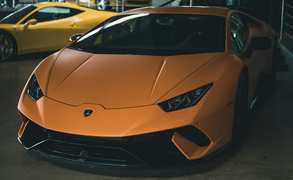
In my decade of experience as an automotive journalist and performance enthusiast, I have found that true mechanical greatness is rarely birthed in a sanitized boardroom. It is hammered out in the pits and on the asphalt. In this guide, we will explore 10 legendary production vehicles that effectively blur the lines between race-bred prototypes and street-legal luxury. From screaming V12s to turbocharged engineering marvels, these machines represent the pinnacle of automotive crossover.
Why Motorsport Matters for the Daily Driver
Motorsport and road-car development have remained inextricably linked for a century. Racing acts as a brutal laboratory, pushing components to their absolute thermal and mechanical limits. When a manufacturer commits to the “Win on Sunday, Sell on Monday” strategy, they aren’t just chasing trophies; they are engaging in aggressive R&D.
The trickle-down effect is profound. Features we now consider standard—such as advanced disc brakes, paddle-shift gearboxes, and lightweight alloy wheels—started as racing necessities. By investing in high-performance automotive engineering, manufacturers create a halo effect that elevates their entire brand. Even for the casual driver who never intends to visit a circuit, owning a car with a pedigree rooted in victory provides an unmatched sense of connection to the history of the sport.
Alfa Romeo Montreal: The Tipo 33 Legacy
The Alfa Romeo Montreal remains an underrated masterpiece. Its 2.6-liter naturally aspirated V8 was derived directly from the Tipo 33 sports prototype. While the race-spec version was winning endurance classics, the road-going Montreal offered a refined, high-revving experience that climbed to 7,000 RPM. Producing 200 horsepower, it delivered a soundtrack that still defines Italian automotive passion.
BMW M1, M5, and M6: The M88 Revolution
BMW’s commitment to motorsport is legendary. The M88 inline-six, which debuted in the iconic M1, was the heart of the ProCar series. Later iterations of this engine powered the E28 M5 and E24 M6, proving that race-derived reliability could exist in a luxury sedan format. Even the E30 M3’s S14 engine was a derivative of these racing programs, sharing DNA with the machines that dominated the DTM.
Chevrolet Camaro ZL1: A Drag-Strip Monster
The 1969 Camaro ZL1 is a masterclass in automotive performance upgrades. Its 427 cubic-inch (7.0-liter) V8 was designed for Can-Am racing. With an all-aluminum block that significantly shed weight, it produced an underrated 430 horsepower. Today, these rare machines are crown jewels for collectors, serving as a reminder of when Detroit prioritized raw track capability over everything else.
Ferrari Dino 206 GT: The Formula 2 Pioneer
The Dino 206 GT represents a pivot point for Ferrari. Its 2.0-liter V6 was developed specifically for Formula 2 racing. By bringing this high-strung, mid-engine layout to a production platform, Ferrari created one of the most balanced sports cars of its era. Weighing just over 2,000 pounds, it proved that a race-bred engine didn’t need massive displacement to dominate a twisty road.
Ferrari F50: F1 Power on the Streets
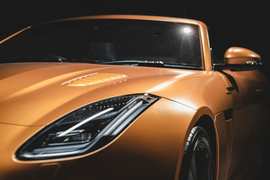
If you want the purest translation of Formula 1 technology into a street car, the Ferrari F50 is the gold standard. Its 4.7-liter V12 was a direct descendant of the 1990 Tipo 641 F1 car. Revving to 8,500 RPM, the F50 offers an unfiltered, raw connection to the track that modern supercars, often dampened by digital assists, simply cannot replicate.
Ford GT: The Endurance Heritage
The Ford GT is perhaps the greatest homage in history. The 2005 model utilized a 5.4-liter supercharged V8 rooted in Ford’s Daytona Prototype program. Fast forward to the 2017 GT, and we see the shift to a twin-turbocharged 3.5-liter EcoBoost V6—a direct application of Ford’s endurance racing success. It is the ultimate example of automotive investment strategy paying off in a flagship halo car.
Jaguar XJ220: Group C Performance
The XJ220’s history is famously complicated, but its engine is pure performance history. Utilizing a twin-turbocharged 3.5-liter V6 from the Jaguar XJR-11 Group C racer, it became the world’s fastest production car for a time. It remains a testament to what happens when you cram a purebred racing power unit into a consumer chassis.
Plymouth Belvedere: The NASCAR Hemi
The 1964 Belvedere is a “wolf in sheep’s clothing.” Beneath its unassuming exterior lay the 426 Hemi V8, a power plant developed explicitly to conquer NASCAR. This engine changed the landscape of American muscle cars, turning a standard family-style vehicle into a track-ready beast.
Porsche 918 Spyder: Hybrid Racing Tech
The 918 Spyder’s 4.6-liter V8 engine is a direct descendant of the RS Spyder LMP2 prototype. By integrating high-voltage electric motors with this race-bred internal combustion engine, Porsche achieved a level of high-end automotive performance that redefined the supercar segment. It remains one of the fastest, most technologically advanced cars ever made.
Porsche Carrera GT: The V10 Legend
The Carrera GT is arguably the last of the “analog” kings. Its 5.7-liter V10 was originally meant for the F1 circuit. When that project stalled, Porsche repurposed the architecture for an endurance racer, which eventually landed in this production masterpiece. With its screaming 8,000 RPM redline, it serves as the ultimate benchmark for motorsport-derived road cars.
The Verdict on Motorsport DNA
Investing in a car with genuine racing pedigree is more than just a purchase; it is a commitment to the art of driving. As we look toward the future, these vehicles stand as monuments to what engineers can achieve when the barriers between the track and the road are dissolved.
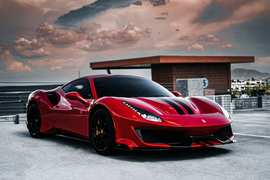
Are you ready to experience the raw, unadulterated performance that only a race-derived engine can deliver? Whether you are a collector looking for your next investment or an enthusiast craving the thrill of a lifetime, the journey begins with an expert consultation. Reach out to our specialist team today to discuss how you can get behind the wheel of a true motorsport-bred legend.