
Track-To-Tarmac: 10 Iconic Production Cars Featuring Genuine Race Engines
There is a visceral, unmistakable thrill that comes from piloting a machine infused with authentic motorsport DNA. We aren’t merely discussing aesthetic “track packages” or aggressive body kits; we are talking about the mechanical soul of a vehicle—the engine. When a manufacturer takes a high-revving, high-output power plant forged in the crucible of professional competition and drops it into a road-legal chassis, the result is a transformative driving experience.
As an industry veteran with over a decade in the high-performance automotive sector, I’ve seen countless trends come and go. However, the allure of performance car engines derived directly from the circuit remains the gold standard for enthusiasts. These engines bring a level of precision, thermal efficiency, and acoustic violence that standard production units simply cannot replicate. In this deep dive, we explore 10 production vehicles that effectively blurred the lines between the paddock and the pavement, offering a raw connection to the world’s most prestigious racing series.
The Engineering Logic: Why Race Engines for the Road?
Automakers don’t invest billions in motorsport just for the trophies. The track is the ultimate laboratory. Under the extreme stress of endurance racing or the high-RPM demands of Formula 1, engineers discover the limits of metallurgy, lubrication, and aerodynamics. This “trickle-down” effect is the primary driver behind luxury car performance breakthroughs.
Historically, the “Win on Sunday, Sell on Monday” mantra dictated that a successful racing program would directly correlate to showroom traffic. In 2025, this strategy has evolved. Today, it’s about brand equity and technical showcase. When you buy a car with a race-bred heart, you are buying a piece of a legacy—a machine capable of sustaining high-load performance that would melt a standard commuter engine.
Alfa Romeo Montreal: The Endurance Prototype Heart
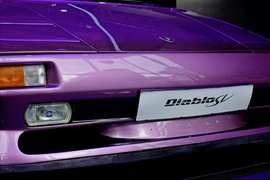
The Alfa Romeo Montreal is a masterclass in 1970s style, but its most striking feature is hidden beneath the vented hood. It utilizes a 2.6-liter V8 derived from the Tipo 33 sports prototype. This wasn’t just any engine; the Tipo 33 was a dedicated endurance racer that took on grueling events like the Targa Florio and the 24 Hours of Daytona.
While detuned to 200 hp for street reliability and longevity, the Montreal’s V8 retained its racing spirit, happily screaming toward a 7,000 RPM redline. For those looking at classic car investments, the Montreal remains one of the most sophisticated and underrated entries in the Italian market.
The BMW M Heritage: M1, E30 M3, and the M88 Legacy
BMW M Division was founded on the principle of bringing the track to the street. The legendary BMW M1 featured the M88 inline-six, a 3.5-liter masterpiece born from the M1 ProCar series. This engine was so effective that it eventually found its way into the E28 M5 and E24 M6, effectively creating the “Super Sedan” segment.
Equally iconic is the E30 M3. Its S14 four-cylinder engine wasn’t a modified economy engine; it was essentially a shortened version of the M88/M12 F1 architecture. Designed to dominate DTM (German Touring Car) racing, the S14 is a high-revving testament to precision automotive engineering.
1969 Chevrolet Camaro ZL1: The Can-Am Monster
In the late 60s, American muscle was at its zenith. The 1969 Camaro ZL1 is the stuff of legend, featuring an all-aluminum 427 cubic-inch (7.0-liter) V8. This wasn’t a standard big-block; it was a specialized unit designed for the Can-Am racing series.
The all-aluminum construction made it incredibly light, improving the car’s balance significantly. While officially rated at 430 hp to appease insurance companies, true dynamometer tests often saw these engines pushing north of 500 hp. With only 69 units ever produced, it is a crown jewel for collectors seeking high-performance vehicle insurance valuations that reach into the millions.
Ferrari Dino 206 GT: The Formula 2 Connection
The Dino 206 GT holds a special place in Maranello’s history. Named after Enzo Ferrari’s son, it featured a 2.0-liter V6 that traced its lineage directly to Ferrari’s Formula 2 racing programs of the 1960s.
Despite lacking the “Ferrari” badge on its nose at launch, the Dino provided a pure, mid-engine balance that became the blueprint for the modern supercar. Its 180 hp might seem modest by 2025 standards, but in a chassis weighing just over 2,000 pounds, the racing pedigree was felt in every gear change and apex.
Ferrari F50: An F1 Car in a Tuxedo
If the F40 was a raw turbocharged beast, the F50 was a sophisticated F1 tribute. Its 4.7-liter V12 (the Tipo F130B) was a direct descendant of the V12 used in the 1990 Ferrari 641 F1 car driven by Alain Prost.
The F50 is perhaps the closest the world has ever come to a street-legal Grand Prix car. The engine was bolted directly to the carbon fiber chassis, acting as a stressed member—just like in racing. This meant every vibration and scream of the 8,500 RPM V12 was transmitted directly to the driver’s spine, offering an unfiltered supercar driving experience.
Ford GT: The Le Mans Successor
The Ford GT is a nameplate synonymous with defeating Ferrari at Le Mans. The 2005 revival used a 5.4-liter supercharged V8 that shared architecture with Ford’s Daytona Prototype engines.
The 2017 second-generation GT took it further, utilizing a 3.5-liter twin-turbo EcoBoost V6. This engine was developed concurrently with the CGR (Chip Ganassi Racing) program that eventually won its class at Le Mans in 2016. It proves that modern engine technology can extract massive power from smaller displacements when backed by a racing budget.
Jaguar XJ220: The Group C Speed King
The Jaguar XJ220 was once the fastest production car on Earth, clocking 217 mph. While customers originally expected a V12, Jaguar delivered something arguably more potent: a 3.5-liter twin-turbo V6 pulled straight from the Jaguar XJR-11 Group C racer.
This engine was a technical marvel, providing the XJ220 with 542 hp. While the V6 configuration was controversial at the time, its track-proven durability and immense turbo boost made it a formidable competitor against the best from Italy and Germany.
1964 Plymouth Belvedere: The “Race Hemi”
The Plymouth Belvedere might look like a modest 1960s sedan, but the 426 Hemi V8 lurking inside was a weapon of war. Developed specifically to dominate the high banks of NASCAR, the “Race Hemi” was so dominant that it forced rule changes in the sport.
To meet homologation requirements, Plymouth had to sell these engines to the public. The road-going Belvedere became a drag strip terror, cementing the Hemi’s reputation as the ultimate American muscle car engine.
Porsche 918 Spyder: LMP2 Hybrid Innovation
The 918 Spyder redefined the “Hypercar Trinity” by pairing electrification with pure motorsport hardware. Its 4.6-liter V8 was a direct evolution of the engine found in the RS Spyder, an LMP2 prototype that found immense success at Le Mans and in the American Le Mans Series.
By combining this high-revving V8 with electric motors, Porsche achieved a combined output of 887 hp. This setup paved the way for the hybrid vehicle technology we see in modern performance cars today, proving that sustainability and racing spirit can coexist.
Porsche Carrera GT: The Shelved F1 Masterpiece
The Porsche Carrera GT is widely considered the greatest analog supercar of all time. Its heart is a 5.7-liter V10 that was originally designed for a Footwork Formula 1 team project in the early 90s. After the F1 project was canceled, the engine was redesigned for a Le Mans prototype (the LMP2000) that also never raced.
Rather than waste the engineering, Porsche placed the V10 into the Carrera GT. The result? A 603 hp banshee that revs to 8,000 RPM and requires expert-level skill to master. For those seeking high-end automotive performance, the Carrera GT remains the ultimate “engine-first” machine.
Conclusion: The Enduring Legacy of Race-Bred Engineering
Owning a vehicle with a race-derived engine is about more than just speed; it’s about the pedigree of performance car engines and the relentless pursuit of perfection. From the gravelly idle of a 426 Hemi to the F1-inspired wail of a Carrera GT, these cars represent the pinnacle of what is possible when engineers are given the freedom to bring the track to the street.
As we look toward the future of the automotive industry in 2025 and beyond, the integration of motorsport technology continues to push the boundaries of what we define as “performance.” Whether through advanced hybrids or high-revving internal combustion, the spirit of the race track will always find a home on the open road.
Ready to find your next high-performance thrill? If you’re looking to experience this level of engineering firsthand, start by researching local specialist dealers and track-day events to see these legends in action. The world of motorsport-inspired driving is waiting—it’s time to get behind the wheel.