
The Heart of a Champion: 10 Production Cars with Genuine Race-Bred Engines
There is an intoxicating, raw energy that vibrates through the chassis of a vehicle born from competition. For the true automotive enthusiast, the appeal isn’t just about aggressive carbon fiber splitters or a stiffened suspension; it’s about what lies beneath the hood. We are talking about race-bred engines—power plants forged in the high-pressure crucible of professional motorsport, then meticulously adapted for the street.
These aren’t merely “performance-tuned” civilian motors. These are mechanical masterpieces originally destined for the Mulsanne Straight, the high banks of Daytona, or the tight chicanes of Monaco. In 2025, as the industry pivots toward electrification, the soul of a high-revving, internal combustion engine derived from racing has become the ultimate high-value asset for collectors and driving purists alike.
In this deep dive, we explore ten production icons that successfully bridged the gap between the paddock and the driveway, offering a visceral driving experience that modern digital supercars often struggle to replicate.
The Engineering Philosophy: From Track to Tarmac
The “Win on Sunday, Sell on Monday” mantra has evolved into a sophisticated engineering exchange. When a manufacturer invests millions into a racing program, they aren’t just buying trophies; they are funding a laboratory for advanced powertrain technology.
Racing forces engineers to solve problems related to thermal management, friction reduction, and structural rigidity under extreme loads. When a race-bred engine makes the jump to a production car, it brings with it a higher ceiling for performance and a level of durability designed for endurance. For the consumer, this translates to an exotic exhaust note, instantaneous throttle response, and the prestige of owning a piece of history.
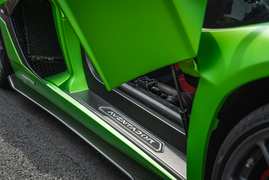
Whether you are looking for a luxury performance vehicle or a high-yield automotive investment, these ten cars represent the pinnacle of “track-to-road” evolution.
Ferrari F50: The Formula 1 Commuter
If there is a holy grail of race-bred engines, it is found in the Ferrari F50. Launched to celebrate Maranello’s 50th anniversary, the F50 wasn’t just inspired by F1; it was practically a Grand Prix car with leather seats.
The heart of the F50 is the Tipo F130B, a 4.7-liter naturally aspirated V12. This engine’s architecture was lifted directly from the 1990 Ferrari 641 F1 car driven by Alain Prost. While the displacement was increased for better road-going torque, it retained the 65-degree V-angle and a screaming 8,500 RPM redline. Because the engine is bolted directly to the carbon fiber chassis as a stressed member—just like a race car—every vibration and combustion cycle is felt directly by the driver.
Porsche Carrera GT: The Shelved Legend
The Porsche Carrera GT is widely regarded as the last great “analog” supercar. Its legend is defined by a 5.7-liter V10 that possesses one of the most hauntingly beautiful exhaust notes in history.
Ironically, this race-bred engine was never intended for a production car. It began life as a secret 3.5-liter V12 for Formula 1 in the early 90s, was later redesigned as a V10 for a Le Mans prototype (the LMP2000), and was finally shelved when Porsche pivoted resources to the Cayenne. Thankfully, the project was resurrected for the Carrera GT. Delivering 603 hp through a beechwood-topped manual shifter, it remains a benchmark for exotic car performance.
BMW M1 and the Legacy of the M88
BMW’s M Division owes its soul to the M88 inline-six. Originally developed for the mid-engined BMW M1—the centerpiece of the legendary Procar Championship—this engine was a purebred racer.
The brilliance of the M88 was its versatility. After proving its mettle on the track, a modified version of this dual-overhead-cam masterpiece found its way into the E28 M5 and the E24 M6, effectively creating the “Super Sedan” segment. Even the E30 M3’s S14 four-cylinder engine is a direct descendant, utilizing a shortened version of the M88’s cylinder head. For those seeking classic car insurance leads or high-end restoration projects, these M-powered icons remain top-tier choices.
Porsche 918 Spyder: Hybridized Le Mans Tech
While the Carrera GT was analog, the 918 Spyder looked toward the future of sustainable high-performance. However, its gasoline engine is as old-school as it gets. The 4.6-liter V8 is a direct evolution of the engine found in the RS Spyder LMP2 race car.
By shrinking the racing engine and pairing it with two electric motors, Porsche created an 887-hp hypercar that could lap the Nürburgring in under seven minutes while still being capable of silent electric cruising. It’s a perfect example of how motorsport innovation adapts to modern emissions standards without losing its competitive edge.
Ford GT: The Endurance Specialist
The Ford GT has always been about proving American dominance on the world stage. The 2005 model utilized a 5.4-liter supercharged V8 that shared significant architecture with Ford’s modular racing programs used in Daytona Prototypes.
Fast forward to 2017, and Ford did it again. The second-generation GT features a 3.5-liter twin-turbo EcoBoost V6. While some purists missed the V8, this engine was developed in tandem with the CGR Ford GT that won its class at Le Mans in 2016. It is a compact, efficient, and incredibly powerful race-bred engine that prioritized aerodynamics and weight distribution over cylinder count.
Jaguar XJ220: The Group C Survivor
The Jaguar XJ220 is a masterclass in “pivot and conquer.” While the concept car promised a heavy V12, the production reality was something much more potent: the JV6 engine.
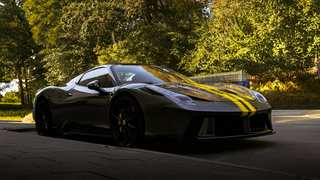
This 3.5-liter twin-turbo V6 was plucked from the Jaguar XJR-11 Group C racer. Despite having half the cylinders of the concept, the racing motor allowed the XJ220 to claim the title of the world’s fastest production car, reaching 217 mph. Today, the XJ220 is gaining massive traction in the collector car market, as enthusiasts finally appreciate the pedigree of its turbocharged heart.
Alfa Romeo Montreal: Exotic V8 Sophistication
The Montreal is often overlooked, but it carries a pedigree that rivals many Ferraris of its era. Hidden beneath its Marcello Gandini-designed hood is a 2.6-liter V8 derived from the Tipo 33 endurance racer.
The Tipo 33 was a dominant force in the Targa Florio, and while the Montreal’s version was detuned for reliability, it kept the dry-sump lubrication and high-revving characteristics of the prototype. For buyers looking for affordable vintage exotics, the Montreal offers a genuine entry point into the world of race-bred engines.
Chevrolet Camaro ZL1 (1969): The All-Aluminum Myth
In the world of American muscle, the 1969 ZL1 is the ultimate predator. Chevrolet didn’t just tweak a production big-block; they took the all-aluminum 427 cubic-inch V8 designed for the brutal Can-Am racing series and stuffed it into a Camaro.
This engine was significantly lighter than the standard cast-iron blocks, drastically improving the car’s balance and drag strip performance. Only 69 were produced, making them some of the most expensive Chevrolets ever sold at auction. The ZL1 nameplate remains a hallmark of high-performance automotive engineering to this day.
Ferrari Dino 206 GT: The F2 Ancestor
Named after Enzo Ferrari’s son, the Dino was intended to be a more accessible brand. However, its engine was anything but “entry-level.” The 2.0-liter V6 was a direct descendant of the power units Ferrari used in Formula 2 racing throughout the 1960s.
Its mid-engine layout and high-strung V6 provided a balanced, surgical driving experience that would eventually influence the design of every mid-engined Ferrari that followed. As vintage Ferrari prices continue to climb, the Dino stands as a testament to the value of racing heritage.
Plymouth Belvedere: The NASCAR “Elephant”
The 1964 Plymouth Belvedere may look like a conservative family sedan, but it was the Trojan Horse for the legendary 426 Hemi. Known as the “Race Hemi,” this engine was so dominant in NASCAR that it was briefly banned until Plymouth made it available in production cars to meet homologation rules.
With its massive hemispherical combustion chambers, the Hemi became the gold standard for muscle car horsepower. Even today, the “Hemi” brand carries significant marketing weight in the automotive industry, proving that racing success can build a century-long legacy.
Why Race-Bred Engines Matter in 2025
As we navigate an era of synthetic engine sounds and autonomous driving aids, the raw connection provided by a race-bred engine is more valuable than ever. These vehicles offer more than just speed; they offer a mechanical symphony and a tactile feedback loop that connects the driver to decades of motorsport history.
From an investment standpoint, vehicles equipped with authentic racing powertrains consistently outperform the market. Whether it’s the high-revving V12 of an F50 or the turbocharged precision of a Jaguar XJ220, these cars represent the peak of internal combustion. They are the artifacts of an era where “win on Sunday” wasn’t just a slogan—it was an engineering mandate.
Secure Your Piece of Automotive History
Owning a vehicle with a race-bred engine is a lifestyle choice that signals a deep appreciation for engineering excellence and competitive spirit. As the market for these “track-to-road” icons continues to heat up, now is the time to identify the right model for your collection.
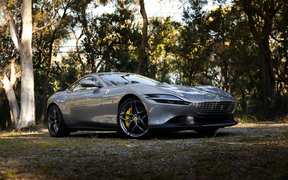
Are you ready to experience the raw power and pedigree of a true racing thoroughbred? Contact our specialist team today to find your next investment-grade performance vehicle.