
Beyond the Asphalt: 10 Production Cars with Genuine Motorsport DNA
For the enthusiast who truly understands the visceral connection between machine and driver, there is an unmistakable thrill in commanding a vehicle birthed from the cauldron of professional motorsport. We aren’t merely discussing race-inspired styling packages or aggressive aesthetic tweaks; we are talking about authentic motorsport DNA—engines designed for the high-stakes endurance of the track, now tamed for the open road. These power plants, forged in the fires of competitive racing, offer a direct lineage to the podiums of Le Mans, Daytona, and Formula 1.
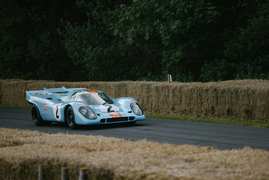
As an industry veteran with over a decade of experience, I’ve witnessed how the “Win on Sunday, Sell on Monday” philosophy remains the ultimate driver of automotive innovation. When engineers develop a powertrain for the track, they aren’t bound by the conventional compromises of comfort or longevity. They are chasing pure, unadulterated performance. Bringing that tech to a production vehicle is the pinnacle of engineering achievement.
In this analysis, we explore 10 production vehicles that blur the lines between race and road, showcasing why high-performance engine engineering is the beating heart of the automotive industry.
The Symbiosis of Track and Street
Motorsport is the ultimate laboratory. It is a brutal, unforgiving environment where failure is not an option. Through decades of racing, manufacturers have refined technologies—like advanced aerodynamics, high-strength forged alloys, and complex powertrain optimization—that eventually trickle down to your daily commute.
When a brand captures a checkered flag, the resulting surge in brand equity is immeasurable. However, the true value lies in the trickle-down effect. From the ubiquitous paddle shifter to high-heat-resistant disc brakes, the features you enjoy today were once bleeding-edge racing secrets. Owning a car with a race-derived engine is the closest a driver can get to the raw, unfiltered experience of a professional pilot.
Alfa Romeo Montreal (1970–1977)
The Montreal is a masterclass in Italian design, but its soul is pure endurance racing. Its 2.6-liter naturally aspirated V8 was derived directly from the Tipo 33 sports prototype. The Tipo 33 was a beast on circuits like the Targa Florio, and while the Montreal’s iteration was detuned for the street, it retained that frantic, 7,000 RPM high-revving character. It remains one of the most charismatic and underrated vintage sports cars in history.
BMW M1 (E26)
BMW’s “M” division is synonymous with track performance, but the M1 is the patriarch of this lineage. Its M88 inline-six was a masterpiece of precision automotive engineering, born from BMW’s M1 ProCar series dominance. This 3.5-liter engine possessed a distinct, mechanical howl that set the benchmark for the subsequent E28 M5 and E24 M6. When you drive an M1, you aren’t just driving a coupe; you’re driving a homologated race car.
Chevrolet Camaro ZL1 (1969)
The 1969 ZL1 is the definition of a “drag strip monster.” Its 427 cubic-inch (7.0-liter) all-aluminum V8 was engineered specifically for Can-Am racing. To keep the engine reliable for private owners, Chevy detuned the racing unit to 430 horsepower, but the spirit of the track remained. It is a rare piece of American muscle, with only 69 units ever produced, making it a cornerstone for serious collectors focusing on classic American high-performance vehicles.
Ferrari Dino 206 GT
The Dino 206 GT represents a pivotal moment in Maranello’s history. Its 2.0-liter V6 was developed for 1960s Formula 2 racing. By mounting this high-revving engine in a lightweight chassis, Ferrari created a nimble, mid-engine sports car that prioritized agility over brute force. It proved that you didn’t need twelve cylinders to feel like a champion.
Ferrari F50
If you want to experience an F1 car with license plates, look no further than the F50. Its 4.7-liter V12 was directly derived from the Ferrari 641, the car Alain Prost steered to glory in the 1990 Formula 1 season. With a screaming 8,500 RPM redline, the F50 is as raw as a production car gets. It provides the ultimate sensory overload, serving as a testament to Formula 1 technology transfer in the 90s.
Ford GT (2005 & 2017)
Ford’s commitment to endurance racing is legendary, and the GT serves as a direct bridge between the legendary GT40 and modern engineering. The 2005 model utilized a supercharged V8 related to Ford’s Daytona Prototype program, while the 2017 iteration showcased the efficiency of the 3.5-liter twin-turbo EcoBoost V6. Both cars prove that Ford’s advanced automotive R&D in endurance racing creates some of the most capable supercars on the planet.
Jaguar XJ220
In the early 90s, the XJ220 briefly held the title of the fastest production car on Earth, hitting 217 mph. Its engine was a 3.5-liter twin-turbo V6 lifted straight from the Jaguar XJR-11 Group C racer. This marriage of a racing powertrain and a grand tourer chassis remains one of the most fascinating “what if” scenarios in automotive history, proving that Group C technology had immense potential for street applications.
Plymouth Belvedere (1964)
The inclusion of the 426 Hemi V8 in the Plymouth Belvedere changed the muscle car landscape forever. This was a motor built for the high banks of NASCAR, designed to dominate at sustained high speeds. Bringing a NASCAR-spec Hemi to a production car was an act of pure defiance, cementing the Belvedere’s status as an icon of high-torque engine performance.
Porsche 918 Spyder
The 918 Spyder represents the future of performance: the hybridization of internal combustion and electric power. Its 4.6-liter V8 is based on the RS Spyder, an LMP2 class winner at Le Mans. By integrating this track-proven engine with electric motors, Porsche achieved a 0-60 time of just 2.2 seconds. It is a masterclass in how to preserve combustion engine passion in an increasingly electrified world.
Porsche Carrera GT
Widely considered the greatest analog supercar of the 21st century, the Carrera GT features a 5.7-liter V10 that was initially destined for Formula 1. When the F1 project was shelved, Porsche repurposed this masterpiece for a Le Mans prototype, and eventually, the road-going Carrera GT. It is the pinnacle of naturally aspirated engine design, providing a tactile, demanding, and utterly rewarding driving experience that defines the term “drivers’ car.”
Final Thoughts on Motorsport Pedigree
The vehicles listed above are more than just transport; they are time capsules of engineering excellence. Whether you are browsing for a collector’s dream or looking to upgrade your current track-day weapon, these cars offer a glimpse into the elite world of professional racing.
Investing in a vehicle with legitimate motorsport DNA is about more than specs on a sheet; it is about honoring the history of the sport. If you are ready to take the next step into the world of high-performance driving or wish to explore how modern track-to-road technology can elevate your own garage, feel free to reach out for a consultation on the best investment-grade sports cars available in today’s market. Your journey into the heart of engineering excellence starts here.