
From Grid to Garage: 10 Street-Legal Production Vehicles with Race-Bred Engines
There is an visceral, unmistakable thrill that comes from gripping the wheel of a machine infused with genuine motorsport DNA. We aren’t talking about “track-inspired” trim levels or aesthetic carbon fiber accents that offer more show than go. We are talking about the mechanical elite—production vehicles that house high-performance engines originally forged for the podium. These power plants, hardened by the brutal demands of endurance racing and Formula 1, bring a level of high-revving, adrenaline-soaked performance to the public road that few other machines can match.
As an industry veteran who has spent over a decade analyzing the evolution of performance engineering, I’ve seen how the “Win on Sunday, Sell on Monday” philosophy has shifted. In 2025, the bridge between a race car and a luxury performance vehicle has become more sophisticated than ever. Manufacturers aren’t just selling a look; they are selling a direct mechanical lineage. Let’s explore 10 legendary production vehicles that successfully transplanted a racing heart into a road-going body.
The Engineering Logic: Why Racing Tech Matters
Before we dive into the list, it’s vital to understand why OEMs (Original Equipment Manufacturers) dump billions into motorsport. Racing is the ultimate laboratory. It is where engine technology, advanced aerodynamics, and lightweight metallurgy are tested to the point of failure so that your daily driver doesn’t have to be.
Historically, innovations like disc brakes, dual-clutch transmissions, and active suspension were birthed on the track. When a manufacturer wins at Le Mans or in F1, it validates their engineering prowess, driving up the resale value and desirability of their entire fleet. For the enthusiast, owning a car with a race-bred engine is the closest one can get to the professional circuit without a FIA license.
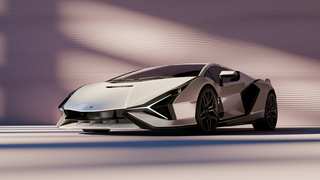
Alfa Romeo Montreal: The De-tuned Endurance Legend
The Alfa Romeo Montreal is often overlooked in the pantheon of greats, but its heart is pure 1960s prototype racing. Tucked under its vented hood is a 2.6-liter V8 derived directly from the Tipo 33, an endurance icon that conquered the Targa Florio.
While the road version was “civilized” for reliability, it retained the racing V8’s dry-sump lubrication and a spine-tingling 7,000 RPM redline. Pumping out 200 hp, the Montreal offered a level of mechanical sophistication—including SPICA mechanical fuel injection—that was lightyears ahead of its contemporary rivals.
BMW M1 and the M-Division Dynasty
When discussing motorsport DNA, BMW’s M Division is the gold standard. The BMW M1 was a homologation special built to compete in the ProCar series. It utilized the legendary M88 3.5-liter inline-six, a masterpiece of Bavarian engineering.
This engine was so robust and efficient that BMW eventually shoehorned it into the E28 M5 and E24 M6, effectively creating the “Super Sedan” segment. Even the iconic E30 M3, which utilized the S14 four-cylinder, took its architecture from this racing block. These cars weren’t just fast; they were built to endure the punishing cycles of DTM touring car racing.
Chevrolet Camaro ZL1 (1969): The All-Aluminum Drag Master
The 1969 Camaro ZL1 is the stuff of American muscle legend. At its core was the 427-cubic-inch (7.0-liter) Big Block V8, an all-aluminum monster designed for the Can-Am racing series.
In an era of heavy iron blocks, this lightweight racing engine offered a power-to-weight ratio that was unheard of. While officially rated at 430 hp to appease insurance companies, true dyno tests of the era often saw these engines pushing north of 500 hp. With only 69 units produced, it remains one of the most expensive and sought-after production vehicles in the collector market today.
Ferrari Dino 206 GT: The Formula 2 Prodigy
Named after Enzo Ferrari’s son, the Dino 206 GT was a pivotal moment for the Maranello brand. It featured a 2.0-liter V6 developed for Formula 2 competition. This high-revving engine allowed the Dino to punch far above its weight class.
Despite the lack of a V12, the 206 GT’s mid-engine layout and 180 hp output provided a balanced, surgical driving experience. It proved that engine technology from the track could make a road car feel telepathic, laying the groundwork for every mid-engine Ferrari that followed.
Ferrari F50: An F1 Car for the Street
If you want to talk about a literal race car for the road, the Ferrari F50 is the undisputed king. Most manufacturers “derive” engines; Ferrari essentially “bolted” one in. The 4.7-liter V12 (Tipo F130B) was a direct descendant of the 3.5-liter V12 found in the 1990 Ferrari 641 F1 car driven by Alain Prost.
The F50’s engine was even a stressed member of the chassis—a pure racing design choice that transmitted every vibration and mechanical symphony directly to the driver’s spine. With a 513 hp output and an 8,500 RPM scream, it remains the purest expression of Formula 1 technology in a street-legal format.
Ford GT: The Le Mans Heritage
The Ford GT is a masterclass in how to honor a legacy. The 2005 iteration utilized a 5.4-liter supercharged V8 that shared its architecture with Ford’s Daytona Prototype engines. Fast forward to 2017, and the GT moved to a 3.5-liter twin-turbo EcoBoost V6.
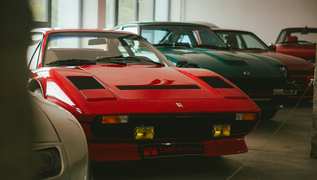
While purists initially scoffed at the move away from the V8, the EcoBoost V6 was a battle-hardened unit from Ford’s endurance racing program. This high-performance engine propelled the GT to a class win at Le Mans in 2016, proving that modern turbocharging could match the soul of the naturally aspirated giants of the past.
Jaguar XJ220: The Group C Speed King
The Jaguar XJ220 was, for a time, the fastest car on the planet, clocking in at 217 mph. While the concept car promised a V12, the production version arrived with a 3.5-liter twin-turbo V6.
This wasn’t just any V6; it was the power plant from the Jaguar XJR-11 Group C race car. This racing pedigree allowed the XJ220 to deliver 542 hp in a package that was significantly lighter and more compact than a V12 would have allowed. It remains a testament to the efficiency of dedicated racing hardware.
Plymouth Belvedere: The NASCAR “Hemi”
In the mid-1960s, the “Race Hemi” was so dominant in NASCAR that it was briefly banned until Plymouth made it available in production vehicles. The 1964 Belvedere was the lucky recipient of the 426 Hemi V8.
This engine was a brute force instrument, designed for sustained high-speed runs on oval tracks. On the street, the 425 hp Belvedere became a drag-strip terror. It solidified the Hemi’s reputation as the ultimate American high-performance engine, a legacy that persists in the modern Hellcat era.
Porsche 918 Spyder: The Hybrid Prototype
The Porsche 918 Spyder redefined the “Hypercar” for the 2010s by proving that electrification and motorsport DNA could coexist. Its 4.6-liter V8 was a direct evolution of the engine found in the RS Spyder LMP2 race car.
By combining a high-revving, naturally aspirated racing engine with two electric motors, Porsche achieved a total system output of 887 hp. The result was a 0-60 mph time of 2.2 seconds and a mechanical roar that reminded drivers this was, at its core, a Le Mans prototype with a license plate.
Porsche Carrera GT: The Shelved F1 Project
Perhaps the most “pure” engine on this list belongs to the Porsche Carrera GT. The 5.7-liter V10 was originally commissioned for a Footwork Formula 1 team in the early 90s. When that project stalled, it was repurposed for a Le Mans prototype that was also eventually canceled.
Refusing to let a masterpiece go to waste, Porsche’s engineers placed the V10 in the Carrera GT. Producing 603 hp with a howl that mimics a 2000s-era F1 grid, the Carrera GT is widely considered one of the last “analog” supercars. Its lack of electronic stability aids and its race-derived ceramic clutch make it a car that demands—and rewards—professional-level skill.
The Future of Race-Bred Performance
As we look toward 2025 and beyond, the integration of engine technology from the track into the street is entering a new phase. We are seeing more hybrid-assist systems and synthetic fuel compatibility, ensuring that the soul of the internal combustion engine survives even as regulations tighten.
Whether it’s a vintage Alfa or a modern Porsche hybrid, the DNA of the track provides a level of engagement that “commuter” cars simply cannot replicate. These vehicles represent the peak of human engineering, offering a bridge between the glory of the podium and the freedom of the open road.

Ready to experience the thrill of a performance-engineered machine for yourself? Explore our latest inventory of heritage-inspired vehicles or speak with one of our specialists today to find a car that brings the spirit of the track to your driveway. Your next great driving adventure starts here.